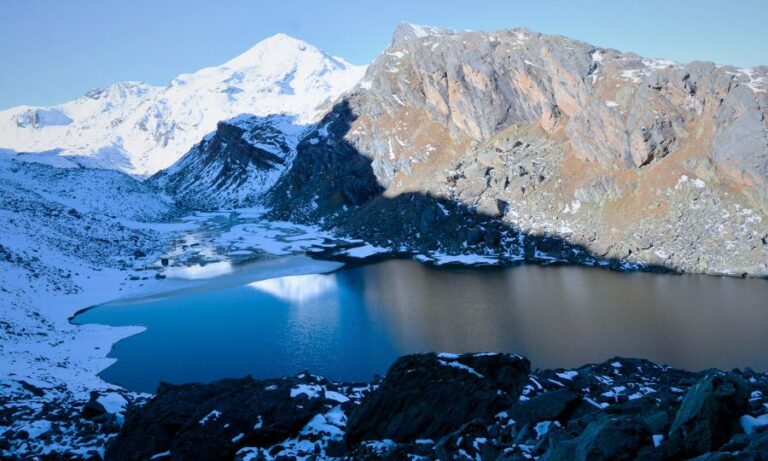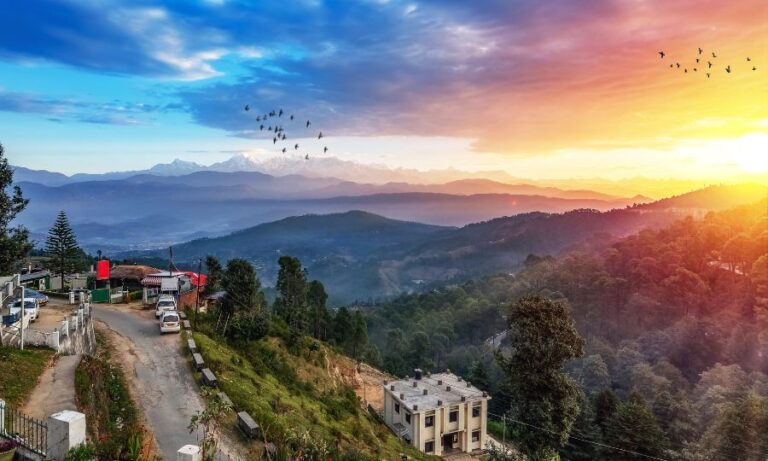
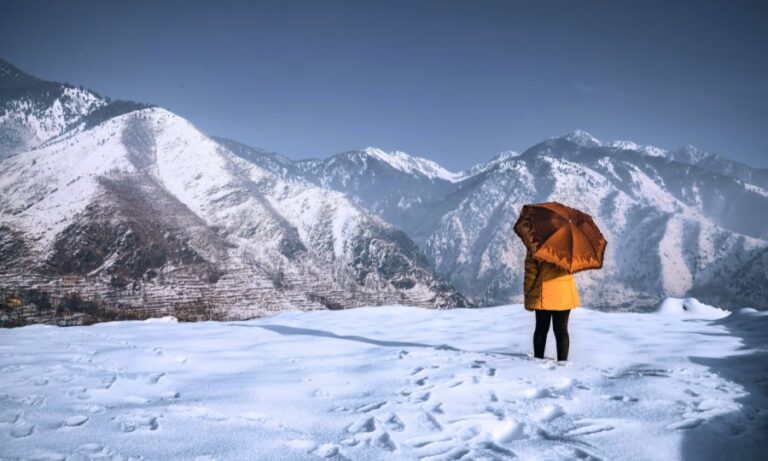
Home Blog Page 8

Ladakh in April: My Unforgettable Trip and Travel Guide

0

Ladakh, which means land of high mountain passes is not only a mountain land but it’s also a rugged cold desert, high altitude passes and lakes, monastery, double hump camel, marmot and many other things make this place a dream destination for many. So was it for me.

After planning for many years I was fortunate to finally travel to my dream destination in the month of April. 

Ladakh in April

I am not a fan of crowded places and Ladakh being one of the most popular places in India is no exception. After careful consideration and analysis, I accompanied my cousin brother to Ladakh in April. Now the question is: How is Ladakh in April?

While Ladakh is a year-round destination, April marks the ending of the harsh winter, as it is Spring. 

Here are the few things you can expect in your Ladakh Trip in April.

1. Limited Connectivity 

Coming Via Manali

The Manali-Leh Highway remains mostly closed in April. It’s not the best time to plan a road trip via this route because the Border Roads Organization (BRO) starts its snow-clearing operations only in March, especially around Rohtang Pass to Baralacha La.

If snowfall has been mild during winter, the BRO might clear the highway by the end of March, and with some luck, the road could open for a short period in April. But honestly, it’s a gamble because, in most cases, the work stretches well into April or even May. By the time they clear all the snow and declare the route safe for civilian travel, it’s usually late May or early June.

So, if you’re dreaming of a Manali-Leh road trip, April isn’t quite your month.

Coming via Srinagar

The Srinagar-Leh Highway typically opens for travelers either by mid or the end of April. The snow-clearing operation at Zojila Pass starts as early as February, and in some lucky years, the work wraps up by early March. If the weather plays along, the highway might even open by late March—but let’s be honest, that’s a rare jackpot scenario!

Even when the road opens early, don’t get too excited, as Zojila Pass often gets fresh snowfall in April, causing temporary closures. So, while a Leh Ladakh trip in April is possible via this route, it all depends on the whims of the weather gods. If you’re planning to take this road, always keep an eye on the weather updates and be prepared for sudden changes.

Flight Route

The most reliable way to reach Ladakh in April is by hopping on a direct flight to Leh. This is what we did.

It’s the most stress free option. The flights to Leh are open in April and also in the winter. Regular flights are available from Delhi, Chandigarh and Srinagar.

If you’re planning a trip in April and want to avoid last-minute cancellations, this is the way to go!

2. Chilly Yet Manageable Weather

In April the weather starts getting warmer but its still remain below 10 degree in most of the region and can go upto -15 degree or even more. For example in our stay in Tso Moriri, the temperature went down to -13 degree celsius.

And not to forget, it’s windy. However it is manageable. 

In short, the weather in April is still manageable compared to the deep winter months.

3. Fewer Crowds

Cold weather, and limited connectivity means fewer crowds.

If you want to experience Ladakh without the bustling tourist crowds, April is ideal. You’ll have most tourist spots, like Pangong Tso and Nubra Valley less crowded and off-beat places like Tso Moriri almost empty. As someone who likes to click this is a chance you can’t miss.

4. Snow-capped Peaks

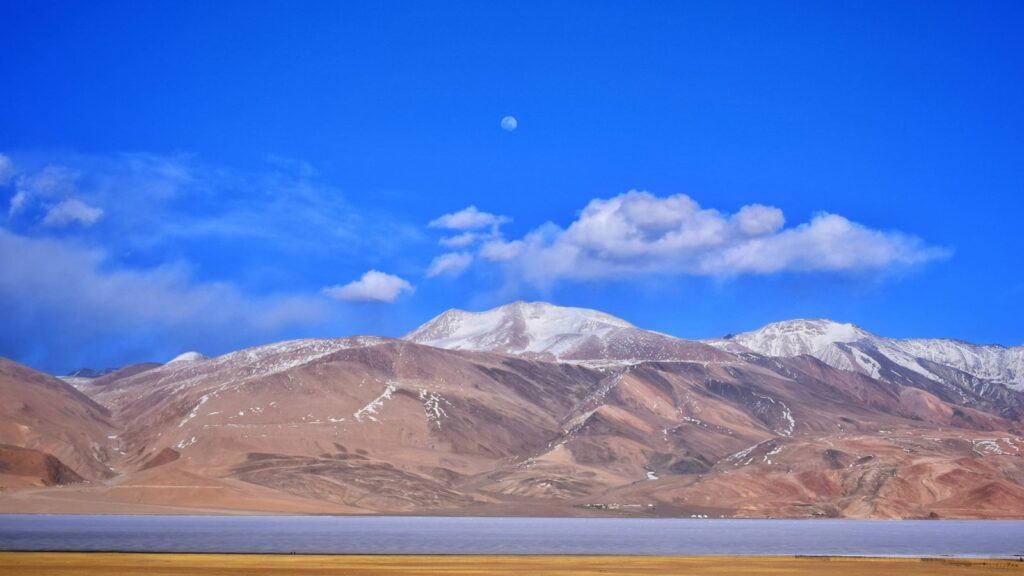
One of the main reasons I wanted to visit Ladakh was to experience snow. I have never experienced snow before. And April is cooler and you would also find snow in some lower altitude regions. By lower I must say not to expect anything below 3000m.

The contrast between the white snow, the blue skies, and the brown barren land is mesmerizing and offers incredible photographic opportunities.

5. Apricot Blossom Season in Ladakh

Spring in Ladakh comes alive with the stunning apricot blossoms. The apricot typically blooms between April and early May. After a harsh winter, the delicate white and pink flowers brighten up places like Nubra Valley and villages around Leh, creating a beautiful contrast against the barren mountains.

These blossoms aren’t just visually stunning—they’re a significant part of Ladakh’s culture and economy, marking the start of the agricultural season. The flowering period is short, so catching this fleeting beauty feels extra special.

If you’re planning to visit, aim for late April to early May and check with locals for exact timings. This season also aligns with the start of Ladakh’s tourist season, making it perfect for exploring the region’s landscapes and culture.

Things to Keep in Mind for Your Ladakh Trip in April

We flew from Kolkata to Delhi and then caught a connecting flight to Leh, the capital of Ladakh.

Our April Ladakh Trip

We went on a Ladakh trip from Kolkata and as said earlier reaching by flight is the only option.

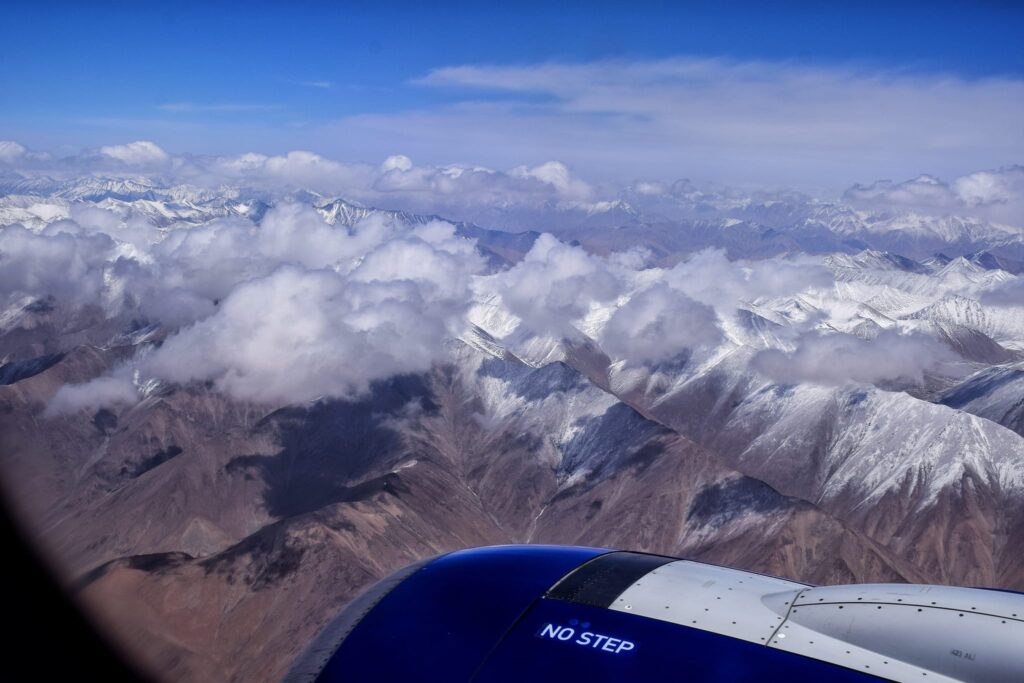
Flying to Ladakh is an adventure in itself. As your plane begins to descend into Leh, you’re greeted by the stark beauty of the Himalayan mountains, their snow-capped peaks peeking out from the clouds. It’s hard not to be in awe of the sheer magnificence of the place.

Things We did Before Ladakh Trip

  • Read lots of blogs and Watched lots of Youtube Videos
  • Stocked up our Winter accessories
    • Jackets to withstand atleast a temperature of -10 degree celsius
    • Good shoes, which will help you walk well even on ice.
    • Socks and caps
  • We did bought few chocolates and protein bars
  • Grabbed flask, as it is important to stay hydrated, and normal bottle’s water will get much colder.
  • Bought few medicine, including Diamox
  • Bought a few SPF 50 Sunscreen as the UV radiation is high along with vaseline to keep the skin moisturized.
  • We did contact few local travel agents, finally settling with Active Adventure.

And then we are off

Yes, we did carry our cameras.

Our Ladakh 7 Day Itinerary

Day 1: Reaching Leh

reach ladakh via plane in April

We boarded our flight and chose the right-side seats, knowing the view would be amazing. After about half an hour of flying, we entered the Himalayan region, surrounded by snow-covered mountains, as if we had stepped into a white wonderland. After around 1 hour 15 minutes, we finally landed at our dream destination, Ladakh, at the Kushok Bakula Rimpochee Airport in Leh. 

Before heading out of the plane, we quickly put on our padded jackets, scarf and covered ourselves. 

The weather outside was cold as expected, but the wind was something we were not prepared for. It was windy, cold winds making the temperature a bit more harsher.

Once outside, as discussed with our agent, our driver cum guide was already waiting for us. This was when we started to feel the difference in altitude; picking up our luggage was no longer as easy as it had been back in Delhi.

At the hotel, we completed the check-in process and headed for a quick lunch. I went for rajma rice, while my brother had chicken rice.

We were too tired then and hence went in for an afternoon nap which lasted more than a few hours, 4 hours to be precise.

I had planned to explore Leh market, but my body was not agreeing with me, not to forget the plan was made before reaching Leh.

Our afternoon nap which got extended to evening nap finally ended with some local music. Yes, we were lucky to get experience at a local traditional show organised by the hotel we were staying at.

Dinner came next, and we kept it light as overeating at high altitudes isn’t a good idea. Plus, I wasn’t ready to test how gravity would work on an overstuffed stomach at this height!

You’re supposed to rest for at least 48 hours in Leh to adjust to the altitude. Before going to bed, we checked with our agent, who confirmed that all the permits were arranged and that we’d be exploring the spots around Leh the next day.

The permits are the environmental (green) fee, Red Cross Fund, and wildlife fee.

As per the Leh permit website, all tourists must acclimatize for at least 48 hours before traveling to higher altitudes. Diamox 250mg should be taken twice a day for at least two days before and two days after arriving in Leh. Avoid physical exertion during the first two days and drink 2-3 liters of water daily. Refrain from alcohol, smoking, and sedatives, and have a light meal on the first day to prevent indigestion. In case of HAPE or HACE symptoms, consult a doctor immediately.

Day 2- Leh Local Sightseeing

On our second day, we set out to explore Leh. After completing our buffet breakfast we were out. Here are some of the places we visited.

1. Indus Valley Viewpoint 

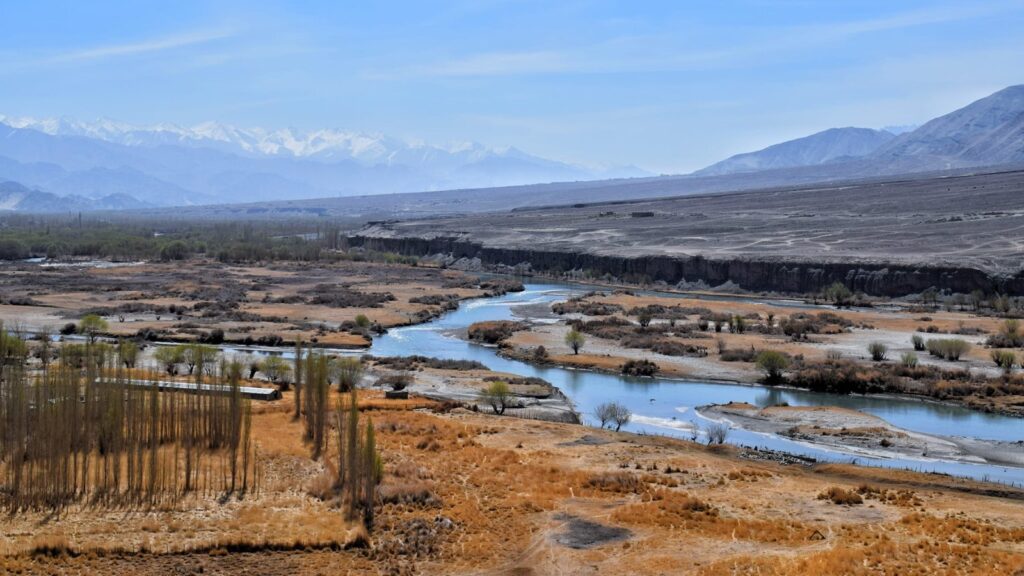
Indus Valley Ladakh

We started at the Indus Valley Viewpoint, and the moment we got there, I was blown away not because it was windy but by its beauty. 

It felt like I was looking at a picture straight out of a postcard, except this one was real. The vastness of the landscape made me feel tiny, but somehow connected to the land in a way I can’t quite explain.

2. Gurudwara Pathar Sahib

Next up was the Gurudwara Pathar Sahib, tucked away in the mountains. And it has a fascinating story. 

According to local legend, Guru Nanak Ji, during his travels, stopped here to meditate. A demon from the area tried to harm him by rolling a huge stone toward him. But when the stone hit Guru Nanak, it turned soft, like wax, and couldn’t harm him. Angry seeing this the demon tried to kick the stone but his feet got stuck. Realizing his mistake he made and asked for forgiveness.

The stone is still there in the Gurudwara as a symbol of the Guru’s power and peace.

As I stepped inside, the peaceful atmosphere instantly welcomed me.I sat quietly for a while, letting the calmness fill me. After spending around 15 minutes we headed for our next site.

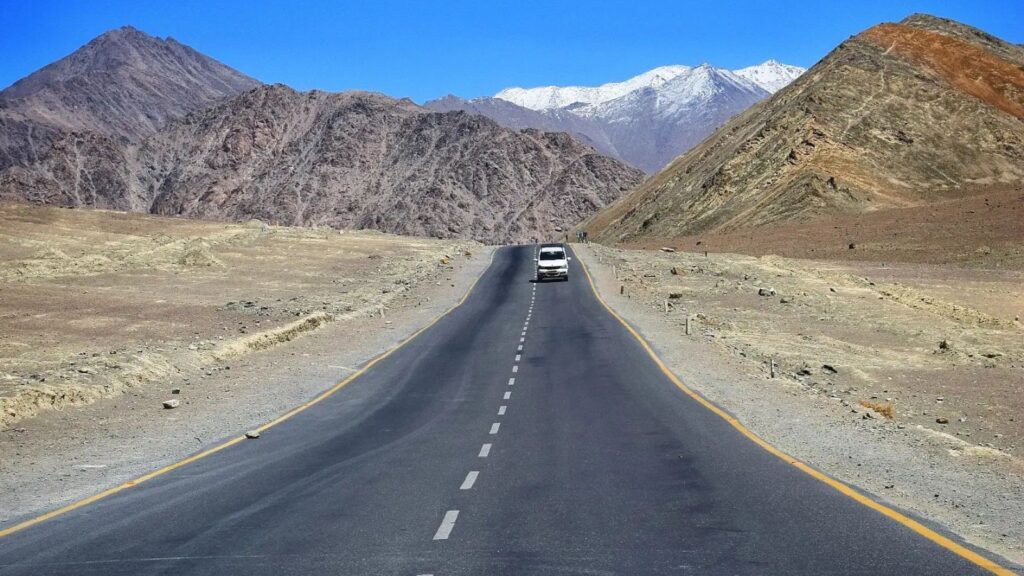
3. Magnetic Hill

Magnetic Hill

We reached Magnetic Hill and got out of our car, excited to see what all the fuss was about. Our driver, with a smile, pointed to the spot and explained how we were about to experience something unique. He parked the car and told us to switch off the engine.

Yes, the rumors are true! It’s that place where your car magically “drives” uphill, but it is not the case, spoiler alert, it’s just an optical illusion. 

The way the landscape slopes makes it look like the car is moving against gravity, but it’s all in the way the surrounding terrain messes with your eyes. 

Still, it was fun to feel like physics took the day off! We stood there for a few minutes, explored the beautiful landscape and took some photographs.

4. Sangam

Next stop is Sangam, the confluence of the Zanskar and Indus rivers. It’s a beautiful spot for photography.

In April, the rivers at Sangam were calm and gentle, with not much current, which gave the place a soothing and peaceful vibe. However, what makes this location truly special is that it’s home to one of the highest river rafting points in the world, with an altitude of around 11,000 feet above sea level!

Imagine the thrill of rafting through icy-cold waters, surrounded by the raw beauty of Ladakh’s towering barren mountains. 

5. Basgo Palace

Basgo Gompa

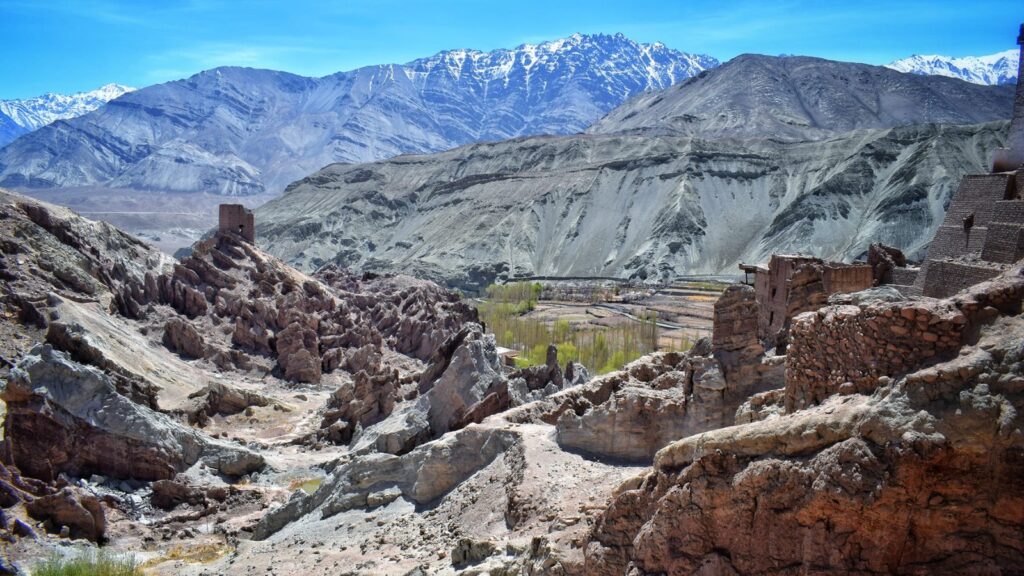
After driving through the main Kargil-Leh Highway, we took a detour towards Basgo, a historical gem that offers a glimpse into Ladakh’s rich culture and architecture.

Reaching the Basgo Monastery, however, came with its own challenges. We had to climb a set of steep steps to get to the top, and let me tell you, this was the moment I truly felt the altitude. Every step felt like a mini workout, and I was out of breath in no time. Yet, I wasn’t ready to admit defeat—not before my brother, at least! I kept glancing back, secretly hoping he’d give up first so I could have an excuse to stop climbing. But nope, he kept going, and so did I, fueled more by sibling rivalry than energy.

Once at the top, though, the effort was totally worth it. The ancient ruins and the monastery perched against the rugged backdrop of the mountains had an almost magical charm. The view from up there was breathtaking, literally and figuratively, with the wide expanse of the valley spread out below. It felt like stepping into a piece of Ladakh’s history, where every wall and corner seemed to have a story to tell.

Lunch Break at Nimoo

We stopped at Nimoo Village for lunch, a quaint little place that felt like a hidden gem amidst the mountains. Here, we decided to try the local favorite Thukpa. 

The steaming bowl of noodles in a hearty broth, packed with veggies and just the right hint of spices, was pure comfort food. 

It was the perfect way to refuel after exploring, and let’s be honest, nothing beats the warmth of a hot Thukpa when you’re surrounded by chilly winds and towering peaks. Simple, flavorful, and just what we needed to keep going!

6. Spituk Monastery 

Spituk Monastery

Our next stop was Spituk Monastery, sitting beautifully on a hill with an amazing view of Leh and the valley around it, along with Leh airport. The airport side photography is prohibited.

The short climb gave us a chance to enjoy the peaceful surroundings, but let me warn you, it involves stairs, and plenty of them!

Inside, the monastery was calm and quiet, with prayer wheels, old paintings, and the soft sound of monks chanting. 

Standing there, looking at the breathtaking view below, I felt a deep sense of peace. 

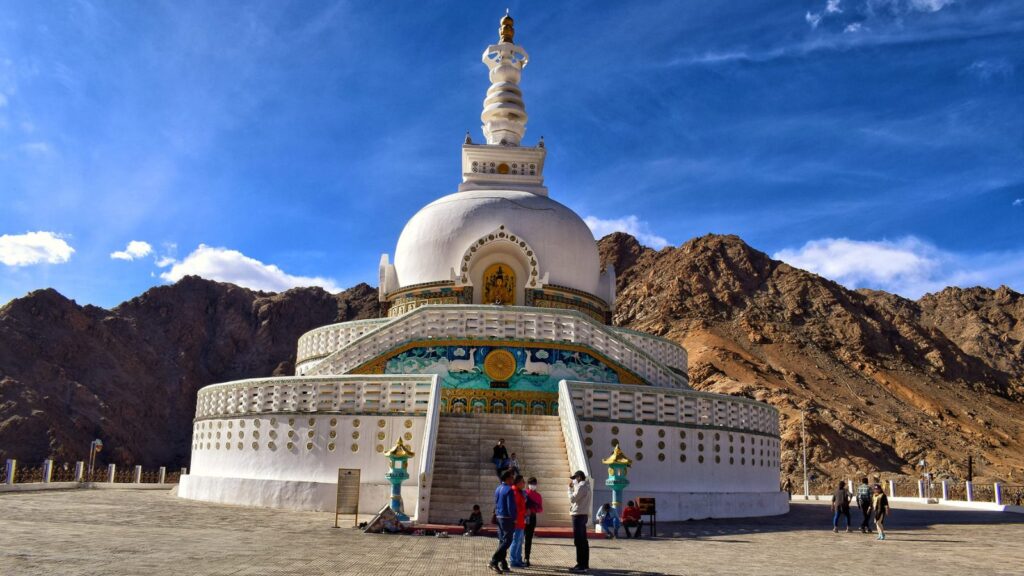
7. Shanti Stupa

Shanti Stupa

Then we headed to visit the Shanti Stupa, a serene white-domed structure perched atop a hill in Leh. Built in 1991 by Japanese Buddhist monk Gyomyo Nakamura and as part of the Peace Pagoda Mission, the stupa symbolises peace and harmony. 

It offers breathtaking panoramic views of the surrounding mountains and the Leh valley, making it a must-visit spot for peace seekers and nature lovers alike.

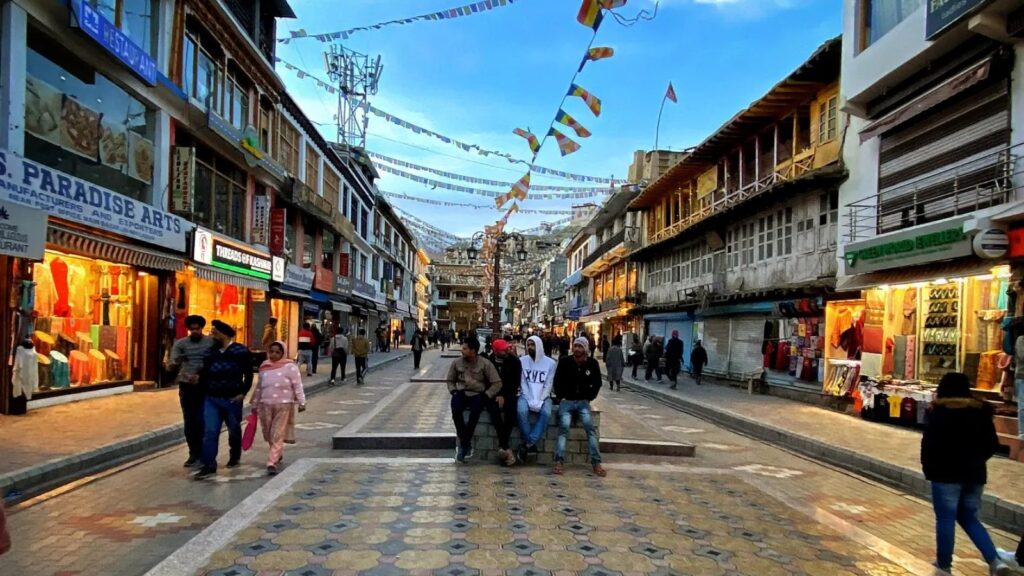
8. Leh Market

Leh Market

Our final destination for the day was the Leh market. After reaching our hotel around 5 PM and freshening up, I headed out to explore the lively streets of the market.

The vibrant Leh market is a treasure trove for souvenirs, woolen clothes, and unique local crafts. It also offers a variety of restaurants serving Ladakhi, Chinese, South Indian, and even pizza, catering to diverse tastes.

After enjoying the market’s charm, I returned to the hotel for dinner, as we had an exciting journey planned to Nubra Valley the next day.

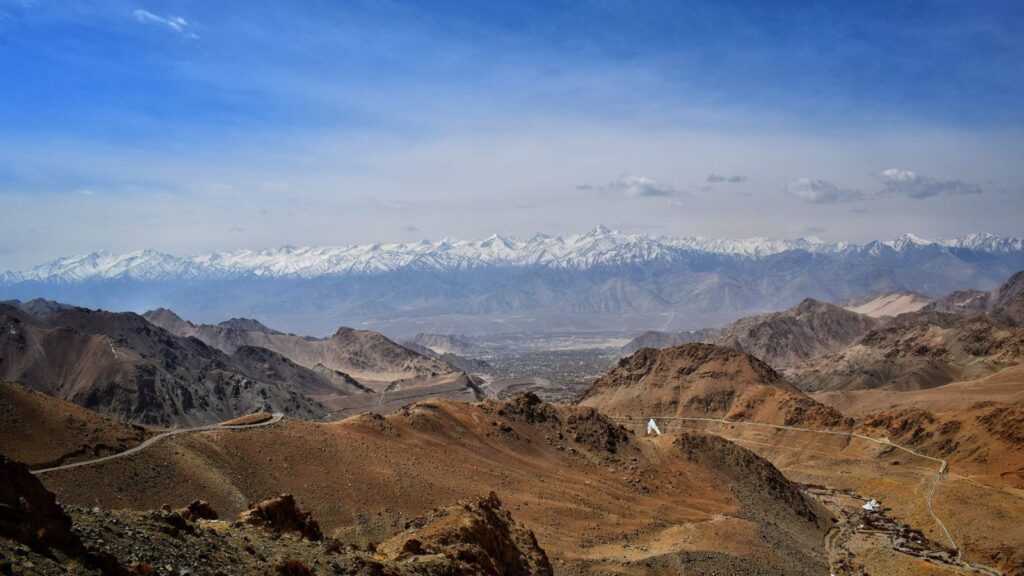
Day 3: Leh to Nubra Valley via Khardung La

View of Leh on way to Khardung la

9:00 AM – Early Start and Preparations

We woke up around 9 AM, feeling a mix of laziness and excitement. After a quick argument over who gets to freshen up first, we finally got ready for the day. Breakfast was a buffet, and let me tell you, we didn’t hold back—it was the kind of meal that sets you up perfectly for a day of adventure.

Once we were done eating, we packed our bags carefully, making sure nothing important was left behind. 

Hot water bottles? Check. Sunscreen? Applied generously. Cameras? Charged and ready for action. 

With everything sorted, we stepped out into the crisp mountain air, ready to explore, capture memories, and see what the day had in store for us.

Morning Drive Through Snowy Mountains

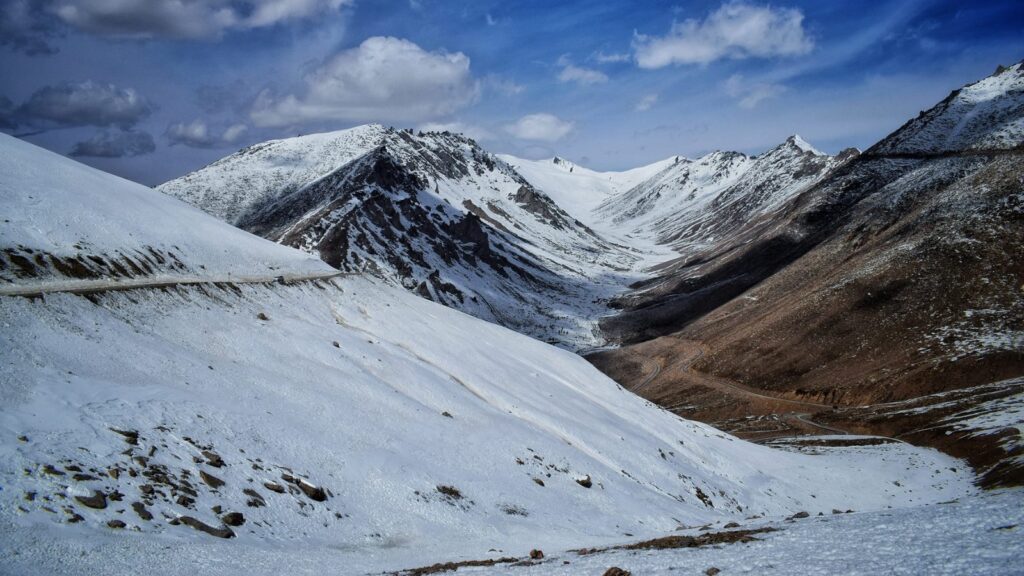
On way to khardungla

A few miles into our drive, as we moved out of the city of Leh, the landscape transformed dramatically. The dusty mountain was changed to snow-covered mountains. 

It was my first encounter with real snow—not just the cold touch from a refrigerator, but the crisp, untouched flakes that blanketed the world in white. The sight was mesmerizing, each snowflake sparkling under the sunlight, creating a serene and almost magical atmosphere.

North Pulu – Majestic Views and Quick Stops

As we approached North Pulu, the majestic views unfolded before our eyes. We decided to pause, soaking in the grandeur of the mountains and capturing the moment with some memorable photographs. The beauty of the landscape was unparalleled, making every snapshot a cherished memory.

Reaching Khardung La

A few minutes later, we arrived at Khardung La, one of the highest motorable roads in the world. The excitement was palpable as we rushed to capture videos and photos, so much so that we forgot to wear our gloves! The surroundings were nothing short of magnificent—snow blanketed the area, creating a pristine and breathtaking panorama. We managed to grab some quick snaps and even attempted a visit to Khardung Gompa, adding a spiritual touch to our adventure.

Attempting to photograph the famous Khardung La signboard proved challenging due to the crowd, but our perseverance paid off when we discovered a smaller, less crowded signboard, perfect for our pictures.

A Cozy Break at the Café

After about five minutes of exploration, hunger set in. We entered one of the highest cafes in the world and grabbed a bowl of maggi along with a comforting cup of Kawa. 

Journey to Nubra Valley

Refueled and ready, we resumed our journey towards Nubra Valley. About an hour’s drive took us to South Pulu, where we decided to take a short break, stretching our legs and enjoying the tranquil surroundings before continuing onward to Diskit.

ATV Bike Point at Khalsar

On our way, we made a halt at the ATV bike point in Khalsar, famously known for the shooting of Bhaag Milkha Bhaag. We took a moment to appreciate the blend of nature and cinematic history before moving forward.

Diskit Gompa

Maitreya Buddha

As we reached Diskit, I began to feel a bit unwell, possibly due to altitude sickness or the rugged mountain roads. Despite feeling under the weather, the beauty of the place was undeniable. 

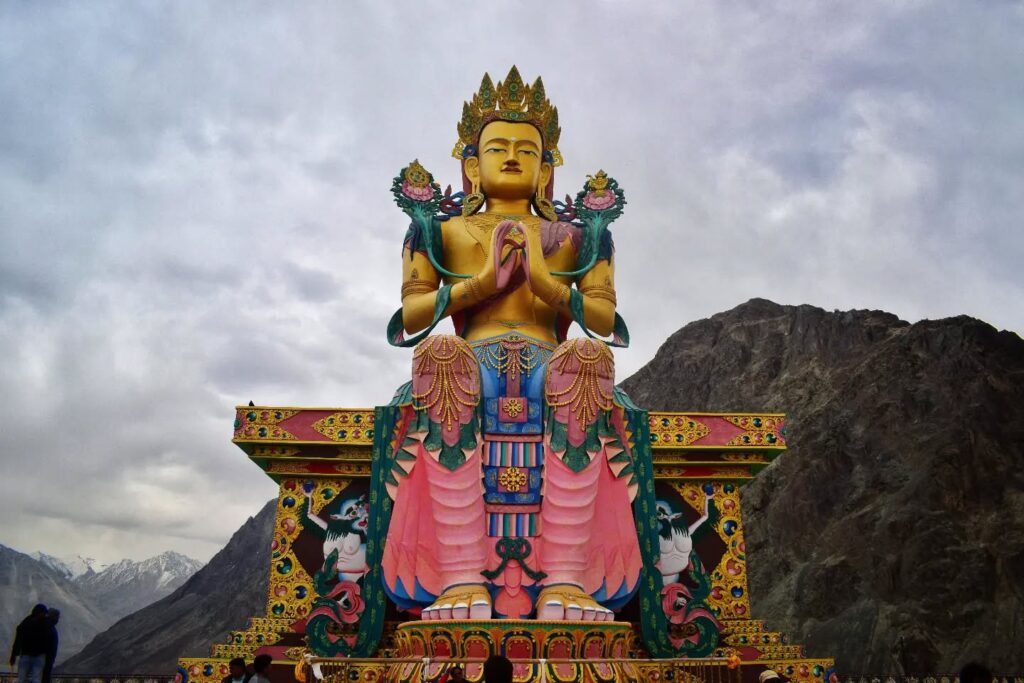
We visited the impressive 33-meter statue of Maitreya Buddha, a towering presence that dominates the landscape. The glimpse of the Diskit Monastery nestled a short distance away, offered a peaceful contrast to the vastness of the valley.

Hunder’s Charm

Continuing our journey, we entered the desert area of Nubra Valley. The sandy winds greeted us, carrying a different kind of serenity. 

By around 3 PM, we arrived at our stay in Hunder. The absence of electricity was noticeable, but we were assured it would return by evening, giving us time to charge our gadgets.

Exploring the Hunder Sand Dunes

Hunder Sand dune

Still feeling a bit unwell, the day took an unexpected turn when a light drizzle began to fall. The cool rain helped me regain some energy, and as soon as it ceased, we set out to explore the mesmerizing Hunder Sand Dunes. 

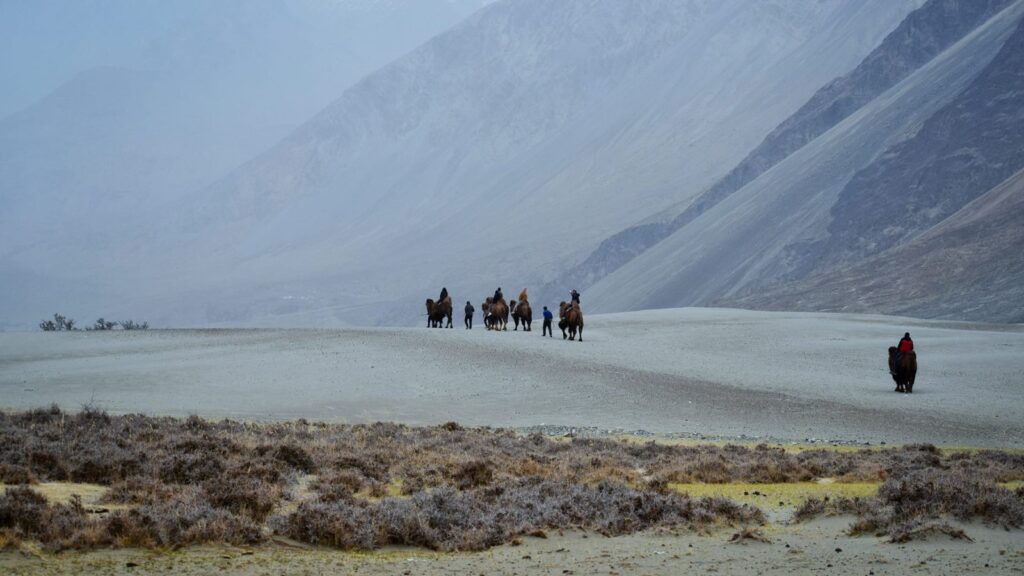
The cold and windy April weather added a dramatic flair to our photography sessions, capturing the dunes in their full glory.

Camel Safari and Evening Relaxation

After some photography, we queued up to ride the iconic double-humped Bactrian camels. The safari was an exhilarating experience, offering a unique perspective of the desert landscape. 

As the sun began to set, we too started our journey back to our hotel.

9:00 PM – Buffet Dinner 

The day concluded with a delightful buffet dinner around 9 PM. Despite the chilly temperatures, the warmth of the meal and the shared stories of the day created a cozy and memorable evening. 

With the camera fully charged, it was time to go to sleep.

Day 4: Journey to Pangong Tso

Sunrise at Hunder

Sunrise At Hunder

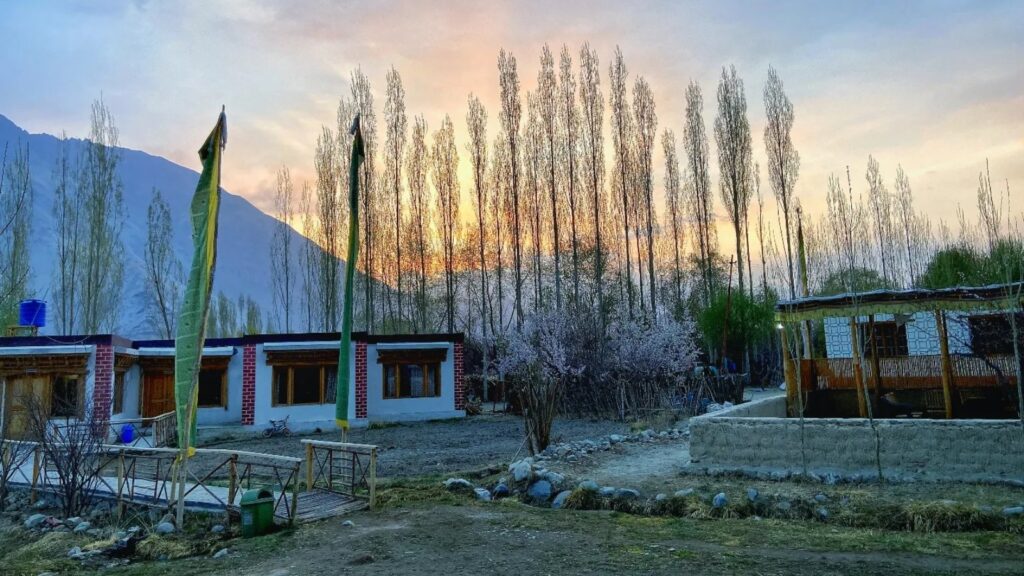
We started our journey to Pangong Tso at around 9:30 AM, after a filling breakfast. The resort looked stunning in the morning light, with apricot flowers blooming beautifully in the garden—a perfect start to the day.

Enjoying ATV Ride

ATV Ride in Ladakh

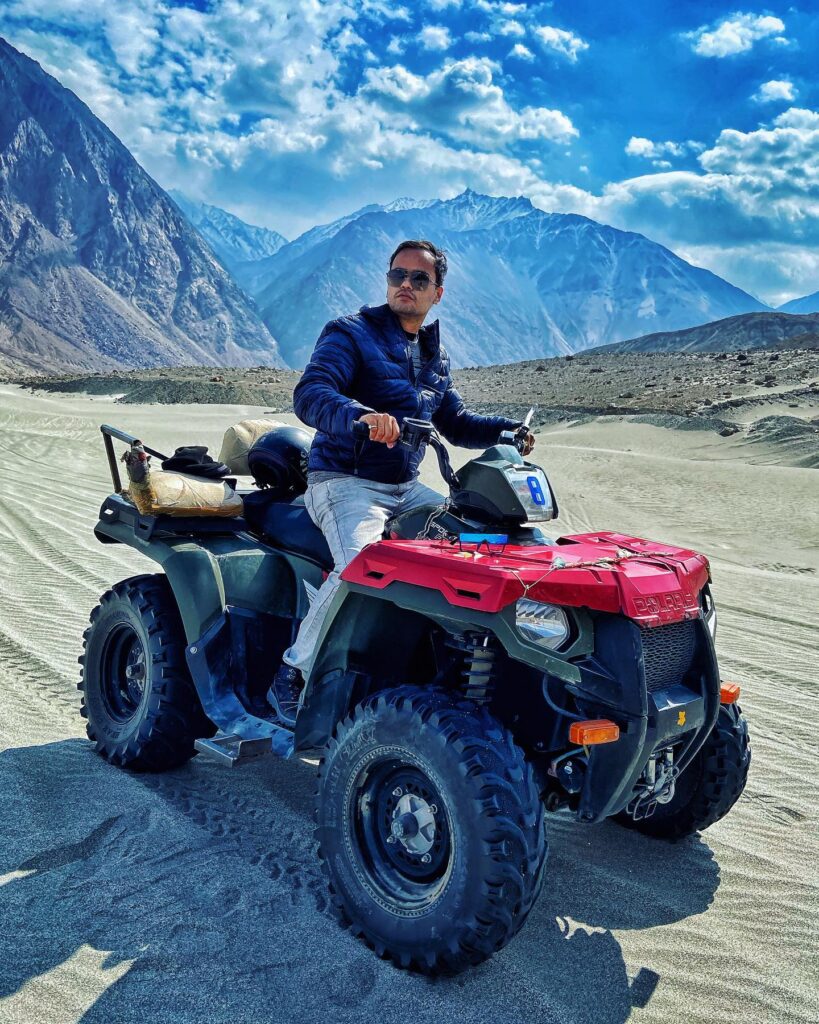
Our first stop was the ATV ride point at Khalsar. We hopped on the ATVs, had a thrilling ride, and, of course, squeezed in a quick photo session to capture the fun.

As we continued toward Pangong, the road became bumpy, but the breathtaking scenery more than made up for it. The Shyok River was our constant companion, flowing gracefully alongside us until we reached Shyok village. We made a few stops along the way to take in the river’s beauty and feel the refreshing mountain breeze.

Lunch at Durbuk

By the time we reached Durbuk, it was lunch hour. We indulged in some simple but delicious rajma chawal, which gave us the energy boost we needed for the rest of the drive.

Soon after, we started catching glimpses of Pangong Lake, and excitement bubbled up. Some spots along the way were where scenes from Jab Tak Hai Jaan were shot, adding a touch of Bollywood magic to the journey.

Reaching Pangong Tso

exploring pangong tso in April

Finally, at around 3 PM, we arrived at the magnificent Pangong Tso. After checking into our tent accommodation, we braved the strong winds, geared up, and made our way to the lake.

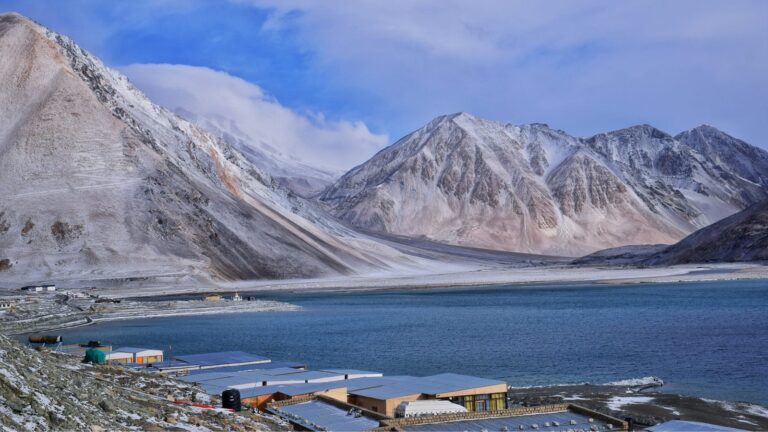
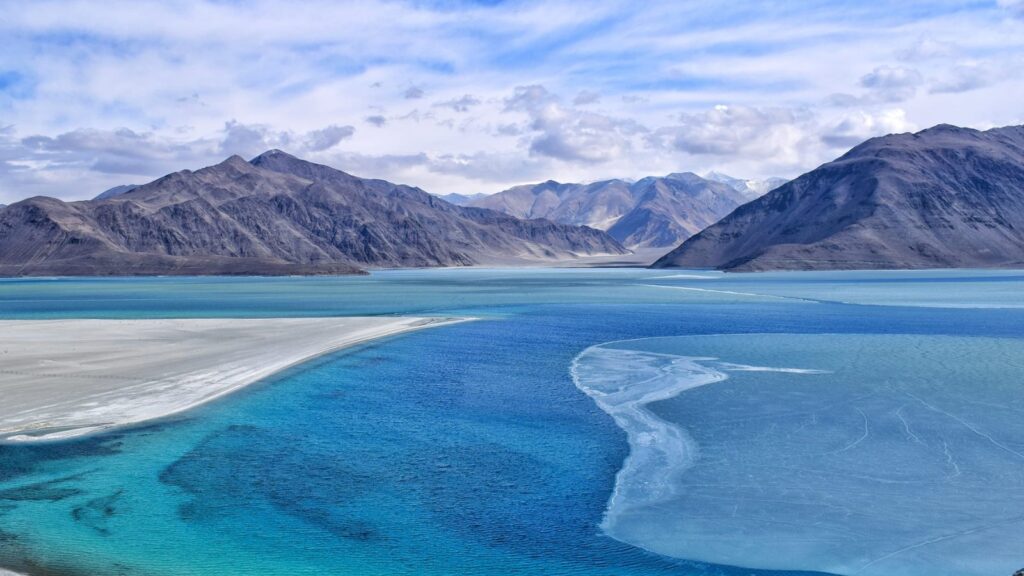
The view was mesmerizing—a semi-frozen lake, with parts still covered in ice while the rest shimmered under the sunlight. It felt like stepping into a painting. Despite the freezing winds making it hard to stay out for too long, we spent about an hour soaking in the beauty of the lake before heading back to the tent.

The rest of the evening was quiet. After a refreshing nap, we went to the tent’s restaurant for the dinner buffet, wrapped up the day with a hearty meal, and settled into a cozy sleep, ready for the next adventure.

Day 5: Heading to Tso Moriri

Snowy Morning

I woke up to find my cousin wasn’t feeling well. So, I went for breakfast alone. Just as I was about to leave the tent, I noticed that the water in the washroom pipes had frozen. As I stepped outside, I was greeted by a white carpet of snow and a bright sunrise. It looked like there had been some snowfall overnight.

Late Start to Tso Moriri

After breakfast, I went back to the tent. We weren’t sure if we’d be able to go to Tso Moriri or head back to Leh, but my cousin found some strength, and we decided to continue toward Tso Moriri.

We took the road along Pangong Tso, and honestly, it was the most beautiful sight I had ever seen. (Here’s a glimpse of the lake in the photo below.)

We took a small detour and got lost for a bit, but eventually reached Chusul. From there, we went off the beaten path, passing through Mahe and Sumodo villages before finally arriving at Tso Moriri.

Journey is Prettier than Destination

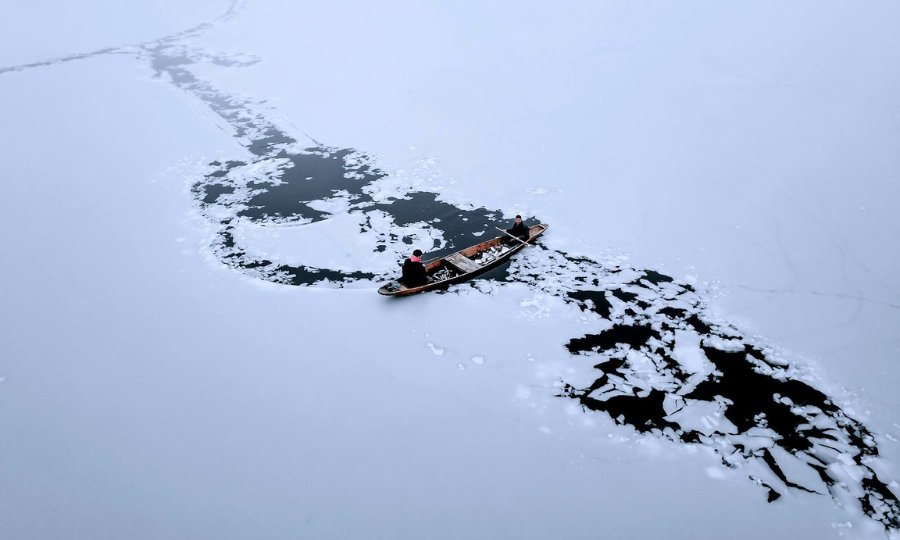
The journey was one of the most beautiful parts of the trip. We were greeted with snowfall, yaks grazing along the road, and the frozen lakes of Mirpal Tso and Kyagar Tso. It was amazing, and thanks to BRO, the roads were surprisingly clean, even after the snowfall.

As we neared Tso Moriri, we realized we had a flat tire. Thankfully, we made it to our homestay. After unpacking, our driver suggested we walk to the lake.

Walking to Tso Moriri

Tso Moriri in April

Let me tell you, that 1 km walk was one of the hardest I’ve ever done. The strong sun and chilly wind made it nearly unbearable. But we pushed through and reached the lake. We spent about 15 minutes there, then headed back to the homestay.

By the time we got back, we were exhausted. We fell asleep around 7 PM, and the homestay served dinner in our room. I had planned to do some stargazing, but… well, I was too tired to even think about it.

Day 6 Heading Back to Leh

The next day, we woke up early and decided to skip breakfast so we could reach Leh sooner. As we drove, we noticed that the lakes were even more frozen, with some water bodies now completely covered in ice. Our first stop was the Puga Hot Springs.

Exploring Puga Hot Spring

Puga was a serene, peaceful spot, surrounded by golden grass swaying gently in the breeze. We saw horses grazing nearby, adding to the calm atmosphere. The area was quite scenic, with the steam rising from the hot springs contrasting with the icy cold surroundings. It felt like we had stepped into a winter wonderland.

Leh Manali Highway

After enjoying the beauty of Puga, we continued our journey toward Tso Kar and after exploring the lake finally reached the Leh-Manali Highway.

On the way, we encountered a bridge issue that caused a slight delay, but it also meant there were fewer people around, making the journey feel even more tranquil. As we approached Tanglang La, the region became almost completely snowy, making it look like a scene from a winter postcard.

Lunch at Upshi

Then we continued our journey and reached Upshi, where we stopped for lunch. I enjoyed a simple yet delicious plate of rajma chawal.

Upshi holds significance as the point where, if you’re traveling from Manali to Leh, you encounter the majestic Indus River for the first time.

We continued our journey to Leh, passing through Karu, a crucial junction where the road from Leh to Pangong Lake converges. This makes it an important waypoint for travelers heading towards the serene Pangong Lake or returning to Leh.

Thiksey Monastery

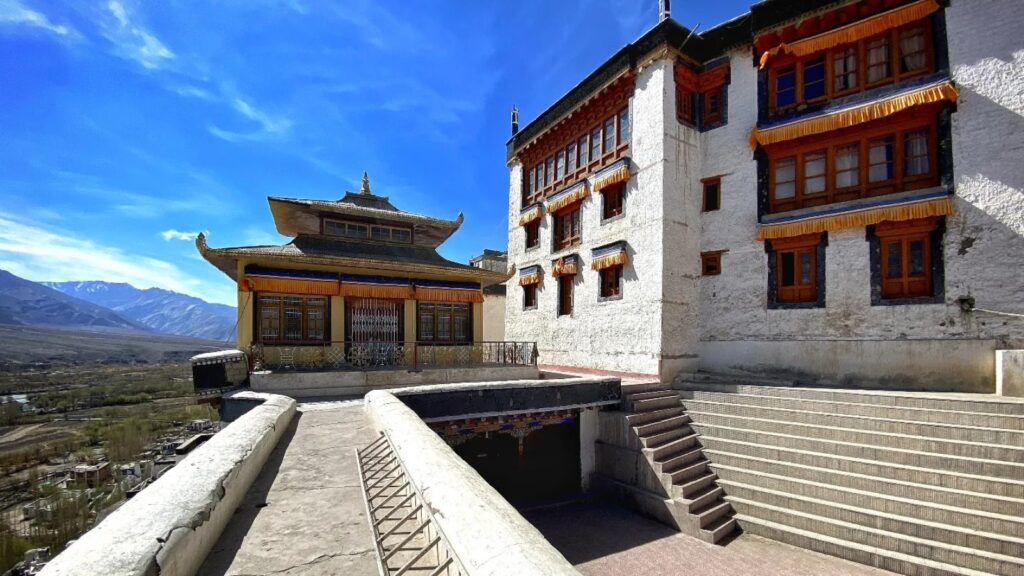
Our next stop was Thiksey Monastery. It is a beautiful monastery built on a hill, with white buildings arranged in steps. Inside, it has a large statue of Buddha and peaceful prayer halls. The view of the valley from the monastery is amazing.

Shey Palace

We passed by the Druk Padma Karpo School, also known as the “Rancho School” from the movie 3 Idiots, and soon reached our next stop, Shey Palace.

The palace, built on a hilltop, is an impressive structure made of stone and mud bricks, with prayer flags fluttering in the breeze. It features a large golden Buddha statue inside the monastery and offers stunning views of the surrounding fields and mountains. 

The multi-leveled architecture and ancient murals reflect the rich history and cultural significance of the place.

Reached Leh

After a tiring journey, we reached Leh around 4 PM, and it was time to take some rest as we had a morning flight the next day.

However, before calling it a day, I made sure to pick up a few souvenirs from the town. These included some sweaters from the Tibetan Refugee Market, a few handicrafts from the local shops, and a magnet as a keepsake.

Day 7: A Memorable Farewell to Leh

After six days of unforgettable experiences, it was time to bid farewell to this beautiful place. Our hearts were full of memories, and our bags a little heavier with extra winter clothes. As we headed back to Delhi, we reflected on the journey that had enriched us with so much. We arrived on time, and the checkout process was smooth, bringing an end to a trip that would stay with us forever.

Ladakh in April: A Journey Through the Majestic Land

Our trip to Ladakh in April was an amazing adventure. From the moment we arrived, we were in awe of the beautiful landscapes, peaceful monasteries, and unique experiences this place offers. 

Our itinerary was well-planned, allowing us to explore everything at a comfortable pace without feeling rushed. However it will be better to stay 1 more day in Leh before starting for Khardung la or other places, particularly when you are coming by flight.

The weather in April was cold but refreshing, and the calmness of the place made every moment special. From the high mountain passes to the peaceful atmosphere, Ladakh’s beauty never stopped amazing me.

This trip to Ladakh was more than just a holiday; it was an unforgettable experience filled with memories. I know, we did miss a lot of places and yes Ladakh trip do take time as Ladakh has lots of places to be explored.

If you’re looking for a destination that offers both adventure and peace, Ladakh in April is the perfect place.

Loading

5 Lesser-Known Hill Stations for a Serene Escape

0

Don’t we all dream of taking a break from the relentless pace of life? If you have been craving some peace and quiet from endless notifications and emails, let me tell you about a few magical hill stations in India that remain refreshingly untouched by mass crowds.

These places aren’t just famous for their scenic beauty, but they have a way of wrapping you in their tranquility, which makes you feel like time has slowed just for you.

1. Kalpa, Himachal Pradesh

Kalpa Town Aerial Panoramic View
Kalpa Town Aerial Panoramic View, India. Picture by Andrey X.

A small village in the Sutlej river valley, Kalpa in the Kinnaur district of Himachal Pradesh is surrounded by snow-clad peaks of the Kinnaur Kailash range. This quaint lesser-known hill station in India feels like stepping into a dream. It’s a place where apple orchards stretch endlessly and cozy cottages whisper stories of the ancient past.

When I first arrived in Kalpa, I couldn’t help but marvel at the beauty of its surroundings. One of my favorite moments was sipping hot tea on a chilly morning, watching the clouds roll over the mountains like a slow dance.

If you visit, don’t miss the ancient temples and the breathtaking sunrise view from the viewpoints.

2. Chakrata, Uttarakhand

Chakrata, Uttarakhand
Chakrata, Uttarakhand. Photo by Avinash Kumar, Unsplash

Located at a height of 7,000m above sea level and 88 km from Dehradun, Chakrata in Uttarakhand is nestled amidst red rhododendrons, a snowy Himalayan range, and towering oaks. This little gem is a paradise for nature lovers. The best part? It’s not crowded. You can walk along the forest trails and simply be.

One memory that stands out from my time in Chakrata is exploring the Tiger Falls. It’s a short trek to reach the falls, and as you get closer, the sound of gushing water grows louder, almost like nature calling out to you. When you finally see the cascading waterfall, it’s breathtaking. Sitting by the water, dipping my feet into the cold stream, I felt a kind of calm that’s hard to put into words.

Pro tip: Pack a picnic and enjoy a quiet meal surrounded by nothing but nature.

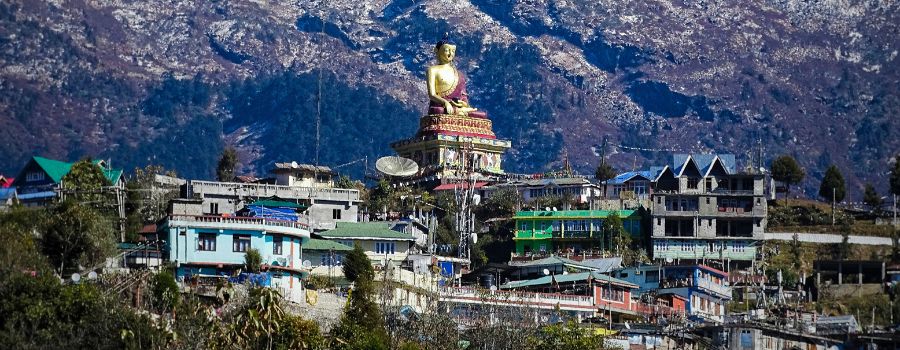
3. Tawang, Arunachal Pradesh

Tawang, Arunachal Pradesh
Tawang, Arunachal Pradesh. Photo by Getty Image/Canva

Ever heard of a place that feels like it’s straight out of a postcard? That’s Tawang for you! Located in the northeastern state of Arunachal Pradesh, this hill station is a mix of stunning landscapes and rich culture. The journey to Tawang might be a bit challenging, but trust me, the destination is worth every bump along the way.

What struck me most about Tawang was its serene monasteries. The Tawang Monastery, in particular, is one of the largest in India, and walking through its ancient halls felt almost meditative. The colorful prayer flags fluttering in the wind, the sound of monks chanting, and the snow-capped peaks in the backdrop, it’s pure magic.

Another must-visit is the Pankang Teng Tso Lake, surrounded by mountains. Just sitting by the lake, listening to the soft rustle of the breeze, I felt like I was in a world far removed from my own. It’s a must-visit!

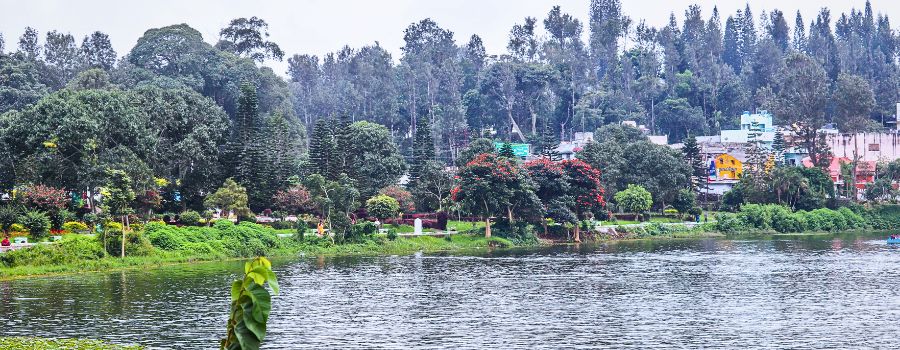
4.Yercaud, Tamil Nadu

Yercaud, Tamil Nadu
Yercaud, Tamil Nadu, Photo by Rangeecha from Getty Images

Let’s head south now, to the beautiful hill station of Yercaud in Tamil Nadu. Often overshadowed by its more famous cousin, Ooty, Yercaud offers a quieter, more intimate vibe. Set in the Shevaroy Hills, this place is all about coffee plantations and misty mornings.

One of my favorite spots here was the Emerald Lake. It’s not just a lake, it’s an experience. You can take a boat ride, surrounded by lush greenery and a serene atmosphere that’s hard to find in busier hill stations.

The view from Pagoda Point is another highlight, the \hills, the distant villages, and the play of light during sunset is a sight I’ll never forget. Yercaud isn’t about ticking off tourist spots; it’s about soaking in the simplicity and beauty of nature.

5. Munsiyari, Uttarakhand

Musiyari
Photo by Amar Singh Rathore on Unsplash

Munsiyari isn’t just a hill station, it’s a slice of paradise in the Kumaon region of Uttarakhand. Known as the ‘Gateway to the Himalayas,’ this tiny town offers jaw-dropping views of the Panchachuli peaks. It’s the kind of place where you can lose yourself in nature and find a piece of yourself.

When I visited Munsiyari, I took a trek to Khaliya Top, a meadow that offers panoramic views of the Himalayas. It’s not an easy trek, but the reward at the top, the snow-covered peaks stretching as far as the eye can see, makes every step worth it.

In the evenings, the town lights up with the glow of small bonfires, and you can hear locals sharing stories under the mesmerizing sky. Don’t leave without trying the local rajma and rice; it’s comfort food at its best!

Find Serenity in Hidden Hill Stations

These places remind you to listen to the sound of your own breathing and appreciate the simplicity of life. So, the next time you plan a getaway, explore these hidden treasures, for who knows you might just find your own serenity!

Loading

Experience The Auden’s Col And Mayali Pass Trekking 

0

Trekking has always been my escape, my way of disconnecting from the chaos of city life and reconnecting with nature. When my friends suggested the Auden’s Col and Mayali Pass trek, I was both excited and apprehensive. Known as one of the most challenging treks in the Himalayas, it connects Gangotri to Kedarnath, cutting through glaciers, rocky moraines, and high-altitude passes. It is the kind of adventure that tests your endurance, rewards your spirit, and leaves you in awe of nature’s raw beauty.

We were a group of six, all equally passionate about trekking, but none of us had attempted something this demanding before. 

The moment we decided to do it, the anticipation began. Late-night planning sessions over coffee turned into intense discussions about gear, fitness routines, and logistics. The allure of the unknown, the tales of breathtaking landscapes, and the thrill of stepping into one of the most remote Uttarakhand trekking places had us hooked.

What made this trek even more special was the promise of shared memories. Trekking with friends brings an unmatched camaraderie—helping each other through tough climbs, sharing warm laughs around a campfire, and experiencing moments of wonder together. 

We knew this would be more than just a trek; it would be a story we would tell for years.

So, with backpacks filled with essentials and hearts brimming with excitement, we set off on this journey to conquer Auden’s Col and Mayali Pass. Little did we know, this trek would take us to the very edge of our limits and reward us with memories that would last a lifetime.

The Trek Difficulty And Details

Auden’s Col and Mayali Pass trek is not for the faint-hearted. The trail connects Gangotri and Kedarnath, crossing through glaciers, moraines, and high-altitude passes. With elevations reaching up to 5,490 meters (18,011 feet), it is categorized as a difficult trek. Proper preparation is essential, including physical fitness, technical gear, and acclimatization.

Here is what you need to know:

Best Time: May to early June and late September to October

Duration: 11 days

Starting Point: Gangotri

Ending Point: Kedarnath

Distance Covered: Approximately 90 km

We ensured we had sturdy trekking gear, warm clothing, crampons for icy patches, and plenty of food supplies. Hiring a local guide is highly recommended, as the route is not well-marked.

The Journey: Day 1 To Day Z 

Day 1: Gangotri to Nala Camp (8 km | 4-5 hours)

We began our adventure in Gangotri, a small town surrounded by towering pine forests and the Bhagirathi River. After seeking blessings at the Gangotri Temple, we started the trek. The initial trail was gentle and passed through verdant forests filled with chirping birds and wildflowers. 

The river accompanied us for most of the journey, adding a soothing soundtrack to our steps.

After about 4-5 hours of trekking, we reached Nala Camp, a serene campsite nestled at the base of mountains. 

The camp was situated near a bubbling stream, making it a perfect spot to unwind. We pitched our tents, enjoyed a warm meal, and spent the evening under a blanket of stars.

Day 2: Nala Camp to Rudugaira Base Camp (7 km | 5-6 hours)

The trek became more demanding as we ascended from Nala Camp to Rudugaira Base Camp. The trail was steep, with a mix of rocky patches and grassy slopes. The thinning air made it more challenging, but the views were breathtaking. We could see the majestic Gangotri peaks in the distance, which kept us motivated.

By midday, we reached Rudugaira Base Camp, perched at an altitude of 4,350 meters. The campsite offered panoramic views of snow-capped peaks, making the effort worthwhile. 

After setting up camp, we spent the evening acclimatizing and preparing for the higher altitudes ahead.

Day 3: Acclimatization Day At Rudugaira Base Camp

Acclimatization is critical at this altitude, so we spent the day resting and exploring the surroundings. We climbed a nearby ridge to help our bodies adjust to the altitude and were rewarded with stunning views of the Rudugaira Glacier. Our guide shared stories of previous expeditions, which built excitement for the days to come.

The day ended with warm soup and camaraderie around the campsite as the sun dipped behind the peaks.

Day 4: Rudugaira Base Camp to Auden’s Col Base Camp (10 km | 7-8 hours)

This was one of the most grueling days of the trek. The trail led us through moraines, scree, and icy patches, requiring careful navigation. We crossed the Rudugaira Glacier, where the icy terrain tested our balance and endurance. 

The sheer beauty of the glacier, with its shimmering blue ice and surrounding peaks, was mesmerizing.

After 7-8 hours of trekking, we reached Auden’s Col Base Camp, situated at an altitude of 4,900 meters. The campsite was surrounded by towering ice walls, making us feel like we were in a world untouched by time. 

The temperature dropped significantly, and we huddled in our tents, conserving energy for the challenging day ahead.

Day 5: Crossing Auden’s Col (5 km | 8-9 hours)

This was the toughest and most rewarding day of the expedition. We started early, equipped with crampons and ropes. The ascent to Auden’s Col at 5,490 meters involved climbing steep icy slopes and navigating through crevasses. 

The air was thin, and every step felt like a marathon.

When we finally reached the top, we were greeted by jaw-dropping views of snow-clad peaks stretching endlessly in every direction. The sense of accomplishment was overwhelming. The descent was equally challenging, with loose snow and slippery ice. 

By evening, we reached the Khatling Glacier, where we set up camp, exhausted but elated.

Day 6: Khatling Glacier To Chowki (10 km | 6-7 hours)

The trail through Khatling Glacier was a mix of moraines, ice fields, and small streams. The glacier’s vastness and pristine beauty left us speechless. It felt like walking on a different planet. 

The descent required careful navigation to avoid slipping on loose rocks and icy patches.

By late afternoon, we reached Chowki, a picturesque campsite located at 3,800 meters. 

The lush green meadow and the gentle sound of a nearby stream were a stark contrast to the harshness of the glacier. We relaxed by the fire, sharing stories and marveling at the journey so far.

Day 7: Chowki To Masar Tal (8 km | 5-6 hours)

The trek to Masar Tal was moderate in difficulty but equally rewarding in terms of scenic beauty. The trail wound through rocky terrain and steep ascents. Masar Tal, a high-altitude lake at 4,100 meters, was a sight to behold. Its crystal-clear waters reflected the surrounding peaks, creating a postcard-perfect scene.

Camping by the lake was an unforgettable experience. The tranquility of the place, combined with the crisp mountain air, made it one of the most peaceful nights of the trek.

Day 8: Masar Tal To Vasuki Tal Via Mayali Pass (12 km | 8-9 hours)

This was another challenging day, as we crossed the Mayali Pass at an altitude of 5,300 meters. The climb was steep, with loose rocks and snow-covered sections. The views from the pass were awe-inspiring, with towering peaks and valleys stretching into the distance.

The descent to Vasuki Tal was technical and required careful navigation. By evening, we reached Vasuki Tal, a serene lake surrounded by rugged mountains. 

The campsite was quiet, and the reflection of the stars in the lake created a magical atmosphere.

Day 9: Vasuki Tal To Kedarnath (7 km | 4-5 hours)

Descending to Kedarnath was a much-needed relief after the grueling days. The trail passed through grassy meadows and small streams, offering a welcome change of scenery. 

When the Kedarnath Temple came into view, it was an emotional moment for all of us.

The ancient temple, surrounded by majestic peaks, exuded a spiritual vibe. We spent the evening exploring the temple complex and soaking in the divine energy of the place.

Day 10: Rest Day At Kedarnath

After days of trekking, we decided to take a rest day at Kedarnath. The day was spent exploring the temple and enjoying the serene surroundings. The local food stalls provided a much-needed break from our camp meals.

We also interacted with fellow trekkers and pilgrims, sharing stories and experiences. It was a day of reflection and gratitude for the journey we had undertaken.

Day 11: Kedarnath To Gaurikund (14 km | 5-6 hours)

The final leg of the trek was a downhill journey to Gaurikund. The trail passed through dense forests, charming villages, and cascading waterfalls. It was a gentle reminder of the beauty of the lower Himalayas.

Reaching Gaurikund felt like a triumphant conclusion to our adventure. We treated ourselves to a dip in the hot springs, which eased our tired muscles. 

The trek had come full circle, leaving us with memories that would last a lifetime.

Porters: The Unsung Saviors Of The Himalayas

No Himalayan trek is complete without acknowledging the role of the porters—the true saviors of the mountains. While trekkers often focus on their own challenges, it is the porters who silently shoulder the burden, making these incredible adventures possible.

On our trek to Auden’s Col and Mayali Pass, the porters left us in awe. With loads that seemed far heavier than their wiry frames could handle, they navigated treacherous trails with an ease that was nothing short of remarkable. Their resilience was humbling. 

Whether it was crossing icy glaciers or scaling steep ridges, they were always a step ahead, preparing campsites, cooking meals, and ensuring that our experience was as smooth as possible.

What struck me most was their spirit. Despite the harsh conditions—freezing winds, unpredictable weather, and long hours of walking—they were always smiling, cracking jokes, and offering encouragement. It was their energy and positivity that kept us going during the toughest sections of the trek.

But beyond their role in our journeys, porters are also custodians of the Himalayas. Their intimate knowledge of the terrain and respect for the environment set an example for all trekkers. 

They carry not just supplies but also the responsibility of preserving the fragile ecosystem, often cleaning up after careless visitors.

Porters are more than just companions on a trek; they are the heartbeat of every Himalayan expedition. Their quiet heroism, unmatched strength, and unyielding dedication deserve far more recognition than they often receive. 

As trekkers, we owe them our gratitude and, more importantly, our respect. 

The next time you trek in the Himalayas, take a moment to thank these incredible individuals—the true saviors of the mountains.

The Rabbit’s Ear: Nature’s Whimsical Wonder

High up in the pristine Himalayas, where every corner seems to hold a story, I stumbled upon something that felt like a secret from nature itself—the Rabbit’s Ear. 

This peculiar plant, with its soft, velvety leaves shaped remarkably like a rabbit’s ear, seemed to pop out of nowhere, adding a touch of whimsy to the rugged landscape.

What struck me most was its resilience. 

The Rabbit’s Ear thrives in the harshest conditions, where the air is thin, the winds are biting, and the soil is sparse. Yet, there it was, standing tall amidst the rocky terrain, a gentle reminder of nature’s ability to adapt and thrive. 

Its pale green hue was a soft contrast to the stark whites and grays of the glacial landscape, almost as if it was whispering, “I belong here too.”

Our guide explained its significance, not just as a marvel to the eye but also as a healer. Locals consider the plant medicinal, using its extract for minor wounds and skin ailments. In a world where we often overlook nature’s treasures, the Rabbit’s Ear quietly contributes to the lives of those who call the mountains home.

Beyond its practical uses, there was something profoundly calming about its presence. Amidst the challenges of trekking, where every step felt like a battle, the Rabbit’s Ear offered a sense of grounding. It was a symbol of quiet strength, a reminder to keep pushing forward despite the odds.

The Rabbit’s Ear isn’t just a plant—it is a metaphor for life in the Himalayas. Simple yet profound, delicate yet enduring, it reflects the essence of these incredible mountains. 

It is nature’s way of saying that even in the harshest environments, beauty and resilience can flourish.

Conclusion 

Among the many Uttarakhand trekking places, the Auden’s Col and Mayali Pass Trek offers an unforgettable journey through some of the most remote and pristine landscapes in the Indian Himalayas. From breathtaking glaciers to verdant valleys and challenging trails, this trek is a true test of endurance and spirit, rewarding adventurers with unparalleled natural beauty and a deep sense of accomplishment. 

Whether you seek the thrill of high-altitude exploration or the serenity of untouched wilderness, this trek promises an experience that stays with you forever.

Frequently Asked Questions (FAQs) 

  • What is the best time to attempt Auden’s Col and Mayali Pass trek?

The best time to undertake this trek is from May to early June and late September to October. During these months, the weather is relatively stable, and the snow conditions are suitable for trekking.

  • Is this trek suitable for beginners?

No, this trek is not recommended for beginners. It is categorized as a difficult trek, requiring prior experience with high-altitude trekking, technical skills, and excellent physical fitness.

  • What permits are required for this trek?

You need to obtain permits from the Uttarkashi Forest Department and the Gangotri National Park. It is advisable to check with local authorities or your trekking guide for the latest requirements.

  • How should I prepare for this trek?

Preparation includes:

– Building stamina through cardio and strength training.

– Practicing long hikes with a backpack to simulate trekking conditions.

– Ensuring proper acclimatization during the trek.

– Carrying high-quality gear such as crampons, ropes, and thermal clothing.

  • Is hiring a guide necessary for this trek?

Yes, hiring a guide is highly recommended as the trail is not well-marked and involves technical sections like glaciers and passes. Experienced guides provide essential navigation and safety assistance throughout the trek.

Loading

Kausani – A Paradise In The Himalayas

0

A golden sunrise with the first rays of sunlight caress the snow-capped peaks of Nanda Devi and Trishul. Yes, welcome to Kausani, a picturesque gem in Uttarakhand that truly feels like paradise. Nestled in the Kumaon region, this quaint hill station promises offbeat bliss away from the crowd and chaos of commercialised tourist spots.

If you are someone who craves serenity, jaw-dropping landscapes, and a dash of adventure, Kausani might just steal your heart. 

In this blog, I will take you on a virtual journey through this Himalayan beauty, sprinkled with my own experiences, tips, and suggestions for nearby spots to complete your Uttarakhand tour.

Why Kausani Deserves A Spot On Your Travel List

Kausani is not your average hill station. 

It is small, serene, and soul-soothing – just what you need to unplug from the chaos of city life. Often referred to as the “Switzerland of India” (thanks to Mahatma Gandhi, who stayed here in 1929), Kausani charms with its panoramic views of the Himalayas. The unspoiled beauty, coupled with the warm hospitality of locals, creates an unforgettable experience.

The best part of Kausani is still its offbeat location. So, you will not find overwhelming crowds or overpriced cafes. It is perfect for laid-back travellers like us.

Getting To Kausani

Kausani is well-connected by road, which makes it accessible yet remote enough to stay pristine. Here is how you can reach:

By Air

Pantnagar Airport is the nearest, around 170 km away. You will need a taxi for the onward journey, which takes about 5-6 hours.

By Train

Kathgodam Railway Station (136 km) is your best bet. The drive from Kathgodam is picturesque, so do not forget to roll down the windows!

By Road

If you are driving from Delhi, it is a 10-hour road trip (410 km). The route via Almora is smooth and scenic.

Things To Do In Kausani

The list is never ending. But here are some of the best that I personally recommend. 

1. Soak In The Himalayan Views

    The crown jewel of Kausani is its 360-degree panoramic view of the Himalayas. The mighty peaks of Nanda Devi, Panchachuli, and Trishul seem close enough to touch. Trust me, sipping a cup of chai while gazing at these peaks feels like heaven on Earth.

    Pro Tip: Sunrise and sunset here are magical. Wake up early, and do not miss the golden hour!

    2. Visit The Anasakti Ashram

      Did you know that Mahatma Gandhi wrote his famous book Anasakti Yoga in Kausani? The Anasakti Ashram, where he stayed, is now a serene museum dedicated to his life and teachings. It is small but peaceful, with exhibits that tell stories of his journey.

      Fun Fact: The ashram also has a guesthouse where you can stay for a unique experience.

      3. Explore The Tea Gardens

        You do not need to travel to Darjeeling for lush tea gardens. Kausani boasts its own Kausani Tea Estate, a sprawling plantation spread across the hills. Walk through the estate, learn about the tea-making process, and yes, stock up on some aromatic tea to take home.

        Pro Tip: Tea tastes better at 6,000 feet above sea level. Trust me on this!

        4. Baijnath Temple

          A short drive from Kausani takes you to the Baijnath Temple, an ancient shrine dedicated to Lord Shiva. Set by the banks of the Gomti River, this 12th-century marvel is an architectural delight. The vibes here are divine, and the stone-carved deities tell stories of a bygone era.

          Travel Hack: Carry some snacks. The riverbank is a perfect spot for a picnic!

          5. Stargazing At Night

          Without the distractions of city lights, Kausani offers a mesmerizing stargazing experience. The sky here is a celestial canvas, dotted with countless stars. If you are lucky, you might even catch a shooting star!

          Quick Tip: Carry a blanket and a hot drink for cozy stargazing nights.

          Offbeat Spots Near Kausani

          While Kausani itself is a haven of serenity and natural beauty, the surrounding areas add layers of adventure, spirituality, and cultural richness to your trip. If you’re someone who loves venturing off the beaten path, these offbeat destinations near Kausani are perfect for you. 

          Let me take you through the details!

          Rudradhari Falls And Caves

          Distance from Kausani: 12 km

          Why Visit: Rudradhari Falls is a beautiful cascade surrounded by lush greenery and terraced fields. The trek to the falls is a relatively easy 2-kilometre journey, making it a perfect spot for beginners. Nearby, the ancient caves add a mystical charm, and legend links this site to Lord Shiva and Lord Vishnu.

          My Tip: Start your trek early in the morning when the forest trail is calm, and the sunlight filtering through the trees creates a magical aura.

          Baijnath Temple

          Distance from Kausani: 16 km

          Why Visit: This ancient temple, dating back to the 12th century, is dedicated to Lord Shiva and is located by the serene Gomti River. The intricate stone carvings and serene surroundings make it a must-visit. The small river beside the temple is filled with fish, which adds to the charm.

          My Tip: Visit during the evening to enjoy the peaceful vibes and stunning sunset views by the river.

          Bageshwar

          Distance from Kausani: 40 km

          Why Visit: Nestled at the confluence of the Saryu and Gomti rivers, Bageshwar is a town of immense spiritual significance. The town is home to several temples, with the Bagnath Temple being the most prominent. It is also a base for trekking expeditions to the Pindari Glacier and Kafni Glacier, making it ideal for adventure seekers.

          My Tip: Do not miss trying local sweets like bal mithai from the nearby shops.

          Almora

          Distance from Kausani: 52 km

          Why Visit: Almora, the cultural capital of Kumaon, offers a mix of colonial heritage, bustling markets, and panoramic views. The Kasaar Devi Temple, known for its magnetic field and peaceful vibes, is a standout attraction.

          My Tip: Visit Almora for a day trip and indulge in local shopping for handmade woollen items and Kumaoni jewellery.

          Ranikhet

          Distance from Kausani: 60 km

          Why Visit: Ranikhet, or the “Queen’s Meadow,” is a charming hill station known for its lush golf course, orchards, and colonial-era bungalows. The Chaubatia Orchards are a delight, especially during the fruit-picking season.

          My Tip: Take a leisurely walk through the orchards and try fresh juices at the local stalls.

          Chaukori

          Distance from Kausani: 80 km

          Why Visit: If you are seeking tranquillity and uninterrupted Himalayan views, Chaukori is the place to be. This small hamlet is known for its tea gardens and orange orchards. It is also an excellent spot for stargazing due to minimal light pollution.

          My Tip: Stay overnight in a homestay to enjoy the slow-paced life of this charming village.

          Binsar Wildlife Sanctuary

          Distance from Kausani: 50 km

          Why Visit: A haven for wildlife enthusiasts and birdwatchers, Binsar Wildlife Sanctuary is home to diverse flora and fauna. The sanctuary also offers hiking trails and breathtaking viewpoints, with Zero Point being the most popular.

          My Tip: Visit during sunrise or sunset for spectacular views of the Himalayan range.

          Pindari Glacier

          Starting Point: Bageshwar

          Why Visit: Known as the “trekker’s paradise,” the Pindari Glacier trek is an exhilarating journey through dense forests, quaint villages, and stunning meadows. The glacier is located at an altitude of 12,300 feet and offers jaw-dropping views.

          My Tip: Plan this trek during the summer months for the best weather conditions.

          Kafni Glacier

          Starting Point: Bageshwar

          Why Visit: A lesser-known trek compared to Pindari, Kafni Glacier is equally mesmerising. The trail is adorned with diverse flora, and the sight of the glacier against the blue skies is unforgettable.

          My Tip: This trek is quieter, so it is ideal if you prefer solitude.

          Someshwar

          Distance from Kausani: 10 km

          Why Visit: Someshwar is a quaint village famous for its ancient Someshwar Temple dedicated to Lord Shiva. Surrounded by scenic beauty and traditional Kumaoni houses, it is a peaceful retreat.

          My Tip: Visit during local festivals to experience the cultural vibrancy of the village.

          Katarmal Sun Temple

          Distance from Kausani: 70 km

          Why Visit: This 9th-century temple is dedicated to the Sun God and is an architectural masterpiece. It is one of the few sun temples in India and boasts stunning views of the valley below.

          My Tip: Carry a guidebook or hire a local guide to learn about the history and significance of this temple.

          Where To Stay? 

          Kausani, with its serene landscapes and panoramic Himalayan vistas, offers a variety of accommodations to suit different preferences and budgets. Here is a curated list of places where you can rest your head and rejuvenate your spirit:

          1. Sun N Snow Inn Kausani By Leisure Hotels

            Overview: This hotel is renowned for its tranquil atmosphere, cozy rooms, and stunning Himalayan views. Guests have praised its courteous staff, delicious food, and elegant decor.

            Location: Approximately 1.4 km from Chevron Mountain Villa.

            Price Range: Rates are competitive, offering good value for the amenities provided.

            2. Khali Estate

              Overview: Situated in the Binsar Wildlife Sanctuary, this estate provides breathtaking views of the Himalayas and is surrounded by lush forests. It is an ideal retreat for nature lovers.

              Location: Approximately 21.7 km from Kausani’s city center.

              Price Range: Mid-range, considering its unique location and offerings.

              3. Pratiksha Himalayan Retreat

                Overview: This retreat offers stunning views of the Himalayan ranges right from your balcony. It is known for its well-maintained rooms and proximity to local attractions.

                Location: Approximately 1.3 km from Chevron Mountain Villa.

                Price Range: Moderate, offering a comfortable stay with essential amenities.

                4. Himalaya Darshan Resort

                  Overview: Perched amidst nature, this resort provides panoramic views of the Himalayas. Guests can enjoy nature trails, jungle walks, and bird watching.

                  Location: Approximately 1.6 km from Chevron Mountain Villa.

                  Price Range: Slightly on the higher side, justified by the immersive nature experiences offered.

                  5. Hobo Huts By The Riverside

                    Overview: For those seeking a rustic charm, this property offers cozy huts surrounded by lush gardens. It is ideal for travelers looking to disconnect and immerse themselves in nature.

                    Location: Approximately 28.2 km from Kausani’s city center.

                    Price Range: Budget-friendly, perfect for backpackers and nature enthusiasts.

                    6. Himalive Homestay

                      Overview: Experience the warmth of Kumaoni hospitality in this homestay. It offers clean rooms with modern amenities and home-cooked meals.

                      Location: Approximately 1.3 km from Chevron Mountain Villa.

                      Price Range: Affordable, providing a homely atmosphere.

                      7. The Heritage Resort

                        Overview: This resort combines traditional architecture with modern amenities, offering a unique stay experience. Guests appreciate its serene environment and attentive staff.

                        Location: Approximately 700 m from Chevron Mountain Villa.

                        Price Range: Mid-range, offering a blend of luxury and tradition.

                        8. Tree Of Life Grand Oak Manor Binsar

                          Overview: Perched atop a hill, this property offers captivating ambiance amidst scenic beauty. It provides comfortable accommodation with a garden, terrace, and restaurant.

                          Location: Approximately 21.6 km from Kausani’s city center.

                          Price Range: Premium, reflecting its exclusive location and services.

                          9. Binsar Forest Retreat

                            Overview: Nestled in the Binsar Wildlife Sanctuary, this eco-friendly retreat offers spacious verandahs with breathtaking views. It’s perfect for those seeking tranquility.

                            Location: Approximately 20.8 km from Kausani’s city center.

                            Price Range: Upper mid-range, offering a unique eco-friendly experience.

                            10. Nayalap – Rural Himalayan Glamping

                              Overview: Located near Shitlakhet, this glamping site offers luxurious tents with modern amenities amidst snow-clad peaks. It is ideal for those looking to experience mountain life and culture.

                              Location: Approximately 28.0 km from Kausani’s city center.

                              Price Range: Premium, offering a unique glamping experience.

                              How To Plan Your Offbeat Adventures

                              To make the most of your trip to Kausani and its surroundings:

                              • Allocate Days: Plan at least 4–5 days to cover Kausani and nearby spots at a relaxed pace.
                              • Start Early: Most destinations require a short drive or trek, so starting early ensures you make the most of your day.
                              • Local Transport: While taxis are available, renting a bike or car gives you the freedom to explore.

                              These offbeat spots near Kausani promise an unforgettable experience, combining nature, spirituality, and adventure. Each destination has its unique charm, ensuring you leave with cherished memories and a newfound appreciation for the lesser-explored side of Uttarakhand. 

                              So, what is stopping you from packing your bags?

                              Best Time To Visit Kausani

                              While Kausani is a year-round destination, you must know what each season offers:

                              Summer (March to June)

                              Perfect for escaping the heat. The weather is pleasant, and the views are crystal clear.

                              Monsoon (July to September)

                              A bit risky due to landslides, but the lush greenery is unmatched.

                              Winter (October to February)

                              Snow lovers, rejoice! Kausani turns into a winter wonderland, with the peaks shining even brighter.

                              Conclusion

                              For those exploring Uttarakhand, Kausani stands out as a true Himalayan paradise. It is one of the most scenic and serene destinations in Uttarakhand, offering travelers a truly unique experience. A visit to this picturesque hill station is a must for anyone on an Uttarakhand tour, as it provides stunning views of the mighty Himalayan peaks, expansive meadows, and lush forests. 

                              Known for its peace and solitude, Kausani is perfect for nature lovers, adventure seekers, and those simply looking to unwind. 

                              Its tranquil atmosphere, combined with a rich cultural heritage and warm hospitality, makes it a destination that stays etched in your memory long after you have left.

                              Frequently Asked Questions (FAQs) 

                              • Is Kausani suitable for solo travellers?

                              Absolutely! Kausani is safe, serene, and ideal for solo travellers looking for peace and self-reflection. Plus, locals are incredibly friendly.

                              • What is Kausani famous for?

                              Kausani is renowned for its panoramic Himalayan views, tea estates, and Gandhiji’s Anasakti Ashram.

                              • How many days are enough for Kausani?

                              Two to three days are enough to explore Kausani and its nearby attractions. However, you might want to stay longer if you are seeking a relaxed pace.

                              • Are there adventure activities in Kausani?

                              While Kausani is more about tranquillity, you can indulge in trekking, birdwatching, and exploring caves and waterfalls.

                              • What should I pack for a trip to Kausani?

                              Pack warm clothes (even in summer, evenings are chilly), comfortable trekking shoes, sunscreen, and your camera for those stunning Himalayan shots.

                              Loading

                              How To Plan A Uttarakhand Tour As A College Student

                              0

                              If you are a college student craving a break from endless lectures, assignments, and exams, Uttarakhand is the perfect destination for your next adventure. Often called the “Land of Gods,” Uttarakhand offers stunning landscapes, serene rivers, thrilling adventures, and budget-friendly travel options. My trip to this northern gem was unforgettable, and I am here to guide you through every step of planning your journey.

                              Before I visited Uttarakhand, I spent weeks reading blogs and travelogues, wondering how I could make this trip fit my limited budget. I was overwhelmed with the options: trekking in the Himalayas, meditating by the Ganga, or simply soaking in the beauty of the hills. 

                              After experiencing it all firsthand, I can confidently say that traveling to Uttarakhand as a college student is not just possible but incredibly rewarding.

                              This blog will take you through everything you need to know, from budgeting and planning to exploring the best destinations. 

                              Whether you are planning a solo trip or traveling with friends, my experience and tips will help you craft an itinerary that suits your preferences and wallet. 

                              Let me dive into how to travel to Uttarakhand and make the most of it as a college student.

                              Plan Your Budget And Stick To It!

                              Uttarakhand Trip Plan

                              One of the first things I did while planning my trip was to set a budget. 

                              As a college student, I knew I could not splurge, but I also wanted to experience everything Uttarakhand had to offer. Transportation, accommodation, food, and activities made up the bulk of my expenses.

                              For travel, I chose buses and trains, which are incredibly economical. 

                              If you are traveling from Delhi, you can take a bus to destinations like Rishikesh, Dehradun, or Nainital for as low as Rs. 500. Sleeper trains are another budget-friendly option and are surprisingly comfortable. Once you reach Uttarakhand, shared taxis and local buses can get you around without emptying your wallet.

                              Accommodation is another area where you can save big. I stayed in hostels, which cost me around Rs. 500 – 700 per night, and guesthouses run by locals, where I paid about Rs. 300 – 500. For food, local dhabas served delicious meals at pocket-friendly prices. With an overall budget of Rs. 5,000 – Rs. 7,000, I was able to enjoy a five-day trip without missing out on any major attractions.

                              Choose The Best Time To Visit

                              Best Time To Visit UTTARAKHAND

                              Timing your trip can make a huge difference in your experience. Uttarakhand is beautiful all year round, but each season brings its own charm. I visited in October, just as the weather turned crisp and the monsoon rains had subsided, making it ideal for exploring and trekking.

                              If you are planning to escape the summer heat, March to June is perfect. 

                              The hill stations like Nainital and Mussoorie are cooler during this time, and adventure activities like river rafting in Rishikesh are in full swing. 

                              Winter (October to February) is for snow lovers. 

                              Auli, in particular, is a snowy paradise, perfect for skiing. 

                              Monsoon (July to September) makes the hills lush and green, but it’s also the season of landslides, so traveling can be tricky.

                              No matter when you visit, always check the weather forecast before finalizing your dates. This can save you from unexpected disruptions.

                              How To Reach Uttarakhand Without Breaking The Bank

                              Mussoorie road
                              Image Courtesy DanielPrudek from Getty Images

                              I know what you are thinking! But if you are reading this, I have got your back. 

                              Getting to Uttarakhand is straightforward and affordable. 

                              Since I was traveling from Delhi, I had multiple options to choose from. Trains are the most economical choice, with sleeper class tickets to Haridwar or Dehradun costing as little as Rs. 200 – 400. I booked my tickets online through IRCTC and found the process hassle-free.

                              Buses are another popular option. 

                              I opted for an overnight bus to Rishikesh, which cost around Rs. 500. Uttarakhand has a well-connected bus network, making it easy to travel between towns. If you’re coming from farther away, flights to Dehradun’s Jolly Grant Airport are available. 

                              While flights are more expensive, they are a great choice if you are short on time.

                              Once in Uttarakhand, I relied on shared cabs, auto-rickshaws, and local buses to get around. These options are not only cheap but also allow you to soak in the local vibe. 

                              Hitchhiking is surprisingly common and safe in many areas, especially in hill towns.

                              Explore The Must-Visit Destinations

                              Uttarakhand is packed with incredible places, each offering a unique experience. My journey started in Rishikesh, the Yoga Capital of the World. Walking across the iconic Laxman Jhula and attending the Ganga Aarti at Triveni Ghat were spiritual experiences that left me awestruck. 

                              For adventure lovers, Rishikesh offers activities like river rafting, bungee jumping, and cliff diving.

                              From Rishikesh, I headed to Mussoorie, also known as the Queen of Hills. The Mall Road was bustling with shops and eateries, and the view from Gun Hill Point was mesmerizing. I also made a quick stop at Kempty Falls, where I spent hours splashing in the cool water.

                              Auli was another highlight of my trip. Known for its skiing slopes, Auli is a winter wonderland. I took the cable car ride from Joshimath to Auli, which offered breathtaking views of the snow-clad Himalayas.

                              Lastly, I visited Nainital, famous for its serene lake. Boating on the Naini Lake was a calming experience, and the local Tibetan market was perfect for buying souvenirs.

                              Accommodation Options For Students

                              Accommodation in Uttarakhand
                              Image Courtesy George Pak

                              You will not go homeless for a shortage in budget. This place has a number of options within your budget. Here are some affordable places you can stay in Uttarakhand as a college student:

                              1. Rishikesh

                                Zostel Rishikesh: Budget-friendly dorms starting at Rs. 500 per night.

                                Live Free Hostel: Known for its cozy atmosphere and affordable rates.

                                2. Mussoorie

                                  goSTOPS Mussoorie: Comfortable and affordable dormitories for students.

                                  Hotel Sun N Snow: Offers budget rooms with beautiful hill views.

                                  3. Nainital

                                    Ashok Hotel: A budget guesthouse near Naini Lake.

                                    Swiss Hotel: Affordable and located close to the Mall Road.

                                    4. Auli

                                      GMVN Auli Tourist Rest House: Government-run budget accommodations.

                                      Homestays in Joshimath: Affordable and offer a local experience.

                                      5. Haridwar

                                        Hotel Krishna Ji: Economical yet clean and centrally located.

                                        Hostel The Culture: Great for students traveling in groups.

                                        6. Dehradun

                                          Nomads House: A popular hostel with vibrant decor and affordable rates.

                                          Hotel Pacific: Budget-friendly with comfortable amenities.

                                          Pro Tip: Use booking platforms like Hostelworld, Airbnb, or MakeMyTrip to find discounts and reviews before booking.

                                          Experience The Local Food And Culture

                                          One of the best parts of traveling to Uttarakhand is immersing yourself in its rich food and culture. Every bite of its local cuisine tells a story, and every interaction with the locals gives you a deeper appreciation of this beautiful state. 

                                          I have satisfied my taste buds. It is your turn now! 

                                          Here is what I discovered during my trip. 

                                          • Aloo Ke Gutke

                                          A must-try dish, Aloo Ke Gutke is a simple yet flavorful preparation of boiled potatoes sautéed with mustard seeds, red chilies, and turmeric. Often served with rice or puris, it’s a staple in most Uttarakhand households. I tried it at a roadside dhaba near Rishikesh, and the rustic flavors were unforgettable.

                                          • Phaanu

                                          A traditional Garhwali dal made by soaking and grinding mixed lentils, Phaanu is rich, hearty, and perfect for the chilly weather of the hills. I tasted this delicacy at a homestay in Mussoorie, and it felt like a warm hug in a bowl.

                                          • Bal Mithai

                                          This iconic sweet from Almora is made with caramelized khoya and coated in sugar balls. I picked some up from a local sweet shop and could not resist finishing it all on my way back to the hotel.

                                          • Kumaoni Raita

                                          Made with cucumber, mustard, and turmeric mixed in yogurt, Kumaoni Raita is a refreshing side dish that compliments most meals. It was my go-to choice at every meal, especially to cool down after spicy curries.

                                          • Street Food

                                          The streets of Nainital and Haridwar are a paradise for foodies. From piping hot momos to crispy pakoras, I relished every snack. My favorite was the aloo tikki chaat, loaded with chutneys and yogurt, costing just Rs. 30 but tasting like heaven.

                                          Stop By The Local Markets

                                          Exploring the local bazaars was an experience in itself. Haridwar’s market was bustling with vendors selling wooden handicrafts, copper utensils, and woolen shawls. 

                                          I bought a beautifully handwoven scarf as a keepsake.

                                          A Must Watch – The Ganga Aarti

                                          Rishikesh UK India Arti Ritual
                                          Image Courtesy : Soubhagya Maharana

                                          Experiencing the Ganga Aarti at Haridwar and Rishikesh was magical. The chanting of mantras, the glow of lamps floating on the river, and the collective energy of the crowd made it a moment to remember.

                                          Exploring Uttarakhand’s food and culture gave me a chance to connect with the traditions and warmth of the state. 

                                          It was not just about what I ate or saw – it was about how it made me feel part of something timeless.

                                          More Adventures Awaits! 

                                          Uttarakhand is a haven for thrill-seekers. My first adventure was river rafting in Rishikesh. Navigating the rapids of the Ganga was an adrenaline-pumping experience I will never forget. For Rs. 500 – 800, you can book a session with experienced guides.

                                          Another unforgettable experience was trekking. 

                                          I chose the Kedarkantha trek, which is perfect for beginners and costs around Rs. 5,000, including food and guides. The sunrise view from the summit was worth every step.

                                          Skiing in Auli is a must if you visit in winter. 

                                          Even as a first-timer, the slopes were manageable, and instructors were available for a nominal fee.

                                          Prepare And Pack Wisely

                                          Packing smartly can make your trip more comfortable. 

                                          I packed light but included essentials like a sturdy backpack, trekking shoes, and a reusable water bottle. The weather can be unpredictable, so layering is key. Carry a waterproof jacket, especially during monsoons, and do not forget sunscreen and sunglasses for the sunny days.

                                          Other essentials include ID proof, a power bank, and basic medicines. Since some areas have limited ATMs, I carried enough cash to avoid running out.

                                          Conclusion

                                          Traveling to Uttarakhand as a college student is not just a journey; it is an experience that stays with you forever. From the spiritual vibes of Rishikesh to the snowy slopes of Auli, every moment was magical. By planning wisely and sticking to a budget, you can explore this beautiful state without worrying about expenses.

                                          Now that you know how to travel to Uttarakhand, it is time to pack your bags and create your own adventure. 

                                          Trust me, this trip will be one of the best memories of your college life.

                                          Frequently Asked Questions (FAQs) 

                                          What is the best time to visit Uttarakhand as a college student?

                                          The best time to visit Uttarakhand depends on what you want to experience. For pleasant weather and outdoor activities, March to June is ideal. If you want to enjoy snow, plan your trip between October and February. Avoid monsoon months (July to September) due to landslides and travel disruptions.

                                          How can I travel to Uttarakhand on a tight budget?

                                          To travel on a budget, use trains or buses to reach Uttarakhand. Stay in affordable accommodations like hostels, guesthouses, or homestays. Eat at local dhabas or street food stalls for economical and delicious meals. Plan your activities wisely to avoid overspending.

                                          Is Uttarakhand safe for college students traveling alone?

                                          Yes, Uttarakhand is generally safe for solo travelers, including students. However, always exercise basic precautions such as avoiding isolated areas at night, keeping your valuables secure, and staying updated on local weather conditions.

                                          What are some must-visit places for first-time travelers to Uttarakhand?

                                          For first-time travelers, Rishikesh, Mussoorie, Auli, Nainital, and Haridwar are must-visit destinations. Each offers unique experiences, from spiritual retreats and adventure sports to serene hill station vibes.

                                          How can I book affordable accommodations in Uttarakhand?

                                          You can book budget-friendly accommodations through platforms like Hostelworld, Booking.com, or MakeMyTrip. Options like Zostel, goSTOPS, and local homestays are affordable and ideal for students.

                                          What are the cheapest transportation options in Uttarakhand?

                                          Local buses and shared taxis are the most affordable ways to travel within Uttarakhand. Sleeper trains and state-run buses are economical for getting to Uttarakhand from nearby states.

                                          What local dishes should I try in Uttarakhand?

                                          Do not miss trying Aloo Ke Gutke, Phaanu, Chainsoo, Kumaoni Raita, and Bal Mithai. These dishes give you a taste of Uttarakhand’s authentic flavors. Street food like momos and pakoras is also worth trying.

                                          Do I need permits for trekking in Uttarakhand?

                                          Yes, some trekking routes, such as Kedarkantha or Valley of Flowers, require permits. These can usually be arranged at the trek starting points or through local tour operators.

                                          What adventure activities can I do in Uttarakhand?

                                          Uttarakhand is perfect for adventure lovers. Popular activities include river rafting in Rishikesh, trekking in Kedarkantha, skiing in Auli, camping in Chopta, and paragliding in Naukuchiatal.

                                          What should I pack for a trip to Uttarakhand?

                                          Pack layers of clothing to adapt to varying temperatures, a waterproof jacket, trekking shoes, sunscreen, a power bank, and essential medicines. Do not forget cash, as ATMs can be scarce in remote areas.

                                          Loading

                                          Exploring the Uniqueness of Murals

                                          Have you ever walked past a large, colorful painting on the side of a building and found yourself stopping to admire it?

                                          That’s the magic of a mural. It is a piece of art that is expressive and feels like it’s speaking to you!

                                          Murals have become a favorite form of artistic expression in cities and towns around the world, transforming ordinary walls into breathtaking works of art. In this article, let’s dive into what murals are, why they matter, and how they make the world a more beautiful place.

                                          What Exactly Is a Mural?

                                          A mural is any artwork that is painted or applied directly onto a wall, ceiling, or other large surfaces. Unlike a painting on a small canvas, murals are big, bold, and impossible to miss. They can be found indoors, like in schools or offices, or outdoors on streets and city walls.

                                          Murals have been around for centuries. Think of the incredible wall paintings in ancient Egyptian tombs. However, murals aren’t just relics of history. Today, they’re a dynamic form of contemporary art, showcasing the creativity of modern artists and bringing life to unexpected places.

                                          Why Are Murals So Special?

                                          What makes murals different from other types of art?

                                          For starters, their size. Murals are often massive, which gives artists the freedom to dream big and create something truly spectacular. But it’s not just about their physical scale—murals have the power to tell stories, reflect cultures, and connect people.

                                          Here are a few reasons why murals stand out:

                                          1. They Transform Spaces

                                          Murals have the ability to take boring or neglected spaces and turn them into something eye-catching and inspiring. They bring beauty to unexpected places, making cities and neighborhoods more inviting.

                                          2. They Tell Stories

                                          Every mural has a story to tell. Some depict historical events or celebrate local culture. Others highlight social or environmental issues. A mural might feature a portrait of a community hero, scenes from daily life, or even abstract designs meant to spark your imagination. Whatever the theme, murals invite you to stop and think about what they’re saying.

                                          3. They Build Community

                                          Murals are often created with input from the community. Residents might share ideas, help paint, or celebrate the finished work together. This collaborative process makes murals more than just art, they become symbols of unity and pride.

                                          Murals in Everyday Life

                                          You don’t have to visit a famous gallery or museum to experience the joy of murals. They’re everywhere! Let’s take a closer look at where you might find murals and how they make a difference.

                                          On City Streets

                                          Urban murals are like open-air galleries. Walking through a city with vibrant murals can feel like an adventure, with each new wall revealing a surprise. Cities like New York, Berlin, and Mexico City are known for their stunning street art scenes, where murals by talented artists cover everything from alleys to skyscrapers.

                                          In Schools

                                          Murals in schools often have uplifting messages or colorful designs that brighten the hallways. They can teach students about history, science, or art in a fun and creative way.

                                          In Offices

                                          Many businesses use murals to add personality to their spaces. A café might feature a cozy mural of coffee cups and pastries, while a fitness studio might have a bold design that inspires energy and movement. Murals can also help attract customers and create a memorable experience.

                                          How Are Murals Created?

                                          Making a mural is no small task, but it’s a labor of love that takes planning, skill, and a lot of patience. Here’s a simple breakdown of how artists create these masterpieces:

                                          1. Design the Artwork: Before picking up a paintbrush, the artist comes up with a design. They might sketch it out on paper or use digital tools to visualize how it will look on the wall.
                                          2. Prepare the Surface: The wall needs to be clean and smooth for the paint to stick properly. Sometimes, artists apply a base coat to create a blank canvas.
                                          3. Transfer the Design: To ensure accuracy, artists might use grids, projectors, or stencils to transfer their designs onto the wall. This step helps them scale up their artwork to the right size.
                                          4. Start Painting: Using brushes, rollers, or spray paint, the artist brings their design to life. This step can take days or even weeks, depending on the size and complexity of the mural.
                                          5. Protect the Mural: Once the painting is done, the artist applies a protective layer to keep it safe from weather, dirt, or graffiti.

                                          Why do Murals Matter in the Modern World?

                                          mural in delhi
                                          Photo by Arbab Khan

                                          In today’s fast-paced world, murals play an important role in bringing us together. They remind us to slow down, appreciate our surroundings, and connect with one another. Here are a few ways murals are making a difference:

                                          Raising Awareness

                                          Murals can highlight important issues, like climate change, social justice, or mental health. They act as visual reminders of what matters and inspire conversations.

                                          Source of Creativity

                                          Murals encourage people to think outside the box. Seeing art in everyday places can inspire both children and adults to explore their own creativity.

                                          Boosting Tourism

                                          A city with great murals often becomes a hotspot for tourists. Travelers love to take photos with striking backdrops, and these images help spread the word about the destination.

                                          Conclusion

                                          Murals are more than just paintings on walls, they’re a blend of creativity, culture, and community. They bring beauty and uniqueness to unexpected places and remind us of the power of art to transform the world around us.

                                          Whether you’re walking through a city or scrolling through photos online, take a moment to appreciate these incredible works of art. Who knows? The next mural you see might just brighten your day or spark a new idea.

                                          So, next time you spot a mural, stop and admire it. There’s always a story waiting to be discovered!

                                          Loading