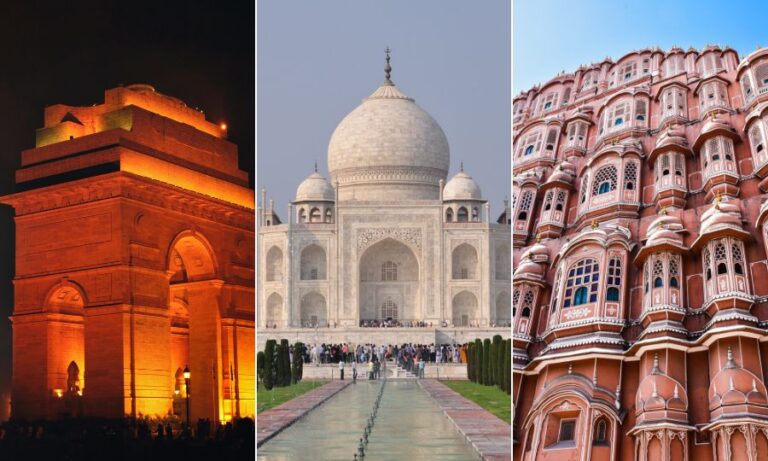
Have you ever been to the ‘Golden Triangle’ in India?
Confused about what a golden triangle is after all?
Well, everyone knows these famous cities—Delhi, Agra, and Jaipur. These are not just three cities on a map, but these are adventures through the heart of India’s rich culture, history, and architectural marvels!
Visiting the Golden Triangle would surely be the adventure of a lifetime! From the chaotic streets of Delhi to the incredible Taj Mahal and the vibrant city of Jaipur, the triangle truly has everything to offer to everyone.
The Golden Triangle of India is a popular tourist destination in the country, attracting the imagination of every traveler by providing a glimpse of India’s glorious golden past.
If you want to travel this circuit, then you have come to the right place, for we are going to help you get travel ready!
Let’s know more about this fascinating route!
Golden Triangle of India: A Journey to Wonder
For first-time visitors to India, these three major cities in the north can be explored in five days. Providing a taste of modern India, these three cities feature every kind of architecture, from palaces to havelis, and Mughal forts, these famous destination provides a deep dive into India’s rich history, culture, and craftsmanship.
Delhi is not just a city, it’s a feeling. The national capital of India has served several empires in medieval times, like the Delhi Sultanate and Mughal Empire from 1649 to 1857, which is why it remains famous for its culture, tradition, architecture, and history.
Delhi is a mix of both worlds, old and modern. Once you visit, you can find yourself immersed in the ancient forts and palaces and ever-so-inviting bazaars of Delhi. You can also find cozy cafes and corporate buildings, standing tall. This place truly bears the testimony of a brand-new age of development.
The majestic Red Fort is a reminder of the strong and powerful Mughal Empire. The crowded lanes of Chandni Chowk, the largest market in Asia, are a must-visit for shopaholics and food lovers.
The city of love, Agra is situated on the banks of Yamuna River in Uttar Pradesh just about 230 km away from the bustling city of Delhi.
The golden age of Agra city began with the Mughals in the early 16th century. Today, the city has developed into an industrial town, booming with the tourism industry along with leather, footwear, and others.
Agra can surprise you with the 8th wonder of the world—-the Taj Mahal, which is one of the three World Heritage Sites in India. Apart from the enigmatic beauty of the Taj Mahal, tourists come here to explore Agra Fort, a massive red-sandstone fort, Ram Bagh, Akbar’s Tomb, Jama Masjid, Guru Ka Taal, and so on.
If you are a foodie, Agra has a lot to offer you! From the famous Petha to Jalebi and Paratha to Mughlai Food, there’s truly so much!
Jaipur, the pink city of India is famous for its warm and inviting nature. People visiting this city effortlessly recognize all buildings painted in the color pink. The city stands for its unique architecture, palaces, art and craft, astrology, lavish cuisines, and traditional attire.
Jaipur’s bustling bazaars are truly a treasure trove of jewelry, handicrafts, and artifacts, each telling a story of the region.
How Does the Expedition of the Golden Triangle Begin?
As you know, this is one of the most traveled circuits in India, the Golden Triangle is triangulated in Delhi, Agra, and Jaipur. The route usually starts at Delhi and goes south to Agra and then west to Jaipur.
Reaching Delhi
Here’s what you can do:
You arrive in Delhi via train, road, or flight.
Travelers are greeted by the vibrant metropolis and the energy of the city.
Explore the bustling Old Delhi area.
Visit Red Fort, Lotus Temple, Akshardham, etc.
Reaching Agra
After exploring Delhi, you can continue your journey to the next destination, which is Agra. You have several options to reach Agra from Delhi:
Distance: 230 km approx.
Train, which usually takes 2 to 3 hours.
Private car or tourist bus, which usually takes 3 to 4 hours.
Here’s what you can do when in Agra:
Taj Mahal
Agra Fort
Fatehpur Sikri
Explore local markets
Attend cultural performances
Take heritage walk
Try local cuisine
Reaching Jaipur
After exploring Agra, your last destination on the Golden Triangle circuit in India is Jaipur.
Distance: 240 km approx.
By road, which typically takes 4 to 5 hours.
By train, it typically takes 4 to 6 hours.
By bus, which takes 5 to 7 hours.
Here are some top things to do in Jaipur:
Visit Amber Fort
Discover City Palace
Explore Hawa Mahal
Shop at Johri Bazaar
Visit Jantar Mantar
Experience authentic Rajasthani cuisine
Concluding Note
The Golden Triangle is best visited between the months of October to December and February to April when the temperatures are soothing and cool. Book your tickets well in advance if you are thinking about visiting during the winter.
With a plethora of vibrant culture, historical wonders, and learning, it is time to embrace India’s rich heritage.
Don’t you have a nagging feeling sometimes—the desire to learn something new? But the problem remains that you don’t feel like going through the lengthy YouTube tutorials due to overwhelming commitments.
What if I told you that you can by dedicating just 30 minutes of your day unlock a new world full of skills and knowledge? Interesting, right?
Nevertheless, you should keep one thing in mind—you probably won’t become the master of something in 30 minutes flat, but you can absolutely make significant progress by just initiating. Think of it like a daily investment. Dedicating just 30 minutes in your 24 hours can help you become consistent over time.
Making the Most of Your 30 Minutes
As kids, you were taught to learn something new each day. Remember when you participated in extracurricular activities, experiments in the classroom, or took part in cultural programs?
As you stepped into adulthood, you adopted a new routine that rarely changed.
Benedict Carey in his insightful book “How We Learn,” suggests that following routines can clash with our brain’s capacity to develop new skills. While some people may argue it’s worth considering that sometimes happiness depends on the capacity to explore and learn new things.
What Can You Learn in 30 Minutes Every Day?
Pick something from the following and give it a try. Let’s see how much you can tick off!
1. Playing Guitar
If you have 30 minutes each day, you can try out your favorite songs on the guitar or ukulele. You can find quick YouTube tutorials to understand the method. Although learning guitar or ukulele requires a little patience at the start, you can begin by learning the chords: A, D, E, C, G. Remember that quality and consistency are the keys to learning any type of instrument.
2. Practice Speed Reading
If you are someone who is a visual learner then speed reading speeds up the rate at which you take in the new information. If you do not know—speed reading is a method where you scan written information to understand the phrases and sentences instead of actually reading word by word.
The average speed of reading is 250 words per minute and with speed reading, you can go up to 400 to 700 words per minute!
There are speed reading apps that bold the letters which you need to emphasize to see the word in your head.
3. Artistic Pursuits
Engaging in artistic pursuits is a great way to go creative. Whether you wish to sketch with charcoal, mold clay, or use a paintbrush, art can be really fulfilling.
Drawing allows you to translate your observations and imagination into paper, and practicing this 30 minutes a day can refine your ability to depict textures, and emotions, and hone your skills.
Painting invites you to express your innermost thoughts and feelings on a blank canvas. The palette of colors creates a unique atmosphere, setting the mood, and weaving intricate narratives with each brushstroke.
4. Mindfulness
Agree or not, modern life is full of distractions and that’s why practicing mindfulness every day for 30 minutes will help you focus and improve your well-being.
Sure, you must have so much about mindfulness in videos, books, articles, conferences, and so on. But, if you commit 30 minutes or less each day you will notice positive changes in your stress level, mood, and general well-being.
All you have to do is:
Set your timer for 20 minutes
Sit somewhere quiet
Find a comfortable posture (your goal is to stay relaxed)
Start with a long breath in and breathe out
Recognize what it is like to be in this moment
Repeat this exercise two more times
5. Writing
Writing is a superpower that lets you express yourself either by journaling or narrating amazing stories. Let us tell you how writing can change your life in just 30 minutes:
Do you have a million thoughts in your mind? Writing can help you express yourself freely.
Do you love a good story? Try writing it yourself by creating your own world and characters.
Are you seeking for a more creative outlet? Maybe you should try your hand in writing poetry.
Writing allows you to organize your thoughts. The more you write, the better your thinking becomes. So, grab a pen and paper and see where the world takes you!
How to Learn a New Skill Every Day in 30 Minutes?
Following are some tips to maximize your 30-minute learning session:
Choose a Particular Skill: Don’t pick something too lengthy or too broad. Concentrate on a well-defined part of a bigger skill. For instance, instead of learning photography, you can choose to learn basic camera settings.
Find the Right Resources: The Internet is a bank brimming with incredible learning resources. So, you can explore online tutorials, informative blogs, or crash courses.
Become Action-Oriented: Try not to passively consume information. Engage with the material, take notes, try out new techniques, and complete the exercises.
Track Your Progress: Watching your improvement can be your great motivator. You can track your progress by keeping a journal, creating a progress chart, or tracking the lessons you have completed.
Ready to Get Started?
Studies show that shorter, focused sessions are more effective than longer, unfocused ones. That’s why 30 minutes allows you to dive into new learning and grasp the concept.
Pick something you have always wanted to try and dedicate your 30 minutes to watch yourself bloom. You might surprise yourself!
A messy individual procrastinates when it comes to cleanliness and order. Being an unorganized or messy person can lead to several problems and challenges in daily life. Where most see clutter, they see a beautifully lived-in environment.
Are you one of those who is constantly struggling against a pile of clutter and disorganization?
Some common issues that disorganized individuals often face:
The foremost consequence of being unorganized and living in an excessively cluttered environment is health hazards especially affecting the respiratory system, misplacing important documents and belongings, forgetting appointments, resulting in missed deadlines. A chaotic environment can be mentally and emotionally draining, increasing stress levels and anxiety, and low productivity. If you face such things, don’t worry you’re not alone. Like you, there are a number of people who struggle with having an organized surrounding. These kinds of individuals are in a constant state of chaotic disorder.
Being organized is an art. A skill that can be achieved by many. You can bid farewell to the chaos and embrace a more organized, stress-free lifestyle.do u want then read to the following blog? These skills can’t be achieved overnight but can be learnt by inculcating the following simple strategies and developing new habits-
Wipe the slate clean
Before you can truly get started with organizing, first you should address the existing mess, this can be a bit overwhelming. Set aside a dedicated block of time to declutter the mess i.e. getting rid of items you no longer need or use. Either donate, sell, or discard that doesn’t serve a purpose.
Embrace the Power of Categories
Once you are done with decluttering, it’s time to start organizing the leftover items. The key is to segregate groups of similar items together into categories that make sense for your lifestyle. To tackle this, you may adopt the “one in, one out” rule. This says that in order to bring a new item into your space, get rid of something you no longer need. This is one of the simplest principles that can help you maintain a sense of preventing clutter from accumulating over time.
Scheduling
Disorganization often arises due to a lack of planning and time management. Indulge a habit of scheduling important tasks, appointments, and deadlines. Taking a day out to organize the mess can be tiring and more time-consuming, rather take time out of every day and clean it after completing the work. This helps in clearing of mess staying organized and avoiding last-minute scrambling.
Conquer Paper Clutter
Paper documents can easily get out of place if left unchecked. Nowadays people use digital files or record documents which can be easily accessible and help to reduce physical clutter. Separate files are most easy and most used methods of organizing.
Embrace the Power of Lists
Listing is an activity which helps to keep your mind calm and focused towards your work. It’s one of the most tried and tested methods of increasing productivity. A list can be made for a daily to-do list, a grocery list, a packing list for an upcoming trip, writing things down can help you stay focused and on track.
Designate a “Home” for Everything
You should have a designated space for every category of things. Make a habit of returning the item to its original place after using it immediately. This is indeed the simplest practice that can prevent clutter from accumulating and save you valuable time searching for misplaced items.
Embrace the Power of Routines
A game-changer when it comes to staying organized is following a strict and practical routine. Make gradual changes in your daily routine to set aside a few minutes each morning to plan out your day. These small, consistent actions can add up to a huge impact on your overall organization.
Be Patient and Persistent
Finally, being organized is a journey, not a destination. Today’s generation is lacking in patience and persistence. It takes time and continuous effort to develop new habits and break old patterns. You might get discouraged by setbacks but be patient, and celebrate small victories. With dedication, you can gradually transform your living or working space into an oasis of order and tranquility.
Conclusion
In today’s fast-paced world, being organized is a necessity. This can’t be inculcated with an indication of struggle with an organization for a long period of time. We have discussed the ways to take care in order to stay organized. This has a positive impact on our lifestyle by prioritizing tasks effectively, and making the most of our time and resources. This eliminates the chaos and confusion, having a good mental space. Moreover, being organized engraves a sense of accomplishment and confidence, as we tackle challenges head-on and achieve our goals more efficiently.
Fitness is a concern of everyone in today’s world. Starting a fitness journey can be a difficult experience, especially for beginners. It can be even more challenging if you are overweight or too lazy. The thought of joining a gym, purchasing equipment or making plans for workout can be overwhelming at the beginning.
But the real game is consistency, hard work and dedication. To continue the fitness journey for a longer period of time is a real task. If you are confused about how to start your fitness journey then must follow this blog. In this blog, you can find several ways which will be extremely helpful to start your fitness journey.
Set Realistic Goals:
The very first step in starting your fitness journey is to set realistic goals which can be accomplished by you. Remember staying fit is not the same as winning a marathon overnight or losing weight within a week. It is about inhabiting some healthy habits to keep yourself fit and energetic.
You need to make small, achievable goals that can gradually be completed by you. Start with walking for 30 minutes a day or doing a few push-ups. As the day passes and you progress then go on increasing then go on increasing the intensity and duration of your workouts.
There are various types of workouts available over the web, in magazines and other sources. But it is important to choose the one which suits your needs and preferences. Different people may be facing different problems or diseases. So according to your own needs, choose the most beneficial exercise.
If you are just starting and present in the initial stage then go for workouts like yoga, Pilates or bodyweight exercises. These are lightweight and extremely helpful for the newbies. These workouts are gentle on your body which will help you in building strength and body fitness. You can be fit and flexible without putting heavy pressure on your body, especially your foot.
Create a Workout Schedule
Consistency is the key to achieving fitness. You need to create a workout routine that suits your lifestyle and stick to it. For a few weeks, you can start with a few workouts and build strength within you. As soon as your holy gets stronger increase the speed and time spent.
While exercising or working out you mustn’t forget to give your body time to rest and recover in between workouts.
You must know that enough water is required to maintain good health and fitness. By staying hydrated you can regulate body temperature and ease your joint pains.
Water helps in transporting nutrients throughout the body. Make a target of drinking atheist 8 glasses or 3 litres of water per day. You must increase your water intake during exercise or workouts.
Following the proper balanced diet is highly needed for fueling your workouts and hoping for recovery. You must add various nutrients to your meal like fruits, vegetables, whole grains, lean protein and healthy fats.
Although you don’t need a lot of equipment to start your fitness journey, so you just need to spend on some key instruments. Remember these instruments can act like game changers.
You must purchase a yoga mat, a set of dumbbells, a sweat resistance band and a pair of comfortable shoes and clothes if possible. These instruments will help you achieve your goals and make you stay fit for the rest of your life.
Finding a friend or family member during a workout session can be encouraging and motivating. You need to find someone you share fitness goals with and keep regular workout sessions together.
You can stay accountable and comfortable while performing workouts and exercise. These bonds help in providing enthusiasm for starting the fitness journey.
Track Your Progress:
Tracking your progress is an extremely essential part of your fitness journey. This will help you keep motivated and see how far you can reach.
Keep a workout record or use some fitness tracking apps to record your workouts, their type, duration and intensity. This will help you to know your progress over time and the amount of effort required to accomplish the work.
Wrapping Up
Starting a fitness journey can be challenging as well as filled with excitement, joy and experience. So make small goals achieve them and move forward. Follow the tips mentioned in the blog.
It is not only you visit the mountains for their landscape and snow-capped mountain vistas, but you also visit there for its amazing food. Many people have this misconception that food is not great and varied in the Himalayan region. But the reality is just different.
The Indian side of the Himalayas is shared by four countries – China, Nepal, Pakistan and
Bhutan. Therefore, it is no surprise that the food available in the Indian region
The Himalayan region is a mixture of all the regions.
There are endless numbers of times I have been to the Himalayas and every time I have fallen in love with the food in every region.
The Himalayan food is diverse and unique covering the cultural borders from all ends. The different foods that are available in the Himalayan region have influenced different cultures.
The Aroma of Food – What drives you to the Himalayas?
No matter which part of the Himalayas you visit, you’ll find unique culinary stories and secrets everywhere. India is extremely renowned for its food but still, the local Himalayan food is prominent over there.
These days, famous locations offer not only the local staple dishes but also other in-demand cuisines. You will get Himalayan food not only in the big restaurants of the regions but you will also get delectable dishes in the tin-roofed shacks throughout the Himalayan region.
However, what I feel is that the best part of the Himalayan food is the drooling mixture of Indian, Chinese, Nepalese, Tibetan, and Kashmiri cuisine which is very difficult to find in other parts of the world.
Another distinct aspect of Himalayan cuisine that has always drawn me to the high-altitude regions is its strong emphasis on using fresh greens and local herbs.
For example, if you will visit the interiors of Sikkim do not forget to try ‘Rai Saag’ which is very famous in these regions. This is the reason I always try to visit the interior locations of Sikkim and stay in the homestays where one can get the best local cuisines. And that is also at a very reasonable cost.
At high altitudes, the thin air with less oxygen leads to moisture loss in food. This is why food is always covered to retain moisture, which undoubtedly makes the spices even more aromatic.
One thing that is very common in the food of the entire Himalayan region, is the use of distinct spices in the majority of their dishes. However, this usage of spices is quite different from the taste of spicy food available in other regions of India.
Some Distinct Processes of Foods available in the Mountains
As I already said, the taste of the food in the mountains is quite different and unique as compared to other regions of India.
Now, you might be thinking, what makes these foods taste so different and unique from other cuisines by following a simple cooking process?
Well, definitely I will say, that climate plays a major role in the taste of Himalayan food as the ingredients available in these regions have a distinct taste.
While exploring different parts of Nepal, I have witnessed that people over there cook the meat first and then dry them and store it. Now before serving, they cook it again. Now this process definitely will change the taste of the food.
If you will visit the North East part of India, the use of chilli is very common in their dishes. Like Delo Chilli and Naga Chilli are quite famous all over the world.
Most Popular Dishes in the Mountains
My entire blog would be incomplete if I do not elaborate on the most popular dishes of the mountains that makes them so special. Many say, they visit mountains for the landscape.
However, if you will ask me I will always say definitely for the landscape and also for its delicious dishes.
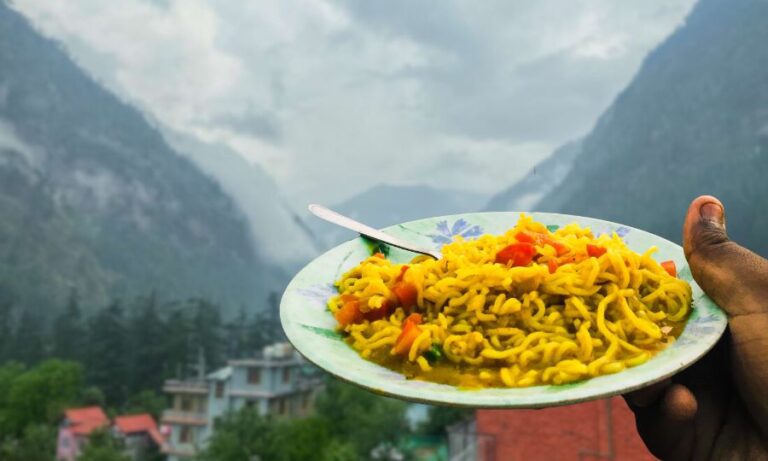
Maggi: Trust me, your visit to the mountains will always remain incomplete if you do not have a plate of Maggi noodles. It doesn’t matter whichever part of the Himalayas you are in, you will always get a plate of hot heartwarming Maggi noodles.
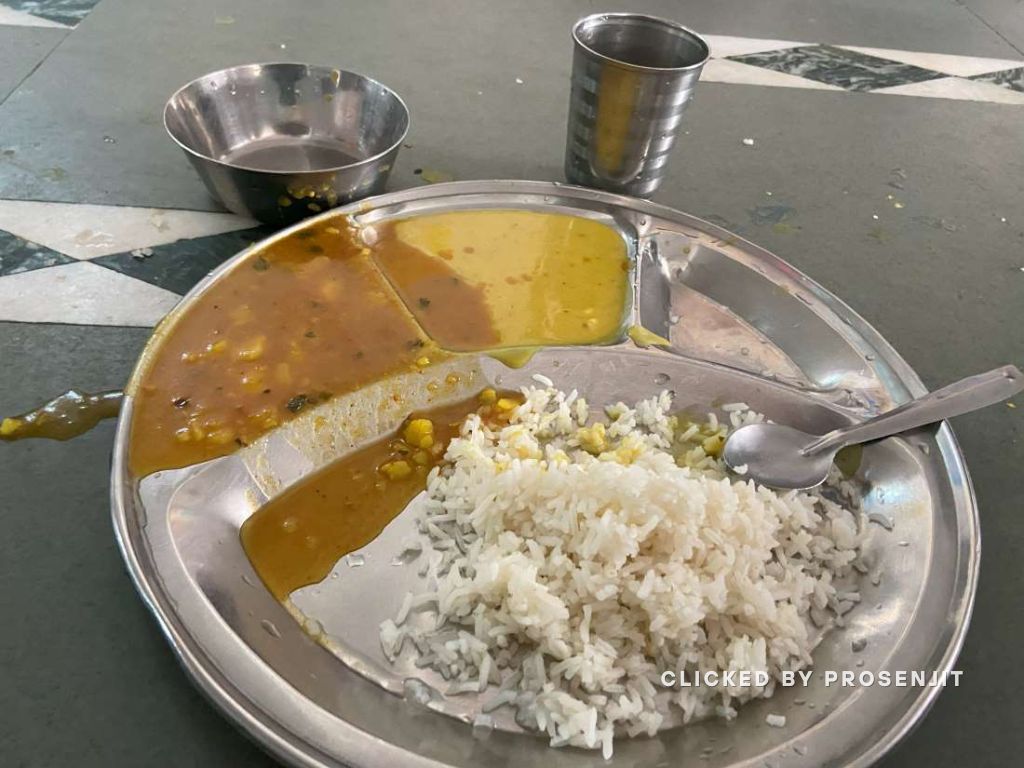
Dal Bhat (Lentil Soup): One of the staple dishes in the Himalayas is Dal Bhat where steamed rice is served with cooked lentil soup. It is often accompanied by pickles, dried chillies, and vegetables. After a long tiring hiking day, when you are served with a plate of hot ‘Dal Bhat’, surely the taste is heavenly.
Momo (Dumplings): Tibetan momo are not only famous in Sikkim and the North East but are also quite famous in other Himalayan region as well. These are steamed flour dumplings with fillings like vegetables or meat. Momo definitely has a Chinese influence and is served hot with red chilli sauce and hot broth.
Ema Datshi: If you are in Bhutan, you simply cannot miss their national dish, Ema Datshi where Ema means chilli peppers and Datshi means cheese. It is a spicy stew made with chilli peppers and local made farm cheese along with spring onions, salt, and oil. The moment I had Ema Datshi, I simply fell in love with this heartwarming simple flavour.
Rajma Chawal: If you are visiting the regions of Himachal Pradesh and Uttarakhand, the most famous dish is Rajma Chawal. It is a combination of steamed rice and rajma or red kidney beans in a thick gravy flavoured with Indian whole spices.
Tea: And last but not least, a cup of tea in the mountains is known to be the king of all dishes in the mountains. Tea is no longer served as a mere beverage in the mountains but is a bucket full of emotions.
Apart from the above dishes, dishes like Alu Paratha, Wai Wai, and Dum Aloo are also very famous. Apart from these authentic dishes like Yakhni, Madra, Sukuti, Tudkiya Bhatha, etc are also quite popular among the explorers.
So for your next journey to the mountains, not only engulf the beauty of its landscape but also enjoy its local food!!!
Featured Image @prosenjit08 and Gopal Bhatia/Canva
Every year, when the temperature soars above forty degrees, we usually think of going somewhere cooler. I’m no exception. But once I turn on my AC, I postpone my plans.
Lockdown has increased views of several YouTubers and I seem to have made a significant contribution to that. My YouTube viewing journey has really taken off since the lockdown days. I’ve devoured so many travel videos that I feel like I could give people a guided tour of anywhere in India!
The videos definitely inspired me to travel, but sometimes laziness kicks in. That’s when we all need a little external push.
Sometimes, that push can be as simple as an Instagram post by a friend trekking in the Himalayas.
That was the push I finally needed to make the move. Now it was time to explore the unexplored.
But where to?
I sat down with my mobile, iPad and started watching travel videos on YouTube and simultaneously did the travelling calculation.
After watching several videos on the Internet, I finally made up my mind that this time its going to be a trek. I had been wanting to go out on a trek somewhere beautiful and is achievable solo, so I continued scouring the internet and watching videos.
Other than the Instagram photos I have several more reasons, one of which was to put my latest camera and video gear into test, before their battery dries out.
I needed to test my new mirrorless camera and my new DJI Mini 2 drone, which I had recently purchased. However, due to my proximity to the airport and height restrictions, the only viable place to fly the drone was from the mountains.
My first drone flight was from Matheran, but that exploration was cut short due to an encounter with a monkey and the rain. Yes I did went there post monsoon.
Taking all these factors into consideration, I carefully analyzed the Indian map, the climate, and the potential encounters I might have with non-domestic animals.
After thorough consideration, and watching over 20 hours of video in 1 week, I finally settled on the Kheerganga trek.
The Kheerganga trek is considered an easy trek. The nearest well-connected town is Kasol.
With hope in my heart and salary recently credited to my account, I booked my flight ticket to Delhi, a Volvo to Kasol, and a room for one day in Kasol.
Journey to Kasol
From Kolkata to Delhi: The Beginning of My Adventure
I started my journey from Kolkata and arrived in Delhi early morning. My bus was at 5:30 PM, so I needed to rest.
Exploring Delhi Before Heading to Kasol
Having a free place to take shelter for a few hours was a relief. I had already informed my friend about my arrival, and he was ready and waiting at home.
Visiting Delhi after a long time was a bit exciting for me. I decided to use this opportunity to explore India’s largest metro.
I started with the express route and then reached Rajiv Gandhi Chowk, where I decided I needed some sunglasses to look cool while taking my selfies, so I bought two pairs.
Connaught Place
The temperature was around 40 degrees, and it was 11:00 AM. With so many restaurants in sight and hunger in my tummy, I had to eat. To satisfy my appetite, I went to a restaurant and ordered a Maha Thali, which I finished. Then, I called my friend to warn him about my arrival.
Rest at Friend’s Home
Afterwards, I went back and boarded the metro, reaching the station where he asked me to meet him. My friend came to pick me up in his car, and finally, I reached his home, empty-handed. They welcomed me, and after an hour of talking and freshening up, they asked what I would like for lunch. I initially hesitated but later agreed to stick with rice, rotis, dal, and sabji, I guess that’s a complete lunch too.
By some miracle, I managed to conquer this “after-lunch-lunch” as well.
Race to Catch the Bus to Kasol
We then went out to meet our mutual friend, where I ended up spending too much time, almost making me late to catch my bus. Kashmiri Gate, from where I was suppose to board the bus is around 1hr 15mins away, and I had 1hr 20mins in hand. May be Just in Time strategy is not applicable every where.
As I was riding through the city of Delhi, my head was thinking about the intro of the movie Darjeeling Limited, where Bill Murray missed his train. However, I was not that unlucky.
I had to call the bus and ask them to wait for a couple of minutes, but they refused. Luckily, I reached the bus stop just two minutes
I finally reached Kashmiri Gate and boarded the bus just in time(almost), and the seat beside me was empty, a perfect place to keep my backpack. And then I was off to Kasol.
The bus halted at some place for dinner, but as I was already given Puri achar for dinner by my friend’s mom, I didn’t have to disembark.
The Road to Kheerganga: Arriving in Kasol
The bus rumbled through the night, passing Delhi and Chandigarh before I drifted off to sleep. By the time I woke, I could feel that the bus had halted, and it was almost morning. Checking my watch, it was around 5 am.
The bus had a pit stop for a tea break, and the best part was that we were near Kasol. I grabbed my sweat jacket from my backpack and stepped off the bus for a break, greeted by the roaring river.
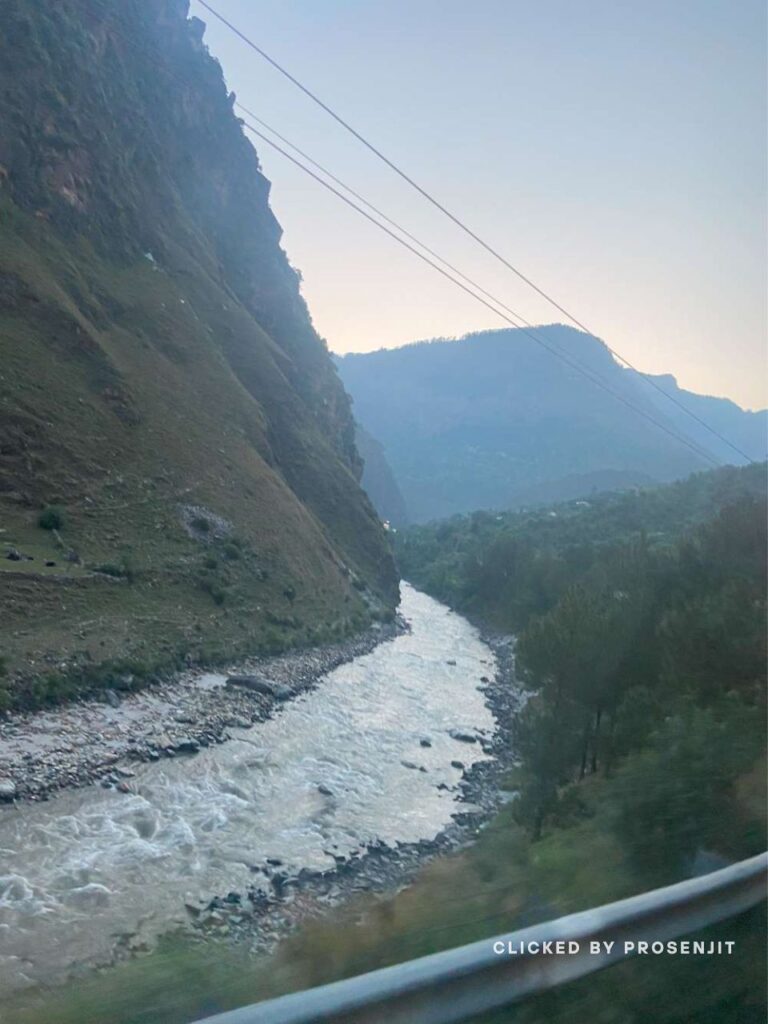
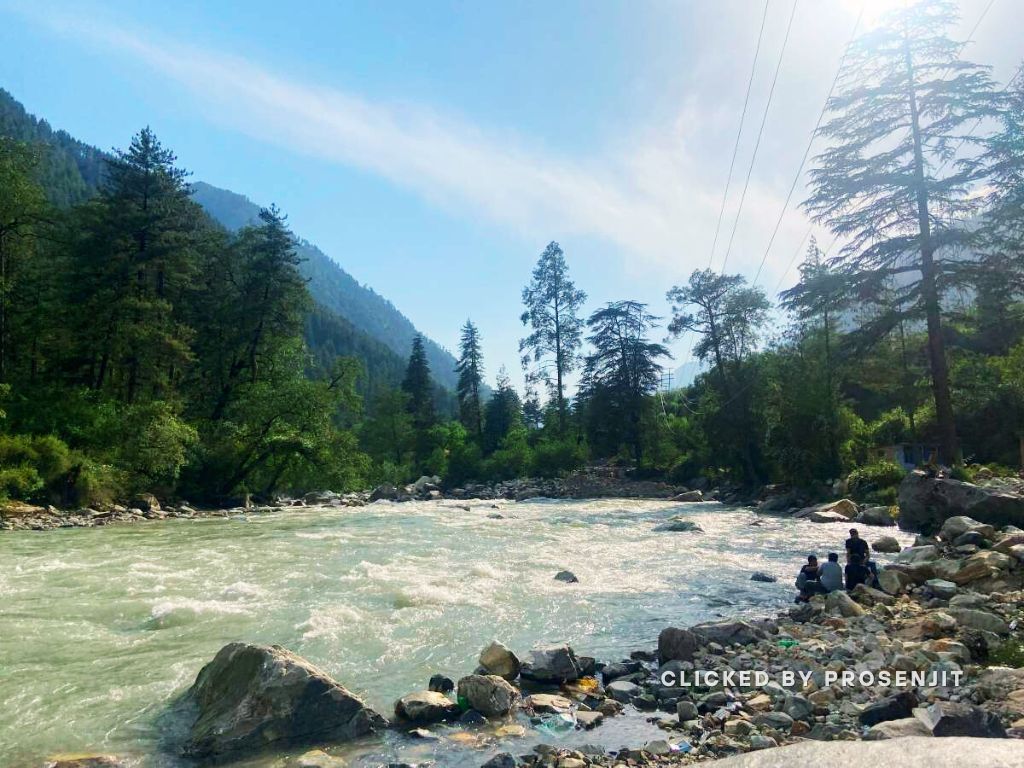
Parvati River, on way to Kasol
“Beauty with fury.” It was river Parvati.
I took a deep breath. Yes the air was pure, just exception of few exhaust from moving cars and buses. Finally, back in the Himalayas.
After spending a few minutes enjoying the breathtaking panorama of the Himalayas, I boarded my bus and resumed my journey to Kasol. But my enjoyment of watching the scenic review didn’t stay enjoyable for long as a familiar rumble deep within my gut announced a different kind of scenery appreciation.
I must say I am a routine person, and my stomach knows it too. And with all those input I took yesterday, it was quite expected.
So it was time for operation “Relief”, the plan was to reach hotel as fast as possible and hopefully they would give the room or at least a toilet.
We arrived at around 7 am. So, my first order of business was to head to the hotel. Hopefully, my room would be available, and I could comfortably tend to my morning pressure.
Being a lowlander, navigating the mountains, especially uphill, was always a challenge. As soon as I got out of the, I pulled out my phone and typed the name of my hotel into my map to get directions and operation “Relief” was on.
On my way, a few people were trying to sell me something, seem like some local candy, but I declined saying “I am too big for that and my body was urgently seeking relief.” I don’t know they gave me a shocking glance.
After a short strenuous uphill climb, I finally reached the hotel, where nobody seemed to be around but a furry dog, who could I think understood the pressure I was feeling.
My Stay at Kasol
My check-in wasn’t until 11 am, and it was only 7 am. However, after a minute, a man appeared. What a relief it was.
I informed him that I had a reservation, and he asked me to wait, which i would happily do, but I was under heavy pressure and I was in no mood to sit around. Thankfully, they have a toiled outside too, by outside I don’t mean outside, but a toilet just outside the hotel’s main premises.
So, I asked, “Can I use the restroom?” to which he replied, “Sure.”
Without even bothering about my belongings, I hastily locked myself in the restroom and relieved myself.
Operation “Relief was successful”
Finally free, with a few hours to kill before I could check in, I sat outside and admired the picturesque hamlet. I was joined back by the furry friend, who didn’t seem particularly interested in me and left after a few minutes.
Deciding not to waste any more time, I resolved to head to Manikaran and make the most of my stay. I asked the hotel caretaker to look after my belongings, and he happily obliged, stashing them in a nearby room.
Considering it a warm-up, I opted to walk to Manikaran.
Day Trip to Manikaran from Kasol
I began my walk to Manikaran, with the camera slung around my neck. The beauty of Kasol mesmerized me; a flowing river, a shining bright Sun, and the majestic snow capped Himalayas, the picture is straight from a drawing book. I snapped almost 20 photos on my way to Manikaran.
After a solid hours of walking, I finally reached Manikaran. It took almost 1 hour 15 mins. I said “Not bad for a guy from city;”
The beautiful Gurudwara and the mighty Parvati River flowing in full force are sights that will stay in my memory forever.
Manikaran
According to Sikhs, Guru Nanak ji came here with his disciple Mardana and they were suppose to cook food for langar, however they didn’t have any source of fire. Guru Nanak then asked Mardana to lift a stone and as soon as he lift the stone, a hot spring appeared.
According to legend, Lord Shiva and Goddess Parvati liked this place so much that they stayed here for over 11,000 years. During their stay, Goddess Parvati once lost her Mani (precious stone) and asked Lord Shiva to retrieve it. Lord Shiva asked his attendant to bring it, but he failed, making Lord Shiva angry, and he opened his third eye. This led to turbulence all across the universe. Seeing this, an appeal was made to Seshnag to pacify Lord Shiva. Seshnag hissed, giving rise to boiling water and resulting in the emergence of the Mani, thereby making Goddess Parvati happy and pacifying Lord Shiva.
I went to Gurudwara, bowed and paid my respects at the Gurudwara. After sitting for a few minutes in , I went to the Manikaran Shiv Parvati Mandir, where I saw people buying rice and boiling it in the hot spring. I bowed and paid my respects and headed back to Gurudwara langar for lunch.
An interesting fact: The rice in the Gurudwara langar is cooked using the hot spring.
Lunch at Manikaran Gurudwara
The lunch was delicious and then it was time to head back to Kasol following the same route took earlier to reach Manikaran.
Finally after an hour of walk I went back to my hotel where they handed me the room key. I was feeling tired and was tensed about what to do next morning, so I started surfing the internet once again for possible weather conditions, what to expect on the trek, and which route to follow.
I got more tensed as few of the videos even mentioned possible encounter with a Himalayan bear. “What was he saying?, a bear” I have never seen any bear post Baloo’s appearance in Jungle Book.
So what if I encounter a bear, I looked at some of the videos, after encounter with monkey, I didn’t want any type of encounter with any kind of animals.
I was a bit concerned about my ambitious solo voyage, and a part of me was hoping for a divine intervention to halt this trek.
But no such thing happened, the weather was supposed to be sunny, however rain was expected the very next day. Without worrying too much, I decided to take my afternoon nap and finally woke up at 4 pm.
A Hike to Chalal Village
When you are trip, you must not waste time taking nap. So, it was time to explore Kasol.
Chalal is a small village, and the hike is beautiful. This wasn’t initially part of my plan, but I was advised by one of my colleagues, a professional travel vlogger, to go for it.
On Way to Chalal Village
With my bag on my back, I set out. But first, a quick prep for tomorrow. The first thing I grabbed was a plastic raincoat – well, that’s it. I have everything else.
Then I continued my walk along the beautiful Parvati River, strolling through the pine trees and occasionally encountering a few humans.
Finally I found a rock by the river which was not occupied and was perfect place to feel the river.
Parvati river- On way to Chalal village
Wow, what a location! This view is amazing. You could easily lose track of time just sitting and enjoying it. A perfect place for digital detox. Words are few to suffice the view so serene – A beautiful mountain river gushing down the hill, its water sparkling like a white pearl. The setting Sun bathed the river in golden glow. Tall green pine tress standing sentinel all around and the majestic Himalayas piercing the blue sky.
Well, look at this happy little fern by the river! So many… uh… enthusiastic fronds? Maybe it’s trying to high-five the whole world? ️
After digitally detoxing myself for few minutes I came out of my poetic mood and entered into reel mode and started taking photos, and then I resumed by journey
This scenic walk through the pine forest, by the river, is a once-in-a-lifetime experience. After walking for a few hours, I reached the village and explored it and then it was time to head back home. By home I mean back to Kasol.
I crossed the river, and then it was a tiring uphill journey back to Kasol. This time, I was on the road, so no river.
Finally, I reached the town, and it was time for dinner. I took out my phone and meticulously searched for vegetarian restaurants, finally settling on one for Veg Biryani(no argument please).
Then again, I walked back through those tiring uphill roads to my hotel room. As soon as I reached my room, it was time to charge my gadgets.
Solo Trek to Kheerganga
Finally, the day arrived – the reason for being in Kasol. I successfully completed my morning routine and checked out from my room. However, I couldn’t carry all of my luggage with me, so I left it at the hotel that I had booked for the last day.
After handing over my luggage, I began my walk with dilemmas. I was still unsure of my stamina. So I created a few alternative plan if the main plan doesn’t work.
So the first Option 1 was, if the weather turns bad, I’ll return and explore Kasol,
the second was, if the weather is okay but solo climbing feels treacherous, I’ll return and explore Kasol,
and the last option is when everything is fine and smooth, I’ll start my climb.
Now that I have all three options, I have little less to worry or disappoint.
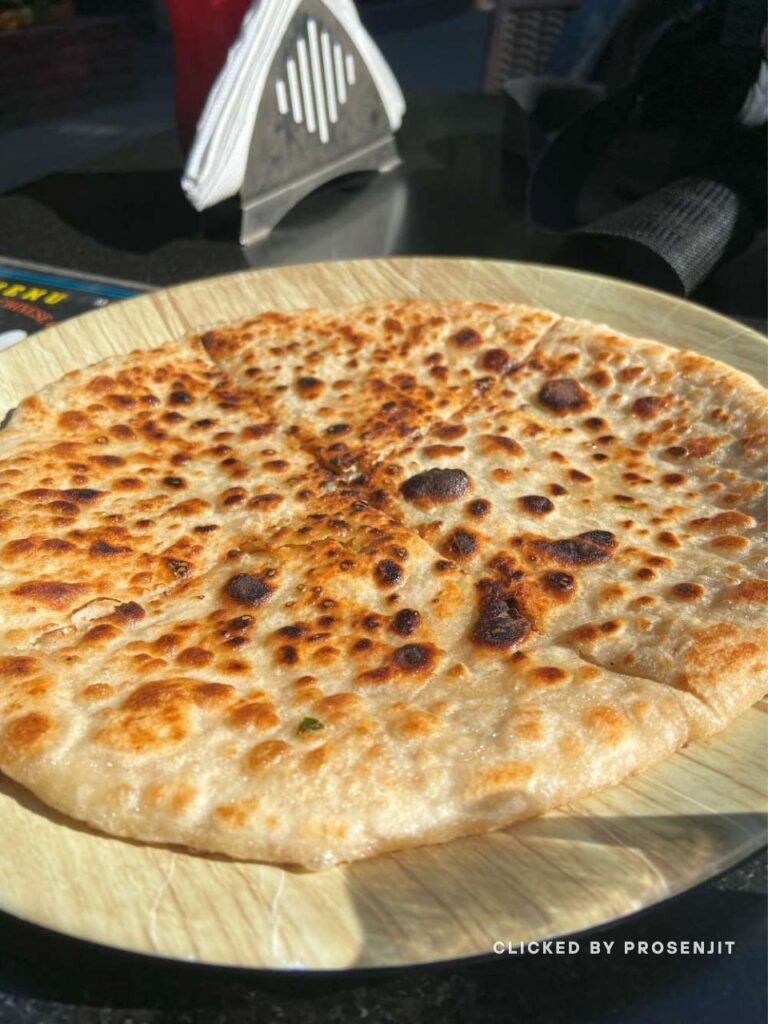
Before starting my journey I finished my breakfast, the aloo paratha was delicious.
Aloo Paratha breakfast before beginning the trek
After a short wait at the Kasol bus stand, I decided to walk to the taxi stand and book a taxi instead of taking the local bus.
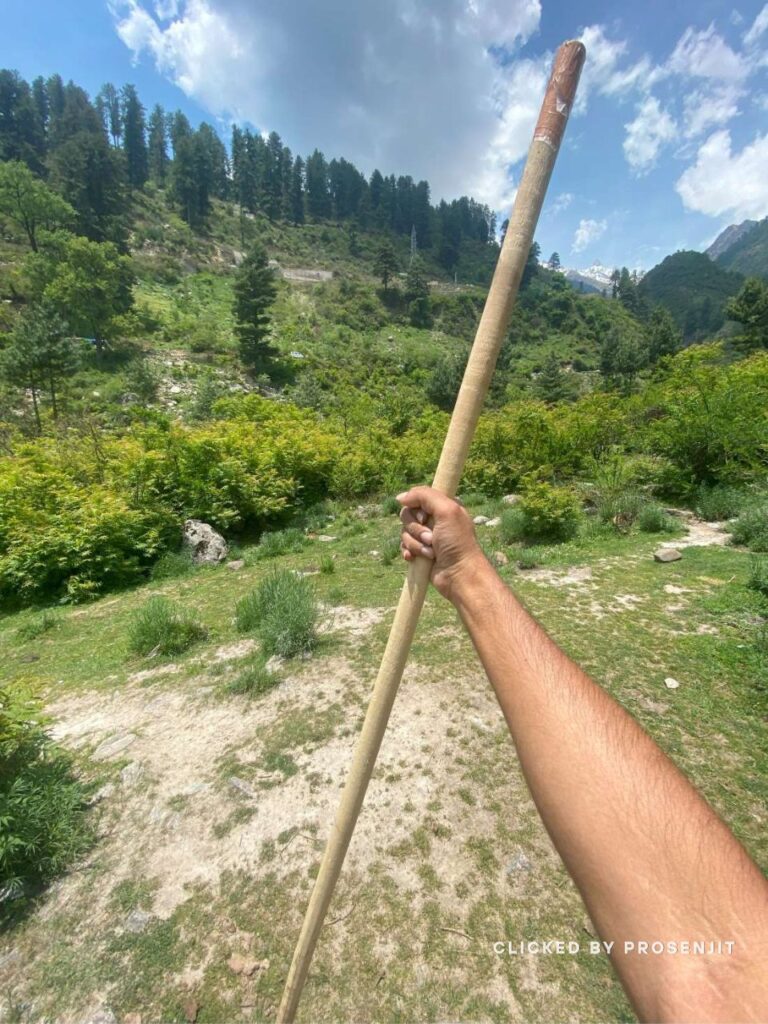
Within minutes, I was on my way. I had a brief chat with the driver, who surprisingly arranged for a camp booking and provided me with a trekking stick from a store he knew. I paid the half price for the camp, and I was on my way.
Climbing via Kalga Village
After analyzing and listening to YouTube experts, I decided to start my trek via Kalga. The trail is covered with trees, making it perfect for an uphill trek.
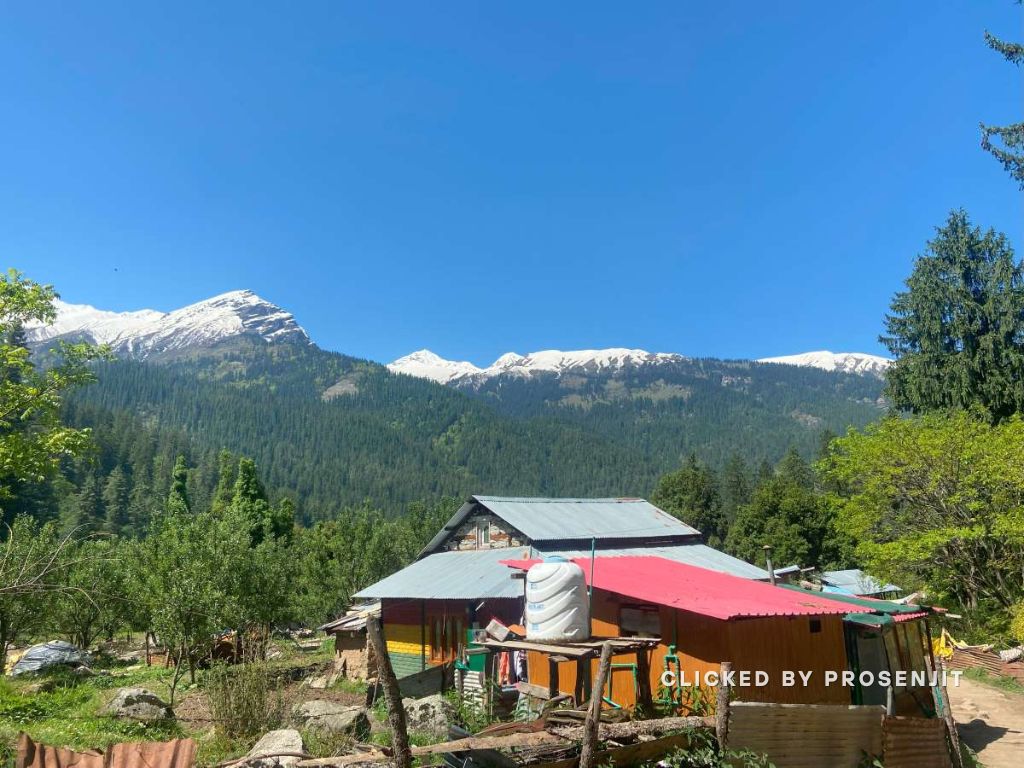
Snowcapped mountains as seen on way to Kheerganga
Sure, I’ve totally climbed Lohagad, (almost) and walked a whole kilometer to crazy high Tso Moriri (it was high, I must say), but this? This was a whole new ball game for me.
Walking on plains and mountains is not the same. I walk several miles every day, but climbing is a different challenge. So, the first part of my trek involved climbing a few stiff feet, and I became so tired that I was on the verge of giving up and turning back.
Then, I encountered the first food stall, actually a group of food stalls and shops. I sat down, bought a bottle of water, and a few energy drinks.
I just sat and breathed.
After resting for a few minutes, I gathered my strength and continued my journey. I was determined to reach to the top.
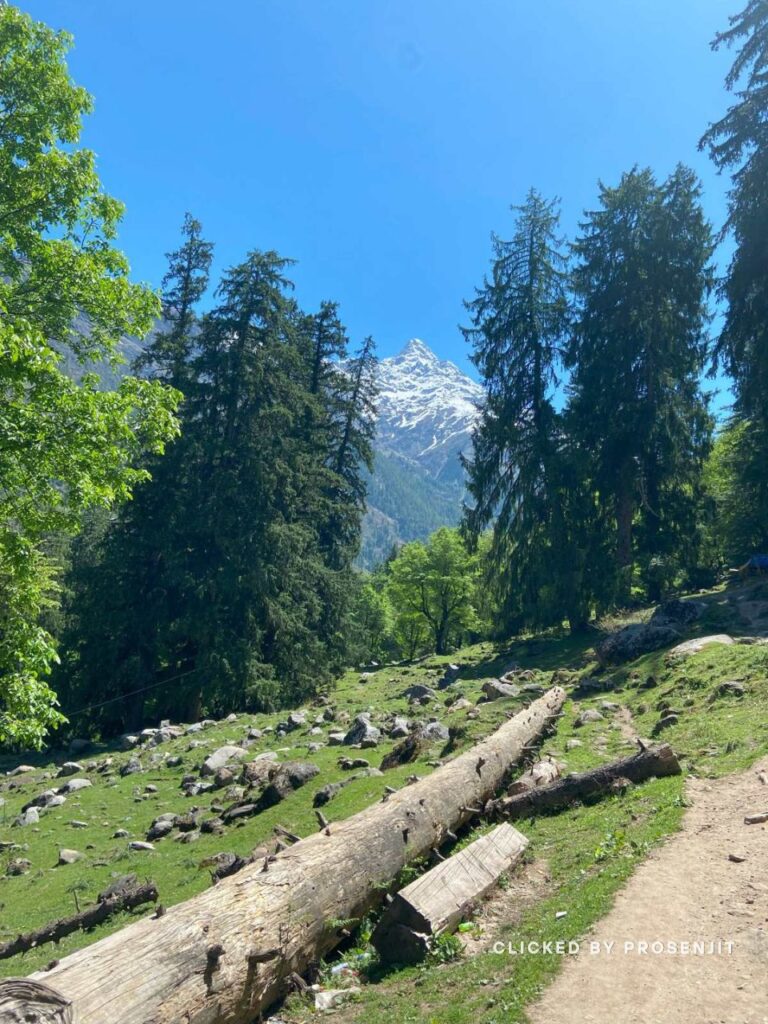
The trail to Kheerganga was mesmerizing, with greenery and snow-capped mountains in the vicinity. I took out my mirrorless camera and started taking photos every few minutes because each path had its own beauty.
View on Way to Kheerganga
After walking for a few more minutes, I encountered some people, and I was relieved to know that I was not alone, even though it was a weekday.
Streams, waterfalls, mountains – what more can I say? My bag was heavy, as I was carrying few camera gears.
I kept walking, but I tired out again. Taking a break on a rock, I watched the amazing Himalayas and enjoyed few minutes catching my breath as I say two guys walk past me. I started questioning my ability, my stamina, as I saw two young guys walk past me.
Later I resumed my trek, saying “We each have our own pace, I am not competing,” until I reached the next food stall, where I ate the famous Maggie noodles and bought a few chocolates and energy drinks.
Its a real bummer to see people throwing wrappers and plastic bottles all through the trek. I mean why???
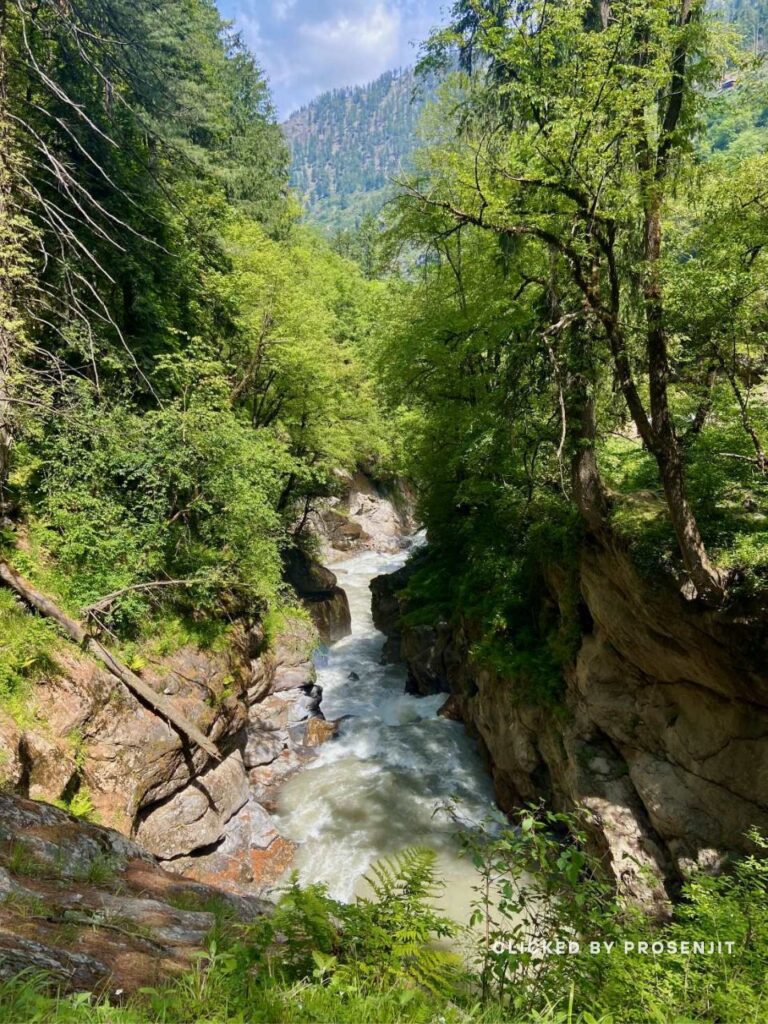
After a few hours of walking, I finally heard the Parvati River roar, which felt good, as if I found a known companion.
Then there, I came across a sign.
The sign read: “Amihay Cohen (RIP) Here fell and died a dear man and good friend. Please be aware of shortcuts…”
Then I sat down at one of the rocks catching my breath and I started thinking about the sign. My mind felt heavy, and for a few minutes, I realized the entire trek is synonymous with life.
Sometimes, in life things get difficult, and we feel like giving up, while some positive moments boost us up and help us move forward, with more enthusiasm. Sometimes we even try to take shortcut winning and sometimes we are not so lucky.
With a slightly heavy mind and keeping the warning in mind, I strengthened my grip on my trekking stick and continued my trek.
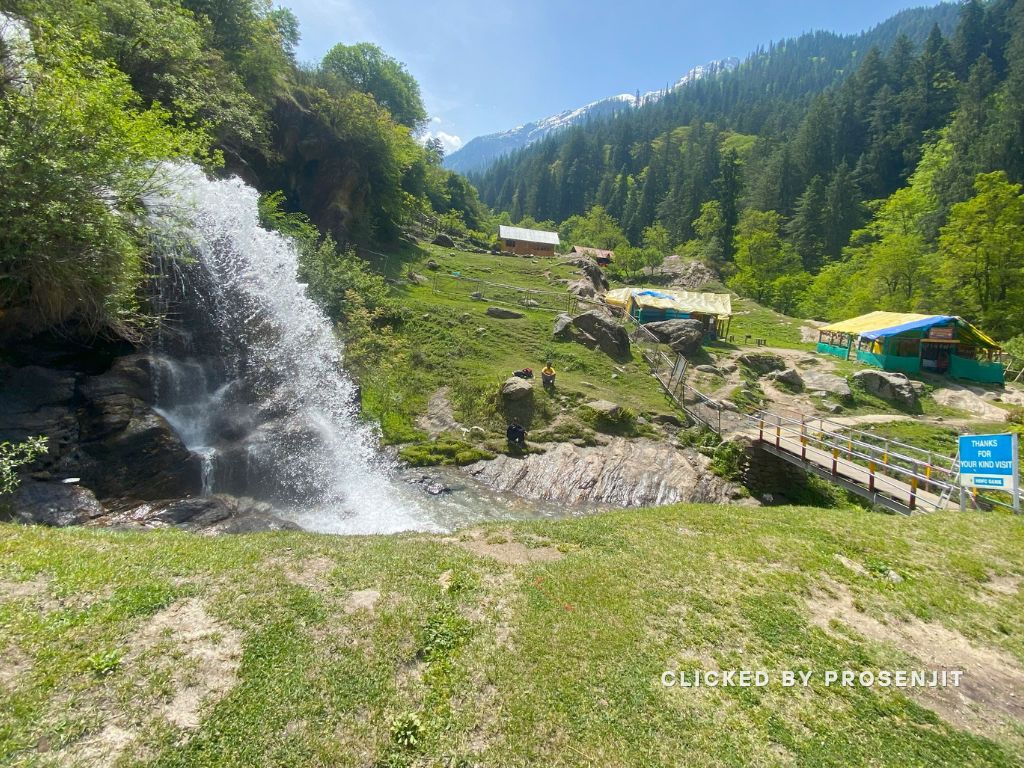
After a few hours, I reached the point where the Nakthan route and Kalga route intersected. It was almost 1 PM, and I reached a point that had a waterfall and quite a few food stalls. Upon asking how far Kheerganga was, they replied “It would take around an hour to reach Kheerganga”.
Gathering some courage and drinking more energy drinks, I continued my final phase of my Kheerganga trek, and it was even steeper.
After walking a few more miles, I noticed the two boys who overtook me earlier were resting. Then I guessed I am not that slow after all.
Reached Kheerganga
After a tiring 5 hours and 30 minutes trek, I finally reached Kheerganga. I was exhausted and wasn’t ready to trek any further. The sight of the camp made me weaker. I was ready to enter into the first tent I saw, but I had already booked one before the trek.
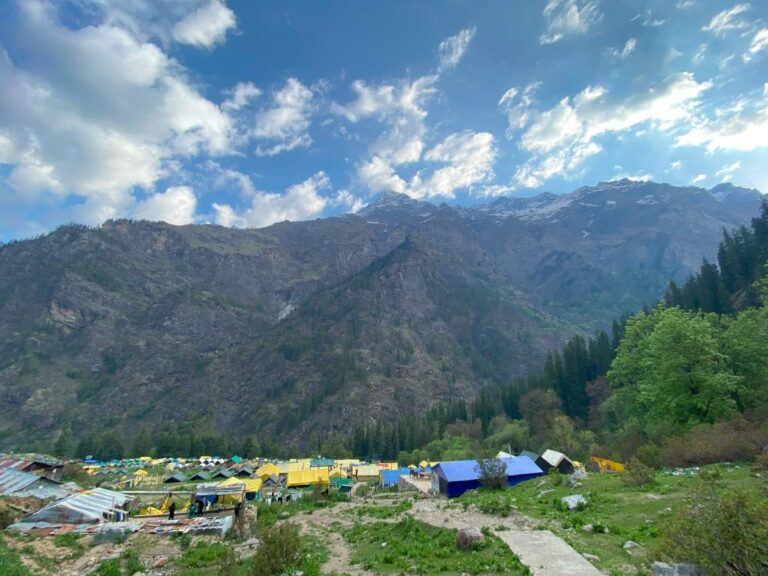
Kheerganga Camp
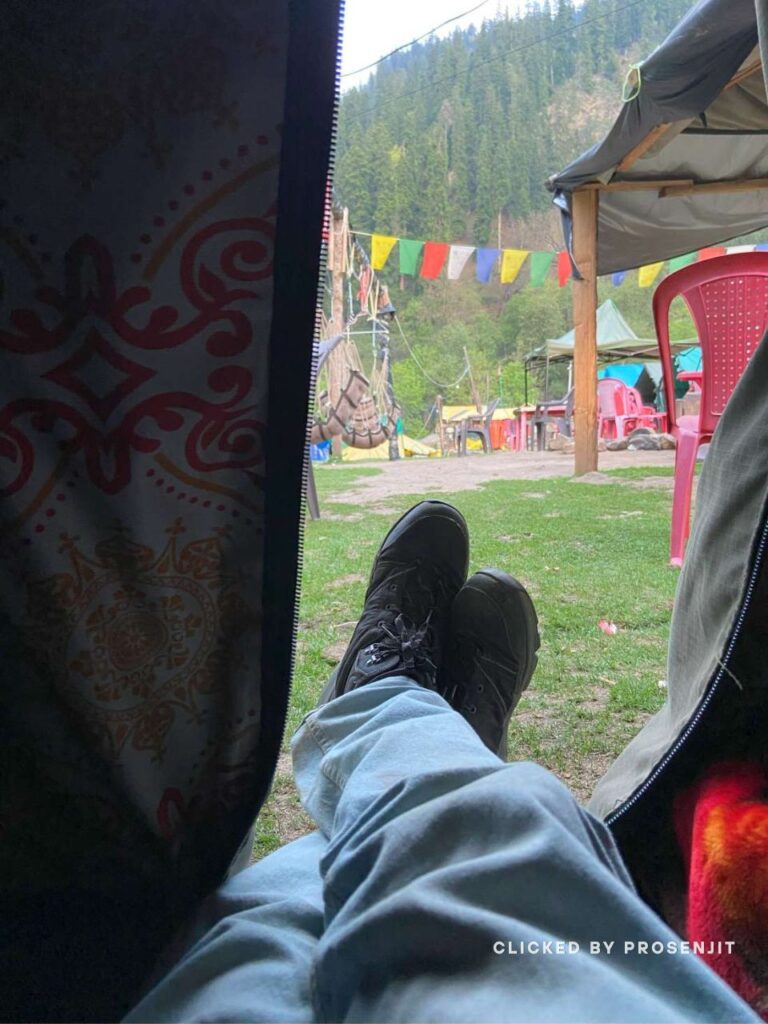
Luckily, the tent I booked, thanks to the driver’s help, was closer. Stepping inside felt like entering a haven after the long trek. They offered me a complimentary tea, which I gratefully accepted, then I asked if anything was available for lunch, in which they replied “we can make Magie”. And I said “yes” to the third round of Maggi.
To my surprise, the tent had Wifi, and I was able to call home.
After taking photos of the Maggie and consuming it, I went to take a few hours’ nap. I woke up at around 5 pm and was too exhausted to explore the place in the evening, so I continued strolling around the camp. The beauty was magnificent: snow-capped mountains, horses grazing over the green grass, furry dogs staring at me.
After taking a few more photos, I went back and took another nap, finally waking up around 8 PM. Then the camp’s staff came around 8:30 PM asking whether I wanted to have dinner inside the tent or outside. “Well, yes, of course, inside the tent, if that’s possible.” I said to him.
Rajma chawal and roti—it felt awesome, and it was unlimited, I think, but I was happy with the initial quantity. After finishing my dinner, I headed out to catch a glimpse of the sky, and it was cloudy I gave up on my hope on star gazing. So, my next plan was to reach Kheerganga temple and start my descent as early as possible.
Stargazing at Kheerganga: First Milky Way Experience
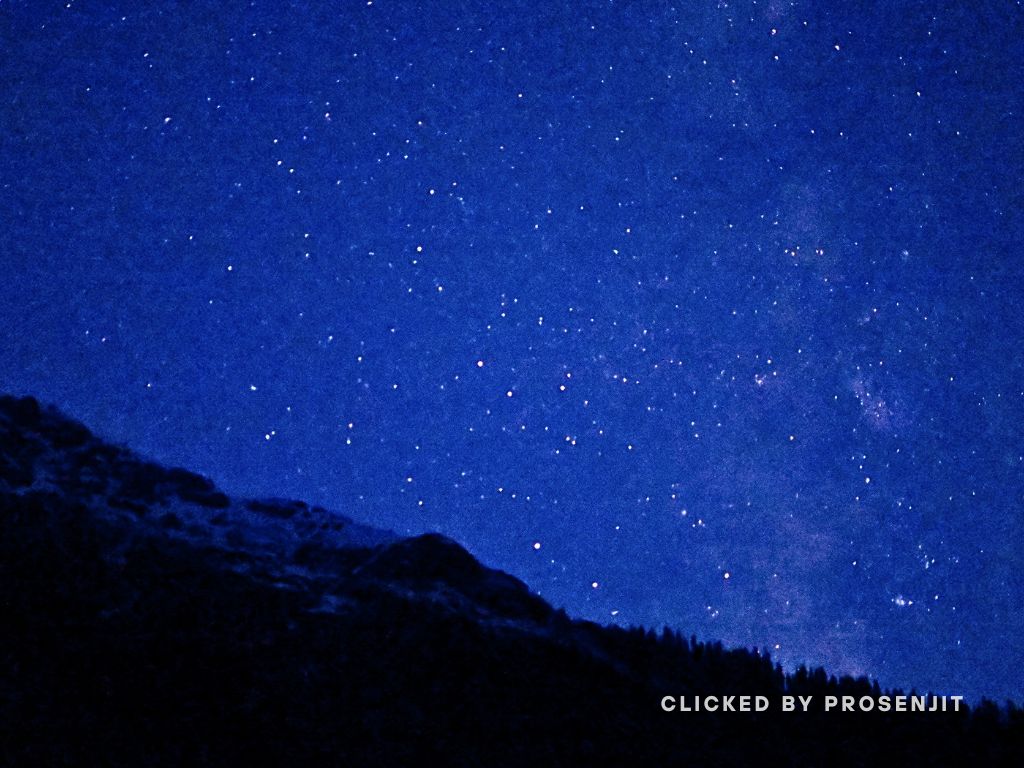
With no hope of stargazing, I fell asleep. But for some reason, I woke up around 3 AM. I thought, let’s have a look outside.
Stargazing at Kheerganga
My heart overflowed with happiness as I experienced the Milky Way for the first time. My previous experience was in Kolkata’s Birla Planetarium.
I went outside, stood there, and kept staring at the beautiful sky, marveling at its vastness and beauty. My eyes got filled with tears. This was perhaps the most beautiful part of my trek. The light was dimly lighting the mountains, to be honest the feeling of seeing it can not be described in words it was just WOW!
Before the Milky Way would fade away, I realized its time to capture the memory. I quickly head back inside my tent and grabbed my camera and mobile.
I tried capturing what my eyes were seeing, but it wasn’t working. And I hadn’t brought my tripod. I attempted to attach my camera to the mobile tripod and managed to get some long exposure, slow shutter photos. Mostly it came out blurry.
Though the photos weren’t satisfactory, the experience was. I headed back to my tent, with my mission 50% successful; only one thing remained, flying my drone.
Final Part of the Kheerganga Trek
After waking up, I began my ascent to Kheerganga fountain and the temple. I noticed that the Kheerganga hot spring was partially closed, but there were arrangements for taking a bath.
I visited the Shiva temple, and then it was time to take off. With a bit of fear and doubt in myself, I started my drone. I have to admit, I was quite scared of losing it, so I flew it for only about 5 minutes and captured some beautiful views of the valley.
Heading Back to Barshaini via Nakthan
I returned to my tent, packed my belongings. Although there was complimentary breakfast available, I opted not to take it and start my descent early.
Finally with camera full of photographs and mind full of memories, it was time to say goodbye to Kheerganga and I began my descent to Barshaini village.
Continuing my downhill journey, this time my plan was to descend via Nakthan. I stopped at a food joint and had aloo paratha for breakfast. There I had chat with the shop owner who warned me about the Nakthan route. The Nakthan is a lengthy route and also difficult. However, I had already made up my mind, why view the same thing twice.
Gradually, I started realizing that it might have been better to return via Kalga, which was a bit simpler. The descents here were brutal, with some drops where so sharp that I had to literally grab onto trees, rocks, and whatever I could hold onto and slide down carefully. I was a first timer afterall.
Parvati River on way to Nakthan
After a few hours of walking, I crossed a dangerous bridge, below which the roaring Parvati River was flowing. The roar was much louder, hence the word dangerous. And then I reached Rudranag, which had a beautiful Shiva temple.
Rudranag
The journey continued, with the heat taking its toll, making it more difficult. The trail was slippery at some points, adding to the adventure.
After hours and hours of walking, I reached Nakthan village. I sat at one of the food stall and grabbed few bottles of energy drink.
Nakthan Village
I was so tired that I briefly considered staying there for the night as they had accommodation facilities.
However, I regained my strength and courage and continued my journey. Finally, I caught sight of Barshaini dam and reached there by 12:08 PM.
Thanks to my shoes and the stick, I successfully completed my first solo trek.
Completed Solo trek to Kheerganga
Heading Back to Kasol
After descending, I grabbed a mango drink from the first shop I could find and headed to the Barshaini taxi stand. It had started drizzling, and I thanked God for allowing me to complete the trek without rain. It would have made the trail slippery and more difficult.
Finally, I reached Kasol and returned to the new hotel I had booked for that day. They had kept my luggage safely, and it was finally time for a nap. Maybe I would explore Kasol in the evening.
I was too tired, and I think God understood that, as it continued raining that night in Kasol.
Checking Out of Kasol
I woke up to the view of a greener, drizzling Kasol. I hadn’t needed my plastic raincoat for my Kheerganga trek, but it seemed like I might need it for the remaining time in Kasol.
My checkout was at 9 AM, and my bus to Delhi was at 7 PM. I had to spend 10 hours.
I packed my luggage, checked out from the hotel, and waited for the rain to stop in the hotel lobby.
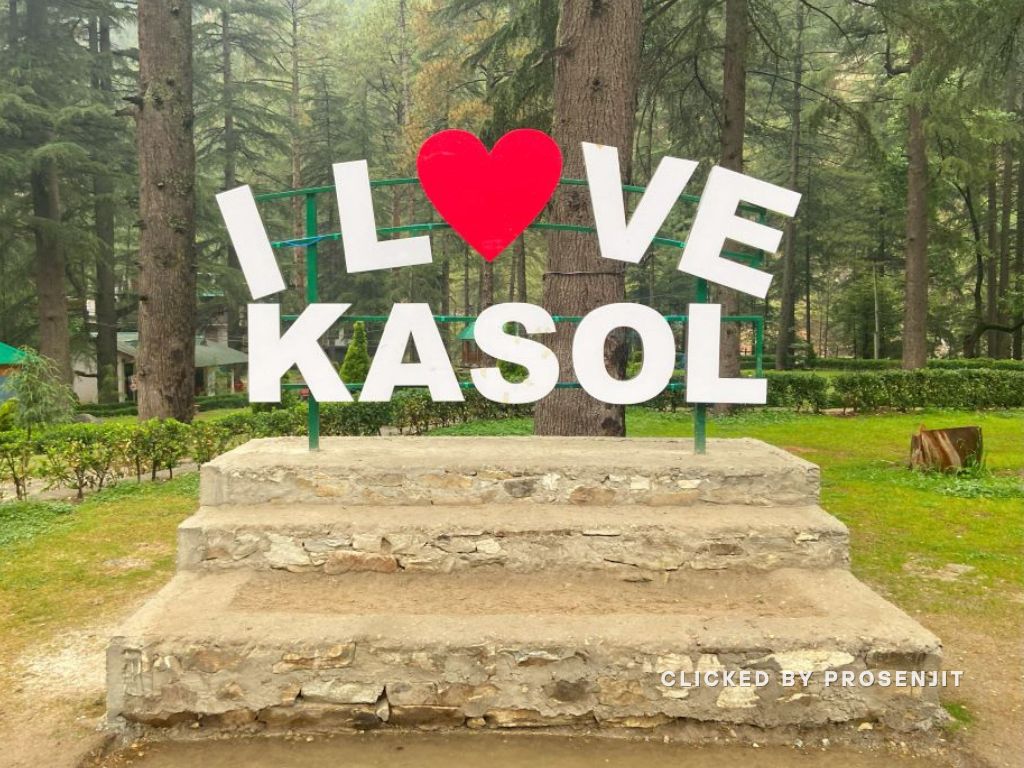
Finally, the rain stopped, and I went out of the hotel. I decided to spend a few hours in the Kasol park, so I bought a ticket, went in, and spent some time there. Then, it started raining again.
Fortunately, around 12 PM, the sun came out, and I decided to leave the park and shop for a few souvenirs.
I bought some traditional shirts, a sweater, and finally, around 4 PM, I went for lunch. Finally, after long hours of waiting, it was time to bid goodbye to the beautiful town. I boarded my bus to Delhi and at 7 pm we were off.
Reflections on a Trek and Life’s Journey
Kheerganga may not have been a walk in the park, but it was an experience I’ll never forget. The challenge of the trek pushed me outside my comfort zone, and the breathtaking scenery filled me with a sense of peace and wonder.
This solo adventure wasn’t just about reaching the top; it was a journey of self-discovery. I learned about my own resilience, resourcefulness, and appreciation for the simple beauty of nature.
It made me realise that just like this hike, there are tough climbs in life, times you wanna quit. But then there’s sunshine, and you keep going strong. We meet people on the trek, just like in life. Some become friends for a while, others just pass by.
Kasol is an ideal place for people to stay and spend few nights. It has several nearby treks as a solo traveller I choose Kheerganga trek. I agree Kheerganga doesn’t have blooming flowers, or beautiful lakes, but it is a perfect getaways for city dwellers to detox themselves in the lap of nature.