
Home Blog Page 12

Your Body, Your Way: Overcoming Negative Body Image

Have you ever looked in the mirror and felt less likeable? Or do you compare yourself to others and feel short? You are not alone.

Body image is much more than just how you look. It is an interplay of thoughts, perceptions, and feelings about how you see your physical self.

This article will discuss the intricacies of body image, and its impact on life, and discover some practical steps to help you embrace your uniqueness.

What Does Body Image Mean?

Body image is the mental picture of your body when you look at yourself. It is more of how you feel and think about your body, how you evaluate your overall appearance and the way you feel about how others might perceive you.

Several people have concerns about their body image. They focus on the skin, hair, weight, and shape. According to NEDA or the National Eating Disorder Association, various experiences, beliefs, and generalizations can lead to body image issues.

Looking back at the past, people have always given importance to beauty. Moreover, social media and popular culture have also contributed to shaping these views.

Body image typically means a person’s perception and emotional attitude toward their own body. It can relate to:

  • What they believe about their appearance
  • How they feel about their height, weight, skin, and shape
  • How they see their body

Why do Self-Esteem and Body Image Matter?

Self-esteem is the way you feel about yourself and the value you give to yourself. It is the opinion you have of your overall self.

Self-esteem affects how you take care of your physical, emotional, and mental being.

Self-esteem and body image influence your thoughts and feelings. When you don’t like something about yourself it becomes difficult to give that value. Eventually, it’s tough to notice the good things about yourself.

Examples of Negative Self-Talk

“I’m not good enough.”

“I always mess things up.”

“No one really likes me.”

“I’ll never succeed.”

“I’m such a failure.”

“I don’t deserve happiness.”

“I can’t do anything right.”

“I’m ugly and worthless.”

“Why bother trying?”

“People are just being nice; they don’t actually care.”

As you can see, the issue with negative thinking and feelings is when people begin to fixate on flaws or difficulties in one area or situation. This makes it easy to spot problems in many other areas. Negative thinking tends to breed more negativity.

Issues Negative Body Image Can Lead To:

According to research, being dissatisfied with your body can lead to several unhealthy habits. It may lead to:

  • Lower-self esteem
  • Eating disorder
  • Muscle dysmorphia
  • Mood disorders
  • Body dysmorphic disorders
  • Relationship issues
  • Self-harm

How Can You Accept the Way You Look?

It is important to understand that everyone is unique, and there is no one-size-fits-all when it comes to beauty. Here are some steps to help you embrace your body:

Practice Self-Compassion

Treat yourself with kindness. When you notice a negative thought about your body, challenge them by asking yourself if you could say the same thing to a friend. Highly likely you wouldn’t, so why be hard on yourself?

Focus on What Your Body Can Do

Instead of thinking about your appearance, think of the incredible things your body does each day for you. Whether it is eating, dancing, walking, or even breathing. Your body is remarkable to support you in countless ways.

Surround Yourself with Positivity

Engage with people who promote body positivity and self-acceptance. Follow social media accounts that celebrate diversity in body types and unfollow those that make you feel insecure.

Practice Gratitude

Listing three things you appreciate about your body every day can strengthen you inside out. It can light up a smile on your face every day. Focusing on the positive can shift your perception gradually.

Help and Support for Body Image or Self-Esteem

Sometimes, it may so happen that despite the best efforts, it can be tough to change how you feel about your body. If you are struggling with body image and self-esteem, let me tell you that it is okay to ask for help.

Here’s how you can seek support:

Talk to Someone You Can Trust

Be it a friend, family, or partner, share your feelings. Sometimes expressing what you are going through can lift off a burden from your shoulders.

Consider Professional Help

A counselor or therapist is more than ready to provide you with tools to improve your self-esteem and body image. Cognitive-behavioral therapy (CBT) has been shown to be effective in regard to this.

Join Support Group

You must have seen it in movies mostly, but groups, both in-person and online can help you connect with others make you feel less lonely and provide you with a new perspective.

Practice Meditation and Mindfulness

Techniques like mindfulness and meditation can help you become more aware of your thoughts and feelings, making it easier to manage negative self-talk and embrace your body.

Concluding Note

In a world where people constantly compare themselves to others, why not recognize your personal worth and rise against all?

Focus more on things your body is capable of doing, like exercising, experiencing the world through different senses, loving the people around you, and having amazing cuisines. By doing these, you will have a better chance of knowing your worth. Crop out the negativity and embrace what makes you different, for your time has come!

What are your thoughts on body image and self-esteem? Let’s talk.

Loading

Blue Mind Theory – Dive Into Calmness Like Never Before!

Let us talk about something we all crave but often struggle to find in our hectic lives: a genuine sense of calm. Ever feel like you are constantly juggling deadlines, navigating endless to-do lists, and dealing with the never-ending noise of modern life?

You are not alone. The stress and anxiety that come with our fast-paced world can feel overwhelming, leaving us desperate for a moment of peace. But what if I told you there is a way to tap into a natural, profoundly soothing calm that has been around forever? Enter the ‘Blue Mind Theory.’

This phenomenon is not just in your head—it is a fascinating concept known as the Blue Mind Theory. Let us dive in and explore this theory, which is all about finding calmness like never before.

Imagine this: You are standing by the ocean, the waves gently rippling at the shore, and suddenly, all your worries start to melt away. Your mind quiets, your breathing steadies, and you feel an almost magical sense of tranquillity. 

This is not just a fleeting experience – it is a profound connection that our brains have with water. The blue mind theory suggests that being near, in, on, or under water can significantly boost our mental health, making us happier and more relaxed.

In a world where we are constantly bombarded with stress, the blue mind theory offers a refreshing escape. It is about finding that perfect balance and calm amidst the chaos. 

So, let us dive deeper and explore how this incredible concept can transform your life.

The Blue Mind Meaning

The ‘Blue Mind Theory’ is the idea that being near, in, on, or under water can make you happier, healthier, and more connected. It is a concept developed by marine biologist Dr. Wallace J. Nichols, who combined his love for water with scientific research to understand the profound effects water has on our mental state. 

In a word, Nichols’ work suggests that water can implant a meditative state, reduce stress, and enhance well-being.

The term “blue mind” contrasts with “red mind,”

It refers to the stressful, anxious, and sometimes chaotic state that many of us find ourselves in due to the demands of modern life. By embracing this theory, we can shift from red to blue, finding peace and equilibrium in the presence of water.

The Origins Of Blue Mind Theory

Dr. Wallace J. Nichols coined the term ‘Blue Mind Theory’ in his 2014 book, “Blue Mind: The Surprising Science That Shows How Being Near, In, On, or Under Water Can Make You Happier, Healthier, More Connected, and Better at What You Do.” 

Nichols’ journey began with his fascination for marine life and the oceans. Over time, he noticed that people often reported feeling more relaxed and content near water.

Nichols researched and collaborated with neuroscientists, psychologists, and environmentalists to delve deeper. 

The resulting insights revealed that our brains are hardwired to respond positively to water. This groundbreaking work has since influenced various fields, from mental health to urban planning, emphasizing the importance of water in our lives.

Unveiling The Science Behind Blue Mind Theory

Now, let us get into the nitty-gritty of why the theory works! 

Our brains are complex organs, constantly processing information and managing our emotions. 

Hence, when we are near water, several things happen:

1. Reduced Stress

Water has a natural calming effect, lowering cortisol levels and reducing stress. The sound of waves or flowing water can be particularly soothing, acting as a form of white noise that drowns out other distractions.

2. Increased Dopamine And Serotonin

These are our brain’s “feel-good” chemicals. Activities like swimming, surfing, or simply being near water can boost their production, enhancing our mood and overall well-being.

    3. Improved Focus And Creativity

    Water can induce a state of “flow,” where we are fully immersed in what we do. This state is associated with enhanced creativity and problem-solving abilities.

    4. Enhanced Meditation And Mindfulness

    According to the blue mind theory, the rhythmic nature of water, whether it is waves lapping at the shore or a river flowing by, can make it easier to enter a meditative state. This helps improve mindfulness and mental clarity.

    Practicing Blue Mind Theory: A Step-By-Step Guide

    By now, you should have an idea of the theory and how it regulates your mental peace, and you should be in the dilemma of where and how to start with it! 

    We get it!

    In order to incorporate the blue mind theory into your life there are some basic steps to follow. 

    It is simpler than you might think. 

    Here are some steps to get you started:

    1. Find Your Water

    Identify a body of water you can easily access. It could be a beach, lake, river, or even a local pool or fountain.

    The goal is to find a place where you feel comfortable and relaxed.

    2. Schedule Regular Visits

    Make it a habit to visit your chosen water spot regularly. It could be a weekly beach trip, a daily walk by the lake, or a weekend getaway to a riverside cabin. 

    Consistency is key.

    3. Engage In Water Activities

    The blue mind theory is all about water, so participate in activities that involve water. Swimming, kayaking, paddleboarding, or even just wading in the water can enhance your connection with it. 

    If you are not a strong swimmer, do not worry – simply being near water works wonders too.

    4. Practice Mindfulness

    While near water, take a few moments to practice mindfulness. Concentrate on the sights, sounds, and senses around you. 

    Let the sound of the water drown out your worries and bring you into the present moment.

    5. Incorporate Water Sounds

    If you cannot always get to a body of water, consider using water sounds in your environment. 

    Apps and sound machines that play ocean waves, rain, or flowing rivers can help replicate the calming effects of water.

    6. Create A Water Sanctuary At Home

    Add water elements to your living space. This could be a small indoor fountain, an aquarium, or pictures of serene water landscapes. 

    Surrounding yourself with these elements can bring a sense of calm into your daily life.

    The Life-Changing Benefits Of Blue Mind Theory

    Embracing this theory can have profound effects on various aspects of your life. 

    Here are some of the benefits you can look forward to:

    • Reduced Anxiety And Stress

    Regular exposure to water can help lower anxiety levels and reduce the overall feeling of stress. 

    This, in turn, can revamp your mental health and quality of life.

    • Enhanced Physical Health

    Engaging in water activities like swimming or kayaking provides excellent physical exercise, which is excellent for muscle strength, cardiovascular health, and flexibility.

    • Improved Mental Clarity

    Water can help clear your mind, improve focus, and enhance cognitive function. This can be particularly beneficial for problem-solving and creative thinking.

    • Better Sleep

    Indulging in the blue mind theory can improve sleep patterns. Water’s calming effects can also lead to better sleep patterns. 

    Many people find that they sleep more soundly after spending time near water.

    • Strengthened Relationships

    Sharing water-related activities with family and friends can strengthen bonds and create lasting memories. 

    Whether it is a beach day, a fishing trip, or a simple walk by the river, these experiences can bring people closer together.

    How Does The Theory Create An Impact In Your Life? 

    You must be thinking of what changes the theory will bring to your life after so much effort. 

    As the saying goes, effort does not go in vain, and this is precisely what will happen. It is time to welcome the new you. 

    Imagine you are having a particularly stressful week at your workplace. There are looming deadlines, emails are piling up, and your stress levels are rising. 

    Now, picture this: after a long day, you take a short drive to the beach. 

    As soon as you step out of your car and hear the waves crashing, you start to feel a sense of relief. You walk along the shoreline, letting the cool water lap at your feet. The rhythmic sound of the waves begins to soothe your mind. 

    Your stress has significantly reduced by the time you leave, and you feel more at peace.

    Or consider a weekend getaway to a lakeside cabin. 

    You spend your days swimming, kayaking, and simply sitting by the water, enjoying the view. By the end of the weekend, you sense rejuvenated and psyched up to tackle the challenges ahead with a clear mind.

    These are just a couple of examples of how the blue mind theory can positively impact your life. The key is to make water a regular part of your routine, allowing it to work its magic on your mental and physical well-being.

    Bottom Line

    The ‘Blue Mind Theory’ is a powerful concept that highlights the incredible benefits of being near water. From taking the edge off stress and anxiety to boosting creativity and improving physical health, water has the ability to transform our lives in countless ways.

    So, next time you are feeling overwhelmed or simply need a break, remember to embrace this theory. 

    Find your water, immerse yourself in its calming presence, and let it guide you to a state of peacefulness and well-being. Dive into calmness like never before, and embrace the peace that water brings.

    Remember, the blue mind is always within reach—all you need to do is take that first step toward the water. 

    Frequently Asked Questions (FAQs) 

    • What is Blue Mind Theory?

    Blue Mind Theory is the idea that being near, in, on, and under water can make us feel contented, more satisfied, healthier, more connected, and better at what we do. It emphasizes water’s calming and therapeutic effects on our mind and body.

    • Who introduced the Blue Mind Theory?

    Marine biologist and author Dr. Wallace J. Nichols introduced the Blue Mind Theory in his book Blue Mind. His work explores the profound connection between water and our mental well-being.

    • How does Blue Mind Theory benefit mental health?

    The theory suggests that water environments help reduce stress, anxiety, and depression. The sound of waves, the sight of water, and even the act of swimming or floating can trigger a state of relaxation and contentment, improving overall mental well-being.

    • Is there scientific evidence supporting Blue Mind Theory?

    Yes, numerous studies have shown that water has a calming effect on the brain. Research indicates that being near water can lower cortisol levels, subside heart rate, and promote feelings of stability and happiness.

    • Can I experience blue mind benefits if I do not live near water?

    Absolutely! You can experience blue mind benefits through various water-related activities such as visiting lakes, rivers, or even indoor swimming pools. Listening to water sounds or taking a relaxing bath can also provide similar calming effects.

    Loading

    5 Thrilling Jungle Safaris in India You Cannot Miss!

    Calling out to all beauty and wonder seekers!

    A tour into the lap of nature and an experience of the untamed beauty of lush jungles. Yes, we are talking about some of the unforgettable jungle safaris in India!

    Dense forest, majestic wildlife, and the thrill of being in the wild–what more can you ask for?!

    It is the perfect time to break away from the hustle and bustle of the city and get ready to spend some time in the calming lap of nature.

    India is well-known for its wildlife safaris; with more than 100 national parks and 500+ wildlife sanctuaries, covering an area of about 1.3% and 3.7% of the country’s geographical area, respectively. These areas are protected havens for various species and play a crucial role in conserving nature.

    So, pack your bags, get your camera ready, and explore the jungle safaris of India. This trip promises an experience that will stay with you for a lifetime.

    Let’s find out about the five thrilling jungle safaris in India.

    Wildlife Safaris in India That You Must Visit

    These safaris in India are full of thrills and surprises! It is nothing but a privilege to witness these natural habitats.

    Here are the top five places to go for jungle safari in India:

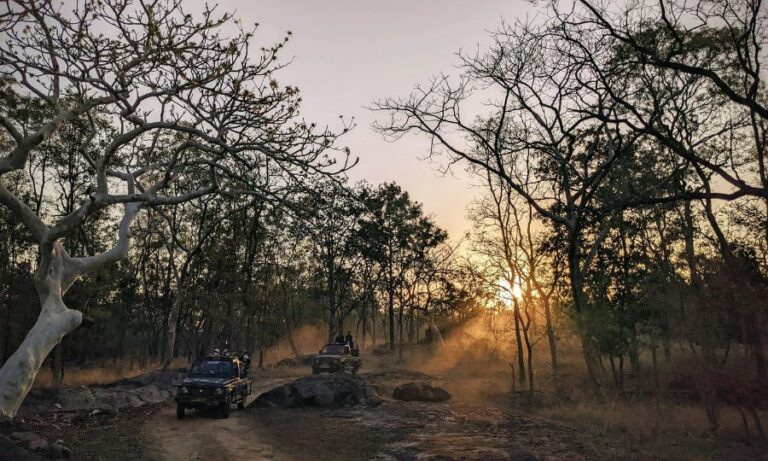
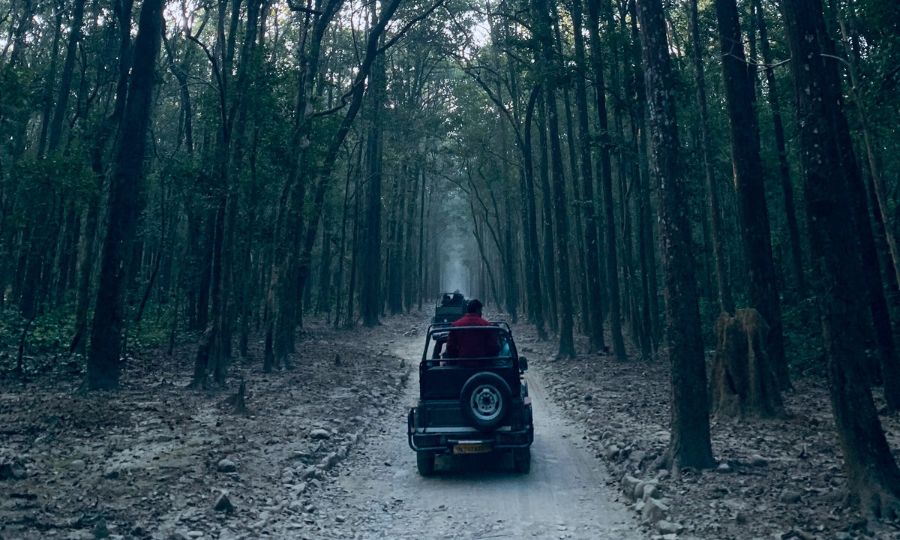
    1. Jim Corbett National Park, Uttarakhand

    Jim Corbett
    Photo by Simran Vij on Unsplash

    Located in the Nainital district of Uttarakhand, Jim Corbett National Park was established in 1936. Expanding about 500 square kilometers, this national park is one of India’s most popular and oldest ones.

    It is divided into nine zones and tourists can expect to see diverse flora and fauna, including Bengal tigers, leopards, deer, sloth bears, Indian elephants, and more than 600 species of bird. The forest consists of sal, mango, peepal, haidu, and rohini trees.

    Safari experience: Jeep safari and canter safari.

    Climate:

    Winter: 5-25°C

    Summer: 32-42°C

    Monsoon: 26-37°C

    Best time to visit: November to June

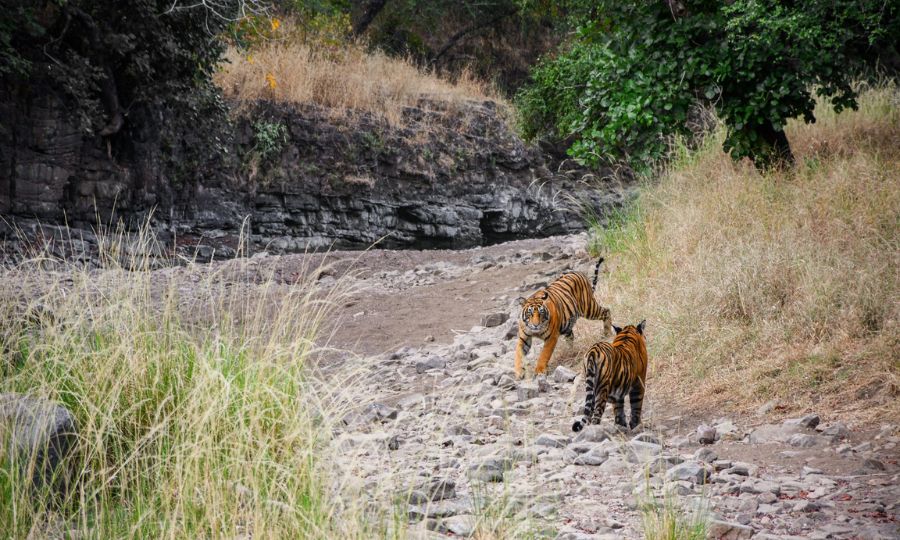
    2. Ranthambore National Park, Rajasthan

    Ranthambore
    Photo by Yash Gupta on Unsplash

    One of the best places to spot tigers is Ranthambore National Park. This national park holds a special spot in the tourism sector in India for its charm and class. Surrounded by Aravalli Hills and Vindhyas, this tiger reserve is spread over 1400 square kilometers.

    Ranthambore is known for its natural habitat. The vegetation consists of tropical dry deciduous and thorny types, largely due to the hilly terrain, with water limited to narrow valleys and lakes.

    Ranthambore is certainly the best place to witness tigers even during the daytime. It is also home to several species of birds and animals.

    Safari experience: Jeep safari and canter safari

    Climate:

    Winter: 10-20°C

    Summer: 30-40°C

    Monsoon: 25-35°C

    Best time to visit: October to June

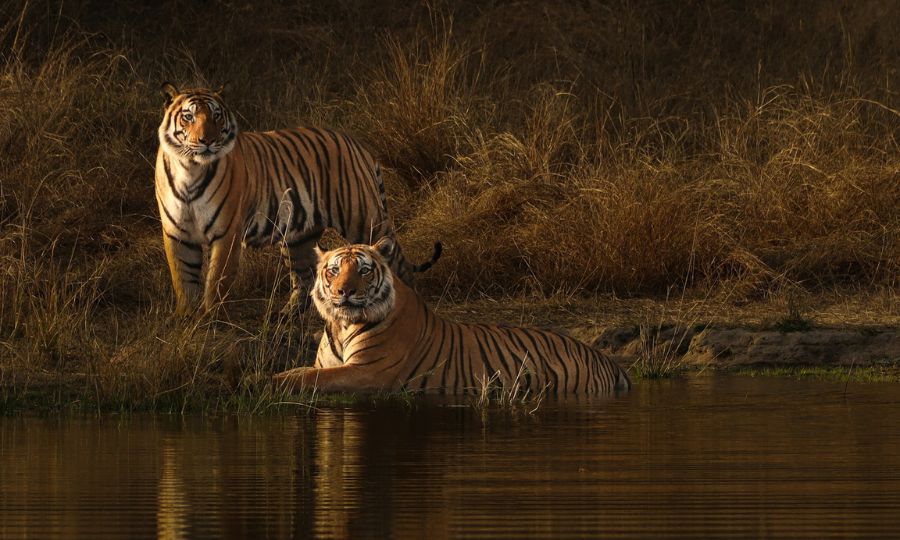
    3. Bandhavgarh National Park, Madhya Pradesh

    Bandhavgarh
    Photo by Debjoy Biswas on Unsplash

    Another one known for its high density of tigers, Bandhavgarh is a paradise for wildlife photographers. With an area of 705 square kilometers, the park has a rich biodiversity with a large population of leopards and deer.

    There are over 250 bird species, about 80 species of butterflies, and several reptiles. Tourists can spot nilgais, chinkara, Indian bison, chintal, jackals, wild boars, green pigeons, and even gray Malabar hornbills.

    Safari experience: Jeep safari and canter safari.

    Climate:

    Winter: 5-25°C

    Summer: 25-45°C

    Monsoon: 15-30°C

    Best time to visit: October to June

    4. Kaziranga National Park, Assam

    Kaziranga
    Photo by Neelakshi Singh on Unsplash

    Renowned for its one-horned rhinoceros population, Kaziranga National Park in Assam is a UNESCO World Heritage Site. According to the March 2018 census by the Forest Department of the Government of Assam and other recognized wildlife NGOs, the rhino population is estimated to be more than 2,000, having the single largest population of this species. Along with the iconic one-horned rhinos, the park is also home to wild water buffalo, elephants, swamp deer, and more.

    Kaziranga has been the theme of several songs, books, and documentaries for its rich biodiversity. This national park attracts massive wildlife lovers each year.

    Safari experience: Jeep safari, elephant safari, and boat safari.

    Climate:

    Winter: 5-25°C

    Summer: 25-37°C

    Monsoon: 22-32°C

    Best time to visit: November to April

    5. Gir National Park, Gujarat

    Gir
    Photo by Gaurav Sharma on Unsplash

    The beautiful landscape of Gir National Park also known as Sasan Gir is popular for Asiatic Wild Lions. With a total area of 1,140 square kilometers, you can come across leopards, four-horned antelope, nilgai, golden jackals, striped hyenas, and Bengal foxes. Gir is also home to 425 species of bird.

    Gir National Park is considered as the jewel of ecological resources of Gujarat. There are more than 400 species of plants, adding to a rich biodiversity.

    Safari experience: Gir offers jeep safari as well as walking safari

    Climate:

    Winter: 10-25°C

    Summer: 25-45°C

    Monsoon: 25-35°C

    Best time to visit: November to March

    Summing Up

    India’s wildlife safaris are an unmissable adventure for nature lovers like you. From the majestic tigers of Jim Corbett and Ranthambore to the unique one-horned rhinos of Kaziranga, these safaris offer an incredible chance to experience the rich biodiversity of the country.

    Whether you’re exploring the dense forests of Bandhavgarh or the stunning landscape of Gir National Park, each destination promises an unforgettable journey into the wild!

    Don’t miss out on these unforgettable experiences that will leave you with cherished memories and a newfound appreciation for the wild.

    Loading

    Finding Yourself On The Road: A Journey to Self-discovery

    “Life begins at the end of your comfort zone.”

    Neale Donald Walsch

    This saying is a reminder that whatever you are asking for is out of your comfort zone. The hope, the desire, the aspirations, everything is waiting for you on the other side. All you have to do is overcome your fear.

    We all get so caught up in our everyday lives that the path to self-discovery almost seems blurry. Maybe you are busy taking care of your little one or juggling through daily activities at your home there could be a lot of things keeping you away from walking down that path.

    So in this article, I will tell you one of the greatest ways you can experience self-discovery. Are you ready to embrace that path?

    Journey to Self-discovery

    Traveling is not just about discovering places but it can be about discovering the adventure within yourself. 

    Whether you are backpacking through unfamiliar terrain or just exploring the nearby country there’s so much you can find out as you step out of your comfort zone.

    Self-discovery doesn’t come with age. It’s not like you need to discover yourself by the time you are 25; self-discovery can happen at any given age – be it 40 or 60.

    Being on the road is one of the best opportunities to learn new skills gain more confidence and introspect on who you want to be.

    And yes if you want to prioritize your personal development while traveling then I have good news for you! In this article, you are about to learn a lot.

    Embracing the Unknown

    Image Courtesy by Yuliya Ilkovych from Pexels

    Travel often brings unexpected surprises. Maybe you planned to visit a famous landmark but instead stumbled upon a hidden gem that wasn’t in any guidebook.

    These unplanned moments can be the most memorable parts of your journey. These remind you that life doesn’t always go according to plan, and that’s okay.

    Learning from Challenges

    Image Courtesy: StockSnap from pixabay

    Sometimes while traveling you might miss your flight, encounter language barriers, or even homesickness and that is okay too because traveling is not smooth sailing.

    These challenges on the road teach resilience and problem-solving skills. The challenges that you encounter and the setbacks of the journey make you capable of handling difficulties.

    New Passions to Discover

    Image Courtesy Wei Zen Yang from Pexels

    “Wherever you go becomes a part of you somehow.” – Anita Desai

    Whether it is cuisine, photography, or a new language, you will find new interest wherever you go. Being exposed to a new culture develops interest and you may even adopt a quirk. While coming back home, you may even find yourself feeling fresh and renewed.

    Connecting with People

    Image Courtesy  urbazon from Getty Images Signature

    One of the most rewarding aspects of travel is that, despite cultural differences, you make connections with others. This reminds you that people share common desires for connection, understanding, and happiness, no matter where you go.

    Sometimes hearing stories from people with different backgrounds can inspire you to reflect on your own goals and priorities.

    Rediscovering Joy in Solitude

    Image Courtesy Chait Goli from Pexels

    Enjoying your own company is a valuable aspect of traveling. It contributes to personal joy and contentment. Doing the things that you love without having to depend on someone else brings happiness and satisfaction. You start prioritizing yourself. Whether you are taking a hike or sitting beside a river, you love being with yourself.

    The Happiness of Being on Open Road

    There’s truly something great about being on the road, whether you are simply driving through a wide-open space or sailing the sea. The sense of freedom and exhilaration that comes along with such experiences is priceless.

    This freedom is what helps in allowing you to be fully present in the moment, free from the constraints of everyday life.

    Traveling encourages you to live in the now, appreciate the beauty of the world, and welcome the unpredictability of life. It’s a reminder that life is an adventure, and the journey is just as important as the destination.

    Bringing It All Home

    Image Courtesy maxbelchenko from maxbelchenko

    The lessons you learn while on the road stay with you even after the trip ends. These lessons become a part of you and shape your perspective. Gradually, these worldviews help you navigate through life’s challenges.

    Travel teaches you confidence, patience, and being open-minded. It helps you appreciate little things.

    As you return home, you carry this confidence and curiosity within you. You gain clarity as well with the experiences that you gather. You may find yourself being more adventurous and calm, willing to readily step outside your comfort zone.

    These changes can lead to a more richer and fulfilling life.

    Summing Up

    Finding oneself while traveling is a journey of self-discovery. Whether you are exploring far-off places or reading a book beside a river bank, the experiences and lessons you gain from traveling can be life-altering.

    So, pack your bags and hit the road! Who knows you might just find a missing piece of yourself somewhere amidst the mountains.

    Loading

    The Only Packing List a Backpacker Needs

    Starting a backpacking adventure can be an exhilarating experience. But at the same time packing for one can be a little problematic. The key to being a successful backpacker is to create a balance between being prepared and travelling light. Follow the comprehensive packing list to ensure you have all the essentials without overburdening yourself. 

    Backpack

    The choice you make in buying a backpack is crucial. Always go for a comfortable and durable pack. It must have a capacity of 4 litres. The backpack must depend on the length of your and your packing style. Let us have a look at the features, which your backpack must have :

    • The backpack must have padded shoulder straps along with a hip belt
    • It must have multiple compartments for organization.
    • Prefer water-resistant materials
    • Must have lockable zippers for security

    Clothing

    You must have quick-drying, versatile, foldable clothes that can fit into your backpack easily. You must pack clothes for about one week, regardless of trip length. Consider the following options while backpacking for adventure.

    • 3 to 4 T-shirts and tops
    • 2 long sleeves shirts for sun protection and cooler weather
    • 1 to 2 parts of lightweight, quick-dry pants.
    • 1 pare kd comfortable jeans, if you feel comfortable in wearing jeans.
    • 5 to 7 pairs of underwear
    • 5 to 7 pairs of socks, you might take pairs of woollen clothes for hiking
    • 1 light jacket or maybe a fleece
    • 1 raincoat
    • 1 swimsuit
    • 1 lightweight towel, which can be used to fulfil various purposes.
    • 1 set of nightsuit
    • 1 hat for sun protection
    • Warm clothes in case you are travelling to cooler destinations. 

    Footwear

    You must select comfortable and durable shoes which can fit in for various activities. 

    • Keep 1 pair of walking shoes or hiking boots. Add one pair of comfortable sandals or flip-flops along with a pair of casual shoes. 
    • Try packing used shoes as the new ones can irritate your feet.

    Toiletries

    You must prefer travel-friendly items to reduce space and reduce weight.

    Some of the important toiletries to be kept –

    • Toothbrush and toothpaste
    • Deodorant
    • Shampoo and conditioner (consider solid bars to avoid spillage)
    • Sunscreen
    • Insect repellent
    • Hand sanitiser
    • Razon and shaving cream if needed
    • Nail clippers
    • Female hygiene products if needed
    • Add prescribed medicines along with the doctor’s prescription 
    • Must carry a basic first aid kit which includes (bandages, antiseptic wipes, pain relievers, anti-diarrheal, motion sickness pills and other necessary medication)

    Travel Documents and Money 

    Mentioned below are some of the essential documents which you must carry while travelling.

    • Passport and visa
    • Driving licence or other IDs
    • Vaccination records( if required)
    • Credit and debit cards
    • Cash ( including local currency)
    • Note of emergency contact number

    Electronics and Gadgets

    You must carry the necessary electronic gadgets. As carrying many of them, might increase the risk of theft and damage. Along with that more gadgets might add extra weight too.

    • Your smartphones with charger
    • Camera with charger
    • The universal travel adapter is a must
    • Headphones, earphones or airdrops as per your preferences
    • E-reader or tablets (optional)

    List of a few more essentials

    The items mentioned below can make your journey more comfortable and convenient

    • Reusable water bottle
    • Travel pillow
    • Eye mask and earplugs
    • Plastic bags for dirty laundry or wet items
    • Travel clothesline
    • Notebook and pen
    • Photocopies of important documents
    • A few ziplock bags for snacks or shopping

    You might consider the following optional items list as per your destination and activities.

    • Sleeping bag liner for hostels or overnight trains
    • One travel towel if not provided by accommodations
    • Hiking poles And camping gear if planning for hikes or camps.
    • Water purification system for areas with unsafe drinking water.
    • Language guidebook or translation maps.
    • Sunglasses
    • Watch
    • A pack of travel games or playing cards.

    Packing Tips

    You must follow the packing tips while travelling. 

    • Roll your clothes instead of folding them to save space and reduce wrinkles.
    • You may use packing cubes to organize your belongings.
    • Go for wearing heavy items like hiking boots instead of packing them.
    • Leave some space backpack for adding a few items during a travel journey. 

    What Not to Pack?

    You must avoid the following items to save yourself from inconvenience.

    • Excessive clothing or shoes
    • Valuable jewellery or unnecessary items
    • Full sized toiletries
    • Heavy guidebooks books ( instead opt for e-books)
    • Items easily available at your destination must be avoided.

    Conclusion

    Remember, the saying “less luggage more comfort”. So don’t add unnecessary items to your backpack. Consider versatility and minimal packing. Each item you add I. Your backpack must have some purpose and can be used multiple times. Keep in mind to purchase essential items on the way, in case you have forgotten them. 

    Before leaving for the journey, carry the backpack and walk around. This will help you to know whether the backpack has proper weight distribution or requires some changes. Don’t hesitate to take out a few things as you might not need them.

    Lastly, embrace the adventure and enjoy the backpack experience with this resourceful learning guide. 

    Loading

    6 Expert Tips to Maximize Savings When Traveling

    Want to travel to your dream destination, but worried because you don’t have sufficient money? Then this blog is exclusively for you. You can follow the tips to save money while travelling. 

    There are numerous ways to make money, such as by travelling. You must work hard and stay consistent in order and make money for travelling.

    By knowing the hidden travel costs, you can easily avoid the excessive cost, and can easily travel on your budget. Go through the blog, you will get to about wonderful tips to save while travelling. 

    1. Prefer travelling during the off-season

    Image Courtesy Holly Mandarich on Unsplash

    Most destinations have “off” seasons, which are times of the year when there is much less tourism.

    Every destination has an off-season during which less number of tourists visit. These days you can get hotel stays at a lower price than usual price.

    It’s an off-season and the weather doesn’t let you waste time, so you prepare your stay limited to a week. You will travel to all the destinations in a short period and will avoid the unnecessary stay in the foreign land. This will help you to save money from the extra expenses to be done by staying in for more days.

    If you decide to travel to your dream destination in the off-season when fewer people travel you will get everything at a cheaper rate. Everything including accommodation, food, and plane tickets can be purchased at a low price.

    2. Prefer to be flexible with your favourite flights

    Image Courtesy by Kunakorn Rassadornyindee 

    Many preferred flights provide discount fares which cost hundreds of Euros less than the usual cost. To avail of this offer you need to travel on specific days of the week in specific months or during off-season

    You can search for the airlines providing such features and their cheapest days to fly. By doing so you will be able to save a good amount from your travel Budget.

    You must fly strategically. Research properly before flying in discounted fare, as some of them take a long duration to reach a destination.

    3. Choose the mode of transportation strategically

    Photo by Andrea Piacquadio

    Prefer flying less and spending more days at a particular destination. Explore the place properly instead of flying just for the sake of travelling.

    At places, use the local mode of transport rather than booking a personal cab. You may opt for a local bus, metros etc. At many places you may get the facilities of the local train for travelling from one city to another, go for it.

    You may prefer walking to cover short distances. It’s good for your health as well as will help you to save money.

    4. Enjoy the local cuisine

    Photo by Brijender Dua on Unsplash

    Whether you have travelled to Germany, Italy, France, Spain or any part of Europe go for their local cuisine. It will be fun to have a different food with amazing and unique taste.

    Almost every country has local restaurants opened in their marketplace. So you must venture them out. These food items will cost you less than a 3-star or 5-star hotel. Even if you are staying in a hotel or lodge, prefer eating the local cuisine. You can find the difference in the price range between a top-class hotel and a local restaurant. It’s a guarantee that you will save a good amount by choosing local restaurants.

    5. Shop from local markets

     Photo by Ricky Esquivel from Pexels

    Whenever you want to shop for something for yourself or family and friends always take suggestions from the local inhabitants. They can guide you in a better way. Ask them for the best shop where you can get quality things in an affordable rate.

    Always prefer shopping in the local markets of a city. You will be getting good products at a reasonable cost. Don’t just jump to the malls and big shops. They charge a lot of taxes and product prices from you.

    By opting for the local markets, you will be able to save a good amount.

    6. Find hostels

    Image by  George Pak from Pexels

    You might know that hostels are one of the cheapest accommodations available in any country. You can get a bed to stay at night along with other facilities.

    Staying in a hostel reduces the cost of travelling. You can book an individual room or sharing rooms. It will be a really fun and exciting experience. You will be able to interact with lots of people and save money too.

    Hostels provide living space, kitchen, lounges and sometimes a free tour around the city. The prices charged by hostels are quite low as compared to other accommodations. There are many websites available over the Internet where you can find the best hostels in your destination with affordable price ranges.

    Conclusion

    If you are planning a travelling trip then must follow these top tips to save money. Incorporating these small ideas into your planning list will result in a big difference. You can save money and travel within budget without any stress.

    Loading