People choose books that feel safe and familiar when life feels uncertain, not stories that demand emotional effort or quick decisions.
Reading during confusion offers comfort, reflection, and quiet clarity rather than answers or transformation.
Books help readers feel understood, reminding them that feeling lost is temporary and deeply human.
Why Do We Reach for Books During Uncertain Phases?
Feeling lost does not always mean something has gone wrong. Many people feel this way during quiet life shifts after finishing studies, changing jobs, losing direction, or simply outgrowing an old version of themselves.
During these phases, people often turn to books. Not for answers that fix everything, but for words that make sense of what they feel.
Books offer privacy. No one interrupts. No one gives advice too quickly. A book allows a reader to sit with confusion without pressure. That is why, when people feel lost, they rarely reach for complex or flashy stories. They look for familiarity, honesty, and emotional safety.
Books That Bring Comfort
People tend to go back to books they’ve read in the past when they feel lost. These types of books are commonly referred to as comfort books. Most of these books were read at some point in someone’s childhood, adolescence, or another time in their life when they felt secure.
Several commonalities exist between comfort books. Most comfort books use a slow pace. They mainly center on relational material and do not contain conflict-related material.
The rhythm of emotion throughout most comfort books is also fairly consistent. Readers of comfort books typically recognize how they felt about the story without currently remembering all of the details about the book.
The reason many people reread books like Anne of Green Gables, Little Women, Harry Potter, or mildly erotic romance novels isn’t because these books provide answers to the many unanswered questions we all have, but rather because they allow readers to experience emotional stability within the book.
Having familiarity with characters requires less energy on the part of the reader to keep up with them. Therefore, readers can use the book as a means of taking a break from mentally stimulated thinking.
Based on search volume increases for phrases such as “comfort books,” “books to reread” and “books for emotional comfort,” as well as the overall behavior of readers, there appears to be a trend away from reading for novelty toward reading for emotional stability, particularly in times of uncertainty.
Example:Harry Potter series by J.K. Rowling, Pride and Prejudice by Jane Austen
Quiet Fiction: Stories Where Nothing Dramatic Happens
This is another category people reach for when they feel mostly lost. These categories do not rely on dramatic twists or fast plots, rather they focus on inner thoughts, ordinary life, and small changes.
Slice-of-life novels, thoughtful literary fiction, and slow-paced stories in small towns or limited spaces are examples of quiet fiction that reflect what life feels like during disorienting times: uneventful but of heavy consequence.
To be able to fulfill one’s desire to be acknowledged during difficult times, quiet fiction reminds readers that their lives don’t have to be full of excitement and progress to be valid. This assurance is very important to those who experience feelings of being without purpose or direction.
Those who look for “slow books,” “gentle fiction,” or “stories told calmly” are often seeking the same thing. They are not looking for motivation but rather recognition.
Quiet fiction validates the experience of being in a period of “stasis.” Although it doesn’t explicitly state so, quiet fiction implies that standing still is an acceptable thing to do.
Example:The Midnight Library by Matt Haig, Eleanor Oliphant Is Completely Fine by Gail Honeyman.
Memoirs and Personal Essays
During periods of uncertainty or being lost, many people want to find out what it was like for others who have experienced similar feelings of being lost.
While readers are still looking for guidance, all these are people’s experiences who had a similar experience.
Readers tend to relate better to memoirs that deal with confusing/uncertain life changes and/or have no success stories. The failure- and sorry-type of books seem to relate better to readers looking for a good read about their type of situation.
Readers can read memoirs and personal essays and see there are others with the same uncertainty and that they share this common experience.
For those searching for a book about how someone else’s journey through uncertainty has been, there are many options out there, such as books about feeling lost, books about life-changing experiences, and books about finding yourself (not as an expert on anything).
Example: Eat, Pray, Love by Elizabeth Gilbert, When Breath Becomes Air by Paul Kalanithi
Gentle Non-Fiction: Reflection Over Self-Improvement
Unlike popular definitions of what makes people feel lost, most people feel that they don’t need an aggressive self-help book. They generally avoid direct plans, rigid step-by-step structures, and language that creates pressure.
Instead, they seek gentle non-fiction. Books written this way approach topics such as life and creativity, or the purpose of life, or mental health in a reflective way. They offer readers a chance to contemplate rather than to take action. They provide support for self-understanding rather than solely for self-improvement.
Types of books in this area include philosophy-related materials, books about living mindfully, and books that describe simple observations about everyday life. The tone is soft. The pacing is determined by the reader.
From the perspective of Google search queries and content, there has been a 180-degree change from searching for “how to fix your life” to searching for “I want to understand myself,” “what is the meaning of my life” and “why am I feeling lost?” This change shows how society has become emotionally tired of continually feeling as if they need to improve their lives.
More than motivating change, gentle non-fiction books provide clarity. To those who feel lost, there is much more benefit in clarity than in motivation.
Example:The Comfort Book by Matt Haig, Ikigai by Héctor García and Francesc Miralles.
Why These Books Matter More Than We Admit?
Books read during uncertain phases often stay with people longer than any others. They become emotional markers. Years later, readers remember not just the story, but how it made them feel during a specific time in their life.
These books matter because they allow rest without guilt. They allow reflection without urgency. They give words to feelings that feel difficult to explain.
From an EEAT perspective, this topic connects lived experience with observable reader behavior. People consistently choose calm, honest, and familiar books during emotional uncertainty. This pattern appears across cultures and age groups.
Reading during a lost phase does not mean escaping life. It means processing it quietly. Books give structure when life feels unstructured. They offer companionship when answers feel distant.
Final Takeaway
The books that we read when we feel lost won’t be the stories that push us forward. Instead, they will be the stories that allow us to stay where we are.
Comfort stories, quiet fiction, honest memoirs, and gentle non-fiction all help the reader feel less alone in their confusion. They remind us that to be confused does not mean that we are bad. These types of books are also a reflection of emotional maturity on the part of the reader and not avoidance. They illustrate a desire to know ourselves before we strive for direction.
Most of the time, the right book for you will not change your life.
Instead, it will help you remain in your own comfort zone until you discover your direction.
For someone who feels lost, this is sufficient unto itself.
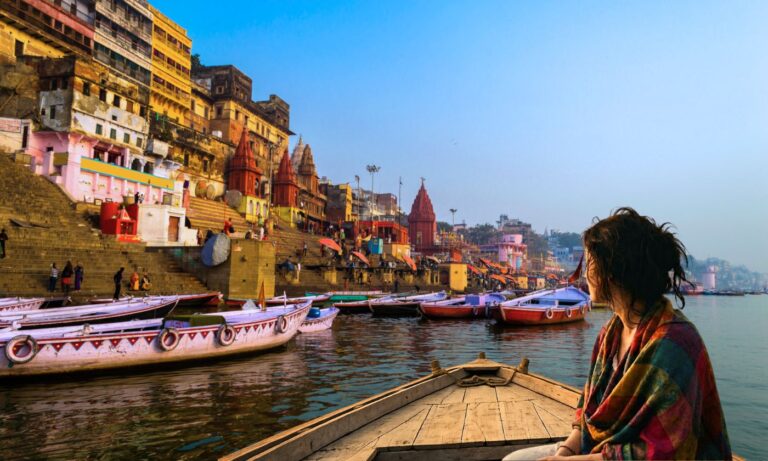
Varanasi is a city in Uttar Pradesh, India, located along the banks of the River Ganga in northern India.
Varanasi exposes everyday life and death together, altering how visitors understand impermanence and continuity.
The city removes control and comfort, which naturally shifts how people respond to uncertainty.
Most visitors experience delayed emotional impact rather than instant transformation.
Varanasi does not introduce itself softly or gently. There isn’t a soft landing or a gradual settling period. Not really. Not truly. As soon as you arrive, the city seems to have functioned perfectly well without you. It does not wait for your comprehension or your comfort or your approval. It throbs along at its own sweet, unhurried pace.
Many visitors come to Varanasi with expectations, though they cannot quite articulate what these expectations are. What visitors rarely anticipate is that they will feel quietly unsettled, long after leaving this city behind.
Varanasi does not try to change people. Varanasi does not sell anything in particular – no healing, spirituality, illumination. Just existence: out in the open, ongoing, and inexplicable. And it is this inexplicability that unexpectedly alters how people think about their own lives not in an instant, not in shock value, but profoundly.
Often it is said that one is unable to express what Varanasi has given to him or her. The reason is that Varanasi does not give; it only shows.
What Varanasi Does Differently
Varanasi does not try to guide your emotions. Instead, it places you in situations that naturally challenge how you see life, time, and control.
Life and death exist together without separation
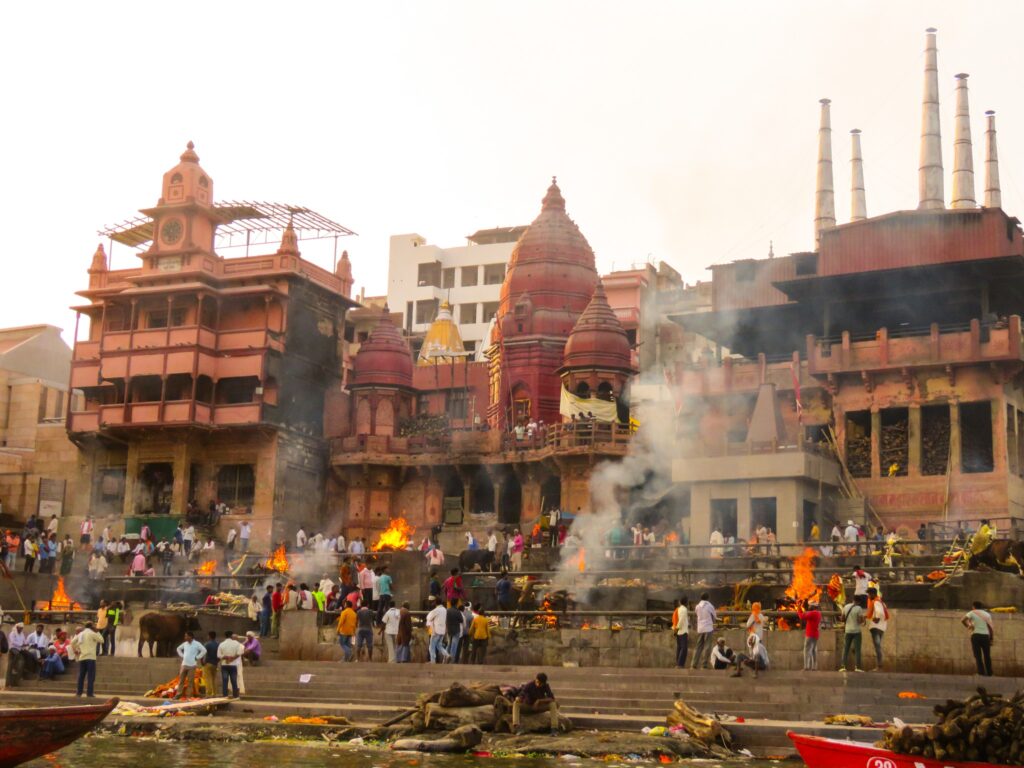
Manikarnika, also known as the Burning Ghat, is believed to be a sacred gateway to heaven according to popular belief. Image Courtesy Supratim Chattopadhyay
At the ghats, funeral pyres flame openly; sometimes they burn all day. Barely feet away, people bathe, pray, sell flowers, laugh, quarrel, drink tea. No one stops the world for mounting grief. No one speaks softly because someone else has not long to live.
This is, naturally, uncomfortable at first for visitors. For in most contemporary societies, death occurs within closed doors. In Varanasi, it occurs in the open, not in celebration, nor in fear. Over time, this is not bothersome; it is grounding.
One starts to grasp just how much emotional energy one puts into keeping death at arm’s length. It’s ubiquitous in Varanasi. The normalcy of its presence subtly shifts one’s way of looking at things. Many travelers return home with a reduced stress level regarding time, urgency, and achievement. Not from a new realization, but from observation.
The city does not change for you
Varanasi does not lend itself to nice paths or clear patterns: its streets twist and constricted beyond expectation; noises collide without respite; scents alter by blocks; itineraries come undone. The city does not apologize for this.
Of course, at first everyone resists this process. People try to control the schedules, the routes, and the expectations. But eventually, everyone gives up on control. And once everyone stops trying to control things, then something changes. The need to control everything disappears. People start moving in accordance with the city instead of against it
Such a level of surrender doesn’t appear to be spiritual. It appears to be quite practical. Many people are aware of the amount of mental stress they go through on a daily basis in an endeavor to be in control of everything. Varanasi does not require this.
Observation replaces participation
Unlike other places that are centered around things to do, Varanasi has very little in this department. End result: You sit. You watch. You wait. You see people doing their rituals with no interpretation, you see people living their daily routines with no interest in visitors, and you see private moments that are perfectly public.
This lack of participation creates space; and space is where distance is created. Distance is what leads to contemplation. Because there is nothing to do, you automatically observe things. Varanasi is not a city that creates contemplation. Varanasi is a city that allows contemplation.
No performance exists for tourists
In most places, life is adapted with regard to visitors. In Varanasi, this does not happen. The rituals carry on regardless of whether anyone is viewing them or not. There is no need to explain things. It makes visitors feel invisible, and also rather liberating. You don’t feel like you have to document and verify what is happening. It makes the city feel rather honest. You aren’t the center of the experience. And it feels rather liberating.
Why This City Affects People Emotionally
Varanasi removes distraction in a way few places do. Even with noise and movement, there is little escape. After a while, phones feel intrusive. Constant planning feels unnecessary. Silence becomes easier to sit with.
Without distraction, people confront thoughts they often avoid. Not dramatic crises, but lingering questions about work, family, ambition, loss, and time. Varanasi does not amplify these thoughts. It creates space for them. Many travellers describe feeling emotionally exposed. Not overwhelmed, but unprotected. There is no curated experience to hide behind. You are present with whatever surfaces.
The city’s age also plays a role. Rituals continue as they have for centuries. Generations pass through the same spaces. This continuity reframes urgency. Individual worries feel smaller when placed inside a timeline that stretches far beyond one life.
People do not leave Varanasi with answers. They leave with perspective.
Why People Carry Varanasi Long After Leaving
The effect of Varanasi often appears later. Weeks or months after returning, people notice subtle changes, like less panic around timelines, less urgency to control outcomes, a quieter relationship with success and failure.
These shifts do not come from belief systems or spiritual conversion. They come from exposure. From seeing life without filters, pauses, or performance. Varanasi does not promise peace. It offers acceptance not through teaching, but through example. Life continues. Rituals repeat. The river flows. Whether you understand it or not. That understanding stays.
Concluding Note
Varanasi does not seek to inspire or change. It doesn’t help to direct emotions or give them meaning. It is precisely, unfailingly, itself: complex, contradictory, and continuous.
And in that honesty, people change.
Not because the city asked them to, but because experiencing life without editing it changes you, changes how you carry yourself. And this is why Varanasi stays with people long after they leave, not because they remembered it, but because it changed how they thought about time, and control, and themselves.
City life gives us speed, access, and opportunity, but it does take away one thing, and that is silence. Over time, the noise starts to feel heavy. That’s when most of us look for an escape. Not a long vacation but just a pause.
What many people don’t realize is that you don’t need remote mountains or expensive flights to find calm. Some of the most peaceful places sit quietly near big cities. They remain unnoticed because they don’t shout for attention. They don’t promise luxury. They offer something better: space, nature, and a slower rhythm.
This guide explores places near major Indian cities that still feel untouched. These destinations exist, and people do visit them, yet they stay free from heavy crowds and over-tourism. If you prefer calm over chaos, this list will help you travel better.
What “Untouched” Really Means
Before we go further, let’s clear one thing.
Untouched doesn’t mean empty or secret. It means:
Minimal commercial development
Limited tourist infrastructure
Natural surroundings still intact
Local life still visible
These places allow you to walk, sit, observe, and breathe without constant distraction. That’s what makes them special.
Near New Delhi – Asola Bhatti Wildlife Sanctuary
Most people associate Delhi with traffic, history, and pollution. Few imagine wildlife so close. Asola Bhatti Wildlife Sanctuary sits on the southern edge of the city and offers a completely different world.
Dry hills, open grasslands, and forest trails stretch quietly across the area. You’ll hear birds instead of engines. You see peacocks, nilgai, and native plants that thrive without human interference.
Why it feels untouched
Limited entry points
No commercial cafes or stalls inside
Large area with few visitors
Best time to visit: Winter and early spring Ideal for: Morning walks, birdwatching, solo reflection Distance: About 45–60 minutes from central Delhi
Go early. Carry water. Walk slowly. Let the silence guide you.
Near Mumbai – Tungareshwar Forest and Trek
It’s true, Mumbai never sleeps, and that’s why Tungareshwar feels like a surprise. Located near Vasai, this is a forest area that offers fresh air, shaded trails, and gentle climbs. In the monsoon, the greenery deepens. You can witness small waterfalls appearing quietly along the path and even the forest retains its calm.
Why does it stay calm?
No resorts nearby
Nature is the main attraction
No loud adventure activities
Best season: Monsoon and post-monsoon Ideal for: Nature lovers, couples, photographers Distance: Around 1.5–2 hours from Mumbai
Avoid weekends if you want deeper quiet. Weekday mornings work best.
Near Bengaluru – Makalidurga Hill and Railway Track
As you know, Bengaluru has a lot of gateways, but Makalidurga still feels raw. The experience begins even before you start the climb. You can witness wide views and old ruins from the hilltop. This space truly feels open and honest to a great extent.
What makes it special?
Controlled entry limits crowd size
No commercial activity on the hill
Long stretches of silence
Best time: October to February Ideal for: Light trekking, mindful walks Distance: About 1.5 hours from Bengaluru
Carry good shoes and water. The simplicity is the reward.
Near Kolkata – Bawali Rajbari & Rural Surroundings
The attractiveness of Kolkata is its culture. Something similar is experienced at Bawali Rajbari, which is located just outside Kolkata.
The heritage structure exists among villages, ponds, and farming areas. When you step beyond the boundary, you experience roads narrow enough for life to pass at a slow pace. People greet you. Land spreads out under the sky.
Spend time taking walks. Observe. The beauty is in everyday life.
Near Chennai – Pulicat Backwaters
Pulicat Lake and its surrounding backwaters offer a rare calm near Chennai. Water spreads quietly across the land. Birds arrive in large numbers during winter. Fishermen move gently through the channels.
The area doesn’t cater to mass tourism. That keeps it honest.
Why it remains pristine
Fragile ecosystem discourages overdevelopment
No flashy attractions
Nature leads the experience
Best time: November to February Ideal for: Bird lovers, early risers Distance: About 2 hours from Chennai
Visit at sunrise. Respect the environment. Keep noise low.
6. Near Pune – Quiet Corners of Lavasa
Lavasa is crowded during peak times, but when you move slightly away from the center, everything changes. You notice lesser-used trails, calm lakeside spots, and empty viewpoints, offering moments of stillness. Just sitting quietly works the best.
Why it still works
Large area spreads visitors thin
Natural landscape dominates
Easy access without chaos
Best time: Winter Ideal for: Short breaks, mental reset Distance: Around 2 hours from Pune
Choose early mornings or weekdays for the best experience.
How to Choose the Right Place?
Ask yourself one simple question: What do I need right now?
Mental rest → Forests and lakes
Cultural grounding → Villages and heritage areas
Gentle movement → Hills and walking trails
Matching intention with destination improves the experience.
What to Carry?
You don’t need much. Keep it simple.
Reusable water bottle
Comfortable walking shoes
Sun protection
Light snacks
Power bank
Small notebook
Travel light. It helps you stay present.
How to Travel Responsibly
These places stay untouched because people treat them well.
Carry back all waste
Avoid loud music
Respect local life
Stay on marked paths
Leave nature as you found it
Responsible travel protects future experiences.
Final Thoughts
Travel does not always need long leaves, packed itineraries, or faraway destinations. Sometimes, the most meaningful journeys begin close to home. Places near big cities that still feel untouched remind us that calm still exists, even when life feels rushed. These spaces allow us to slow down without pressure. They give us time to notice small details: the sound of birds, the smell of wet soil, and the warmth of morning light. When places stay less crowded, they help us reconnect with ourselves instead of chasing checklists.
Choosing such destinations also reflects a more mindful way of travelling. You support local communities. You reduce stress on nature. You return home refreshed, not exhausted. These quiet escapes don’t try to impress you. They simply invite you to pause, breathe, and feel present. And often, that pause becomes the most valuable part of the journey.
Sometimes, the places that give us the most peace are the ones that never asked for attention at all.
If you ever feel tired of the rush or the constant back-and-forth of life, you clearly need to slow down. Maybe you need a vacation, maybe to a beach. You want the wind to refresh you or for it to tangle your hair without asking for attention. Maybe you want the silence that doesn’t feel lonely. This is exactly what Mousuni Islands will offer you.
Most of you may already know Mousuni Island as the quick weekend getaway in Kolkata. Tents, loud music, and busy campgrounds, however, only a few know the untouched stretch on the far end of the island. This part stays quiet, raw, and incredibly peaceful. I like to call it “the side that never tries too hard.” It simply exists, and you feel at ease the moment you step on it.
In this blog, I want to take you through that hidden pocket. I want you to feel the calm, understand the journey, and decide if this offbeat escape fits your travel style.
Where Exactly Is This Silent Side of Mousuni Island?
Mousuni is located by Namkhana, with the Island divided into several sections. Weekend tourists typically visit one area where there are numerous camps, a great atmosphere, excellent dining, and group activities.
To reach the Island’s quieter area, it is necessary to walk away from the busy zone. This part of the Island has a narrow and sandy path; however, it is worth it once you get past the crowded area. You will be greeted with an expansive beach as well as gentle winds that allow your mind to rest and provide the serenity you sought.
Most people do not speak of the quieter end of the Island because there are no coffee shops or “photo spots”. The quiet end has something much more important to offer than coffee shops and photo spots; it is a space to breathe.
Why Does This Side Feel Different?
The first thing you’ll likely notice about this part of the coast is how quiet it is compared to the more popular beaches of Goa. While they are busy with lots of music, beachgoers talking on the phone, and generators buzzing, only the sea, the wind, and the occasional call of a bird.
It is a more untouched part of the beach than most of what we experienced on our trip. Each minute the waves create new patterns in the wet sand as they come up onto shore. The fishermen are working from far away from the shoreline. The simple lines created by their boats on the horizon provide a feeling of tranquillity.
The lack of buildings, billboards, etc., allows you to see the full expanse of the sky from one end to the other. You will see more of the sky from this part of the coast than you can from anywhere within Kolkata. If you enjoy a peaceful holiday and would like to experience the beauty of nature while you travel, then this part of the coast will be a great place for you to stay.
The Journey to Mousuni Island
The journey to Mousuni is not difficult: take the train to Namkhana or drive there. Cross the river by boat and arrive at Bagdanga Ghat. Then, continue your journey by local van or toto.
As you travel along the quieter road, the scenery changes. You will see many coconut trees lining the road; small mud houses are located next to large open fields. Near the ponds, children are playing. Every bend in the road is slower and smoother than in a city.
The island does not intimidate or overwhelm; it welcomes the visitor with open arms.
What Can You Do on the Silent Side of Mousuni Island?
On the calm side of Mousuni island, no one will find typical commercial entertainment and this is one of the island’s best features. It gives you back the things that we take for granted in our everyday lives.
1. Long Walks by the Water
There are so many miles of beautiful beachfront area and ocean in Mousuni that you can enjoy a long walk without ever running into a single person. The beach is so big that you feel carefree when you walk on it. You feel the breeze continually and gently blowing through your body.
2. Stunning Sunsets
You will have the opportunity to enjoy breathtaking sunsets in Mousuni. During the “Golden Hours”, as the sun sets over the horizon and the ocean reflects the colors of the sky, you can sit on the beach and enjoy a beautiful view regardless of where you sit.
3. Photography
If you enjoy taking photos, you will have lots of opportunities to take photos of Mousuni. The old tree roots, large sandy beaches, small fishing boats and changing light provide you with a beautiful natural frame of the island that is like a movie.
4. Quiet Reading Time
Many guests bring along a book, pick a nice quiet spot and read for hours. Everyone is so quiet that no one will disturb you when you are reading. You will find the silence to be soothing, comforting and supportive and you will enjoy your reading much more.
5. Slow Conversations
If you visit Mousuni with a close friend or someone you are in love with, you will have time to discuss the deeper things in life that are important to you both. The peaceful environment allows for you to relax and take your time to connect with each other.
6. Stargazing
This might be the strongest reason to visit the silent side. The sky fills with stars at night. The absence of city lights makes the sky look rich and deep. You lie down on the sand and feel small in the best way.
Things You Should Know Before You Visit Mousuni Island
To keep your trip smooth and stress-free, here are a few tips:
The network gets weak in many spots, so download maps early.
The island doesn’t have ATMs everywhere, so carry cash.
The place stays natural, so carry eco-friendly toiletries.
The wind turns strong in some seasons, so pack light layers.
Respect the calm, avoid loud music on the silent side.
These small habits help keep the island peaceful and clean.
Cost-Friendly and Close to Kolkata
Another advantage is the cost. You don’t spend much here. Travel stays affordable. Stays stay budget-friendly. Food feels homely. You don’t buy much because the island doesn’t push you to shop or spend.
Most travellers look for such places when they want a peaceful break without heavy planning or stress. Mousuni ticks those boxes easily.
Best Time to Visit the Silent Side
Winter months feel ideal because the weather stays cool and pleasant. Early summer mornings also feel beautiful. Monsoon brings charm but also difficulty due to high tides, so many travellers avoid that season.
If you prefer clear skies, strong sunsets, and a comfortable day, visit between November and February.
Who Should Visit This Hidden Pocket–Mousuni Island?
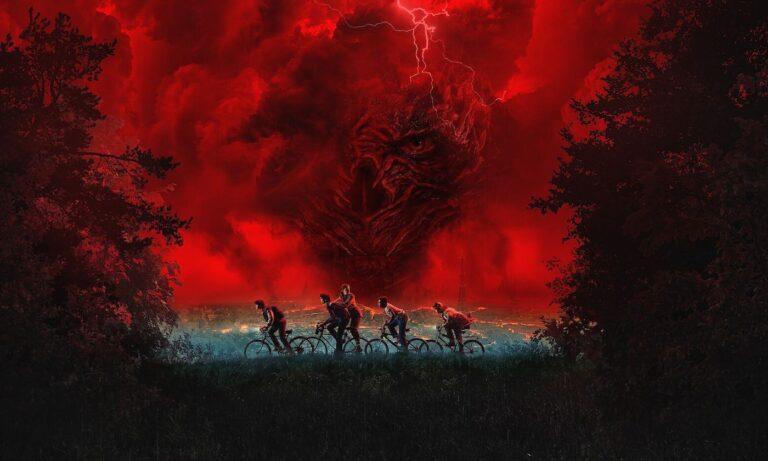
Hawkins is under lockdown, the Upside Down is spreading, and our heroes are preparing for the final fight against Vecna.
I have binge-watched every season of Stranger Things, but this time felt different. It was a Thursday night, already quite late, but I still could not stop myself. I told myself I would watch only one episode, just to see how Season 5 begins, and finish the rest over the weekend. Episode 1 felt fine, and I was sticking to my plan.
So if you haven’t seen Season 5 Part 1 of Stranger Things, I suggest you skip this blog and watch it, as it contains spoilers.
Rewind Season 5 Part 1
The first four episodes of the final season set up the main battle. The military is in Hawkins, and Vecna is missing, but his evil is everywhere.
Episode 1: The Crawl
We all saw the first 5 minutes that Netflix released early. It clearly shows that Will’s kidnapping in 1983 wasn’t random at all — Vecna was controlling everything from the start and even planted something inside him.
Cut to 1987: Hawkins has become a military quarantine zone. Eleven is hiding and training, while the rest of the group secretly runs missions called “crawls” to enter the Upside Down and track Vecna.
Things go wrong during one mission when a Demogorgon attacks the military. Will suddenly gets a powerful vision and sees through the creature’s eyes. It’s heading straight for the Wheeler house.
The episode ends with the Demogorgon ripping open a new gate in Holly Wheeler’s room — putting her entire family in danger and proving that Vecna’s plan is far from over.
Episode 2: The Vanishing of Holly Wheeler
Episode 2 begins with chaos in the Wheeler house when a Demogorgon bursts out of a new gate. Holly is dragged into the Upside Down, leaving her parents hurt and terrified.
Eleven immediately jumps in after her and meets Hopper inside the Upside Down. Together, they try to figure out where Holly was taken and why Vecna wants her.
Meanwhile, Nancy and Mike realise Holly’s “imaginary friend,” Mr. Whatsit, was never imaginary at all — he was actually Henry Creel, now known as Vecna. This means Vecna had been connected to Holly long before the attack.
Episode 3: The Turnbow Trap
The group uses Will’s psychic link to Vecna to set a trap. Will senses Vecna is after a boy named Derek, so they hide him and wait for a Demogorgon to appear. They try to tag it with a tracker to find Vecna’s hideout.
Eleven learns from a soldier that the military is keeping someone powerful locked inside their Upside Down base. She thinks it might be Vecna.
The trap fails when the Demogorgon turns back toward the group. Will realises Vecna has figured out their plan.
Meanwhile, Holly, trapped in Vecna’s illusion, meets Max, who is alive but held inside Vecna’s psychic prison.
Episode 4: Sorcerer
The group’s trap fails, and Demogorgons attack. Vecna appears and kills several soldiers.
Will unlocks a new power. He uses telekinesis, like Eleven, to destroy three Demogorgons, but it leaves him weak and bleeding.
Holly is rescued, while Max remains trapped inside Vecna’s mind, stuck in a nightmare built from Henry Creel’s memories.
Vecna reveals his plan. He is using kidnapped children as vessels to open a powerful wormhole so a greater evil from the Upside Down can enter and reshape the world.
Few Questions That Needs to be Answered
We have seen the trailer and the first part of Season 5. Since then, a few questions have been constantly discussed and debated by fans everywhere. Theories are floating around, connections are being drawn, and nothing feels settled yet.
So why should I stay out of it?
Who Is Falling in the Upside Down?
One shot from the Season 5 trailer stands out. A figure falling through the Upside Down. No face. No explanation. Just silence. It feels deliberate, like the show wants us to stop and think.
Right now, three theories dominate the conversation.
Holly Wheeler: The “Alice in Wonderland” Theory
Many fans believe the figure is Holly Wheeler. The clothing closely matches what she wears in other trailer scenes. More importantly, an episode titled The Vanishing of Holly Wheeler confirms she is a target.
The fall itself feels dream-like, almost like Alice falling down the rabbit hole. If this is Holly, she may be entering Vecna’s mindscape rather than the Upside Down in a physical sense.
Will Byers: The Henry Creel Parallel
There is this theory, that feels darker. The falling space looks like Dimension X, the same void Henry Creel fell into in 1979.
Will’s connection to Vecna has always been unfinished. Vecna’s line in the trailer, “William, you are going to help me one last time,” suggests Will may be forced into the same void, mirroring Vecna’s own transformation.
Max Mayfield: The Mindscape Theory
Here, the fall is not physical at all. Max is still in a coma, trapped inside Vecna’s mind.
The fall could represent her mind either escaping his control or sinking deeper into his memories. Given her psychic journey so far, this visual fits her story.
What happened to the Kids Vecna Took?
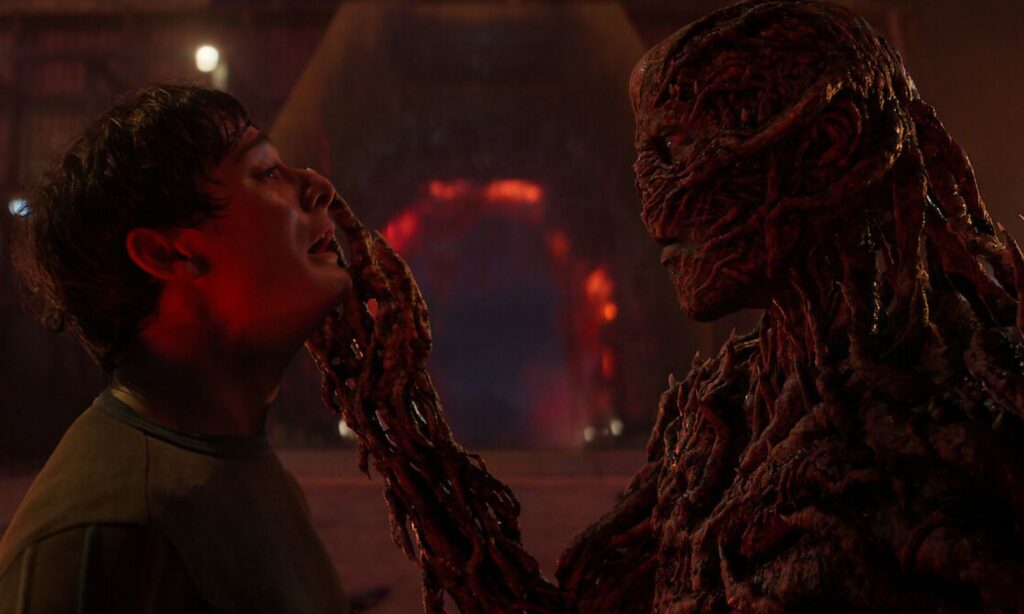
Vecna kidnapped several children and kept their minds trapped inside his psychic world. This twisted mental space is built from Henry Creel’s memories, and once a child enters it, they become trapped inside a nightmare that feels endless. Their real bodies are kept somewhere in the Upside Down’s flesh wall.
Vecna calls these children “vessels.” He is collecting them one by one because he needs their minds to build a powerful connection between the Upside Down and the real world. His goal is likely to create a huge wormhole. If it works, something far more dangerous than him can break through and take over our world.
The children now depend on how fast the group can act. If Vecna finishes his plan, their minds may be completely taken over and used as permanent pieces of his power. But if Eleven and Will manage to enter his mindscape in time, the kids can still be saved, just like Holly and Max who are trapped but still alive inside Vecna’s world.
But, Why 12?
The number 12 was never random. As per a theory, when you connect the play and the show, it feels like a deliberate design tied to Vecna and the Mind Flayer’s final plan.
In The First Shadow, the official poster hints at a dark presence above Henry Creel, shaped like the Mind Flayer, with what look like twelve main limbs or tendrils. It feels less symbolic and more structural, like a blueprint. Almost as if the Mind Flayer needs a specific formation to move power across dimensions.
In Season 5, Part 1, Vecna is not killing children randomly. He is collecting exactly twelve. Their bodies remain in the Upside Down, while their minds are trapped with him. These children act as psychic anchors, matching the twelve-part structure hinted at in the play.
That is why Eleven matters so much. She was meant to complete the twelve. Instead, she broke the pattern. And that fracture may be the only reason the world still exists.
Stranger Things Play – The First Shadow
Now before proceeding further, if you have not read about The Stranger Things Play, here is a short summary to help you get back on track with the story.
Prologue
The story begins in 1943, during World War II. The United States carries out a secret experiment on the USS Eldridge, hoping to make the ship invisible using a force field. The experiment fails. Instead of disappearing, the ship is transported to another realm, later known as Dimension X.
Most of the crew are killed there by strange humanoid creatures. Only one man survives and returns to the normal world badly injured and permanently changed.
The Girl from Nowhere
Years later, in 1959, the Creel family moved to Hawkins, Indiana. Victor and Virginia arrive with their two children, Henry and Alice, hoping for a fresh start.
Henry is troubled, isolated, and already has powerful psychokinetic abilities. He struggles to fit in at Hawkins High and keeps mostly to himself. Despite this, he forms a close connection with Patty Newby, the principal’s daughter.
Patty believes Henry’s powers are not evil and encourages him to control them and use them for good. To show her this, Henry creates a vision where Patty can sing freely and feel supported by everyone around her. They grow close, meet every day after school, and eventually fall in love.
At the same time, Joyce Maldonado is trying to stage a school production of Oklahoma!. Elsewhere in town, Henry begins to lose control. Alone in the attic, he is overtaken by a shadowy influence and enters a mental space he calls “the battlefield.”
Soon after, animals around Hawkins start turning up dead, including a neighbour’s cat. Henry is haunted by visions of a humanoid monster and becomes terrified that he might be forced to hurt Patty.
Bob Newby teams up with Joyce and Jim Hopper Jr. to investigate the animal killings. Meanwhile, Patty asks Henry to use his powers to help find her biological mother. When Henry enters the Void to do this, he loses control again and the shadowy presence returns. Patty’s father walks in and is violently attacked. Patty manages to reach Henry by telling him she believes he is good and that she loves him. Henry stops the attack, but her father is left blinded and badly injured.
Chapter Two: Captain Midnight
Virginia Creel sends Henry to Dr. Martin Brenner. It is revealed that Brenner has known about Henry for years and that Virginia had been giving him information under the influence of drugs Brenner supplied. When Patty’s father regains consciousness, he tells Patty that Henry saved him from a monster. He drew what he saw. It is the Mind Flayer.
At Hawkins National Laboratory, Brenner explains his past. His father was the sole survivor of the USS Eldridge experiment and revealed the truth about Dimension X before his death. Brenner later created the Nevada Experiment to recreate what happened.
One scientist defected and stole key technology, hiding it in a cave in Nevada. At that time, a young Henry and his family were living nearby. While exploring the cave, Henry accidentally activated the device and was transported to Dimension X along with the scientist.
Henry returned after twelve hours, changed. His blood type was different, and his personality shifted. Brenner later tracked him down after Henry dropped his spyglass in the cave.
Using a sensory deprivation chamber, Henry shows Brenner a humanoid creature through the Void. Brenner then attempts to force Henry to kill a prisoner. Henry breaks down, stabs two guards in the chaos, and refuses to kill. Brenner realises Henry is devoted to someone and therefore cannot fully give in. He later identifies that person as Patty and decides she must be removed.
Henry returns home and reads his mother’s thoughts, discovering she plans to send him back to Brenner. He gives in completely to the shadowy influence and kills Virginia and Alice. Victor collapses unconscious.
Hours later, Henry wakes in confusion and goes to Hawkins High School to save Patty during the performance of Oklahoma!. They reunite in the rafters, but Brenner appears and tells Henry that Patty is his weakness. Patty urges Henry not to listen. Henry tells her he found her biological mother, a singer in Las Vegas. Overwhelmed, Henry loses control again and throws Patty from the rafters.
Victor Creel is blamed for the murders, based on the assumptions Joyce, Bob, and Jim made during their investigation. In 1963, Joyce and Jim part ways as Jim is sent to fight in Vietnam. Henry is returned to Hawkins Lab.
Epilogue
Years later, Henry remains restrained at Hawkins Lab. Through the Void, he sees that Patty survived and now walks with a cane. In Las Vegas, she meets her biological mother backstage at the Stardust Casino, and the two recognise each other and embrace.
Brenner informs Henry that the blood transfusions given to other children have been successful. As a reward, he frees Henry. In the Rainbow Room,
Henry meets one of the children and says, “Hello, Eleven. I have something new for us.” Lightning flashes, and the shadow of Vecna appears.
What to Expect in the Last Part of Season 5
Now let’s come back to the main series, the thing which we all have been excitedly waiting for, Part 2 and the finale.
Max Mayfield is not just another victim inside Vecna’s psychic world. When she becomes trapped in his mindscape, a space built from Henry Creel’s memories, she discovers something that changes everything.
Deep inside this mental world, Max finds a hidden cave, a place Vecna avoids and fears. This is the same cave, we saw in the play. The cave where Henry went missing for 12 hours. This detail is important because it proves there are parts of his mind he cannot control completely.
This cave becomes the strongest clue the group has found so far. Max is the only one who has seen this place from the inside, which turns her from a trapped character into a major key to the final battle.
Her connection to Vecna’s mind means she can guide the others through his illusions and help them reach the children he has captured. She also carries the knowledge that could weaken Vecna from within.
In simple words, Max’s mind is not just a prison. It is a map. It holds secrets that can help the group break into Vecna’s world, free the children, and stop the Upside Down from taking over. Max’s presence inside the mindscape may be the one advantage the heroes have in a fight that feels almost impossible to win.
We saw what happened at the end of Part 1 of Season 5.
From Season 1 to now, Will Byers has always been one of the most emotionally scarred characters. His trauma, his connection to the Upside Down, and everything he’s endured made him feel vulnerable; but in Season 5, that all changes.
The final season reveals a jaw-dropping twist: Will isn’t just a survivor anymore. He becomes one of the most powerful weapons the heroes have.
But the way he stopped those dememorgan and killed is something what Henry and Vecna used to kill his victim, lifting the victim up and breaking the limbs and finally snapping the neck.
So what does it mean?
Will’s powers come not from within — but from his long-standing connection to Vecna. Since the events of Season 1 (when Vecna first kidnapped him), Will has been psychically tethered to Vecna’s “hive mind.”
In Episode 4 (“Sorcerer”), Will taps into that connection — with a surge of emotion and self-acceptance — and for the first time consciously “channels” Vecna’s powers. Suddenly, the boy who was taken becomes a sorcerer.
What Powers Does He Have?
We didn’t get to know much about it till season 5. In the final season, episode 4 we came to know about his power.
He can manipulate creatures connected to the hive mind — like the monsters from the Upside Down. In episode 4, the opening round of Season 5’s final battle, he uses this ability to control and destroy multiple Demogorgons at once, saving his friends.
His control is proximity-based: the power works when he is close enough to Vecna’s hive mind or creatures tied to it. However, he is not exactly like Eleven Hopper — he doesn’t have innate psychokinetic powers. Rather, he “puppeteers” the hive mind.
So Will’s power is different, but dangerous in its own right.
What This Means for Hawkins — and Vecna
Up until now, the heroes relied mainly on Eleven’s powers. With Will now in the game, the entire balance shifts.
Having two people connected to the Upside Down is always better than one, right?
And that too in different ways. It significantly increases the team’s chances.
Because his powers depend on Vecna’s hive mind and proximity, the final showdown against Vecna will likely require strategy beyond just brute force. Will opens possibilities: controlling enemy forces, disrupting Vecna’s link, or even using the hive mind against him.
But what if a part of Vecna or Mindcrawler is inside Will.
I am a Potterhead, so this theory has to come to me, anyways.
Does that mean, Will has to sacrifice? We may expect that.
4. Patty Newby Returns to Save Henry’s Soul
The prequel play introduced us to Patty Newby who had a romantic connection to a young Henry Creel.
Patty represents the last shred of Henry’s humanity. Fans believe that if Eleven can’t beat Vecna with force, Patty will return as a surprise character in the finale to appeal to Henry’s human side. Her love or sacrifice might be the thing that distracts or breaks Vecna long enough for the gang to deliver the final blow.
A major emotional showdown where the solution isn’t a blast of power, but a moment of humanity. This would be a very D&D way to end it: the monster is defeated by a true act of kindness.
5. Steve Harrington’s Heroic Sacrifice
Steve Harrington has become one of the most loved character in Stranger Things, and Many fans believe he will make a heroic sacrifice in the final battle. And the idea really hurts.
Steve has grown from a confused teenager to someone who protects everyone around him.
The theory started from small hints. In recent interviews, the Duffer Brothers mentioned that Season 5 will bring emotional closure. They also said some goodbyes will be painful.
Fans quickly connected this to Steve. His arc has always moved toward redemption. From the moment he picked up the nail bat, he became the unofficial guardian of the kids. He never asked for glory. He simply showed up.
Some fans point out that the Upside Down reacts strongly to people with deep emotional attachments. Steve fits that perfectly. He cares too much. And this time, his love for Dustin, Lucas, Max and the others may place him in the center of the final fight.
A popular theory on social media says that the group will get trapped. Someone will need to hold back the enemy for a few seconds. Just enough for everyone else to escape. And Steve steps forward. Not because he wants to be a hero. But because he will never let the kids suffer again.
Another part of the theory talks about Dustin. If Steve does sacrifice himself, fans expect a final moment between them. Something simple. Maybe just Dustin saying he cannot lose him, and Steve telling him he will be fine. Their bond has always been special, what started as comedy but over the years, it turned into family.
Whether this happens or not, the idea alone shows how much people care for Steve. He is the character who changed the most. We have seen him fighting, and protecting. He loves his friends like real family. And that is why this theory has become one of the strongest predictions for the finale.
6. The “Critical Roll” (Nat 20): Eleven, Will, and Kali Unite
This theory is spreading fast because it feels like a final twist the Duffers might actually use. Fans call it the Critical Roll theory.
Inspired by the Nat 20 moment in Dungeons and Dragons. It means the impossible happens at the perfect moment. And in Season 5 Part 2, that miracle could be the reunion of three powerful characters. Eleven. Will. And Kali.
Now that Kali has returned in Season 5, this theory has become stronger than ever. Fans always believed her story was unfinished. She was not just another child from Hawkins Lab. She carried a different kind of pain. And a different kind of power. When she appeared again, locked inside a hidden Upside Down lab, everything changed. The final battle suddenly feels bigger. And more personal.
The idea behind this theory is simple. Vecna has grown too powerful for Eleven to face alone. His control over the Upside Down is stronger. His understanding of her mind is deeper. And Will still carries the shadow of their earlier connection. So the only way to win is by joining forces. Three broken children. Three different abilities. One last impossible fight.
Kali’s power will play a key role. We can expect her to twist Vecna’s vision. She can help the team hide people and she can create openings that do not exist. Fans believe she might use this to shield Eleven and Will as they enter Vecna’s mind. A trick that buys seconds. But those seconds can change everything. It feels like a Nat 20 moment in Dungeons and Dragons. A perfect roll. A miracle that arrives right when all hope is gone.
Eleven brings her strength. Will brings his link to the darkness. Kali brings the skill to reshape the battlefield. Together they can attack Vecna from both inside and outside. Will can guide Eleven to the core of his mind. Kali can keep them hidden long enough to strike. And as the Upside Down shifts around them, we might see a moment where the three finally understand their shared past. They were all children taken from the world. Children forced into power they never asked for.
Their unity becomes the final twist that Vecna never predicted. A combination of power and emotion that can break him when nothing else can.
A true Critical Roll.
7. Jonathan Byers’ Sacrifice
This idea hurts because Jonathan has always been the quiet protector. He is steady. He watches over Will and the family. That arc has been building for years. Fans now think the show could use that history to make his final act mean more than a throwaway death.
There is also a strong narrative reason to pick Jonathan for a sacrifice. Will’s link to Vecna and the Upside Down remains dangerous. Some popular theories claim Vecna might try to use Will directly, or that Will’s connection could make him a target again.
If that happens, Jonathan is the person in the story most likely to throw himself in harm’s way to save Will. It would be tragic, but it would make emotional sense.
Some articles call him a plausible candidate because his arc is now quieter and more sorrowful. Others point to small moments and staging in episodes that suggest the show is preparing a blow to the Byers family. None of this proves anything. But taken together it creates a strong case.
If the show chooses this path, it gives Jonathan a full circle ending. He began as a protective older brother. He ends by protecting the people he loves most. The loss would sting. But it would also finish his story with purpose. Fans who love Jonathan see his sacrifice not as needless death, but as the last act of the steady heart of Hawkins.
10. Is Time Travel Still on the Cards?
Time travel sounds extreme at first, but in Stranger Things, it does not feel random. The show has been hinting at it quietly for years.
The biggest clue is the Upside Down itself. In Season 4, Nancy finds her diary there, frozen on November 6, 1983. The day Will disappeared. Everything in that world is stuck in time. Hawkins moves forward, but the Upside Down does not. That alone tells us time works differently there.
Then there is Vecna. He does not just hate people, he is not a very big fan of time, routines, the idea of moving on. His entire world is built around breaking that order. Even the grandfather clock is not just a visual choice, it is a message.
Will is another key piece. He has always been out of sync. He survived the Upside Down, felt Vecna even when the gates were closed, and still carries that connection. It feels less like a power and more like a scar left behind when time stopped.
If time travel happens, it will not be flashy. No fixing everything. It will be limited, emotional, and costly. One moment, one choice, one attempt to stop something from becoming permanent.
9. All Was Just a Game…
This is one of the oldest and wildest theories in the Stranger Things world. It says everything we watched was not real.
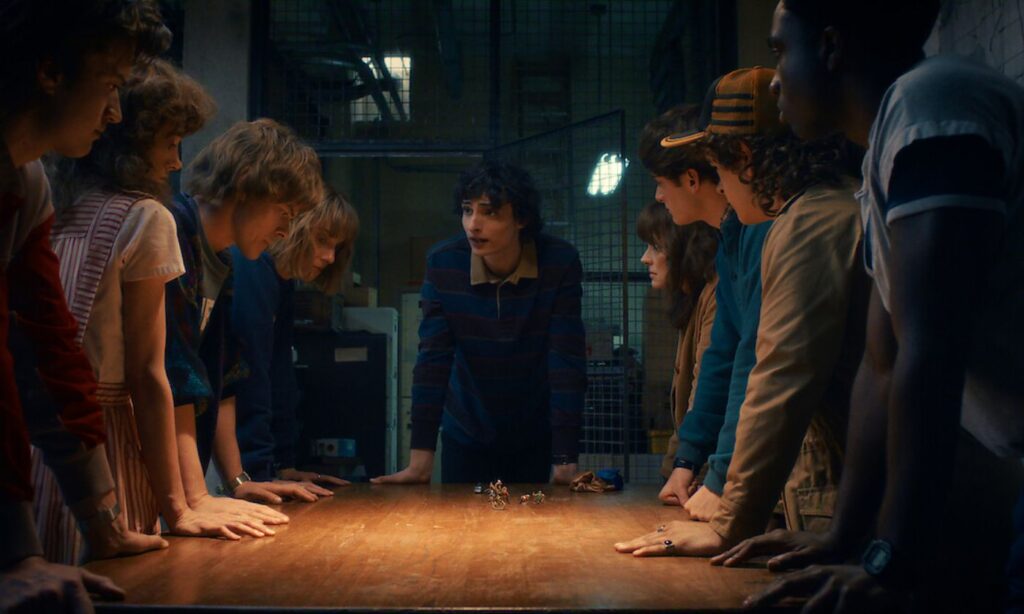
The monsters. The Upside Down. The fights. All of it was part of a game the kids were playing. A long, detailed Dungeons and Dragons campaign that grew inside their imagination.
The theory begins with the very first scene of Season 1. The boys sitting at a table. Laughing. Rolling dice. Completely lost in their story. Fans believe the show might circle back to that moment in the end. Not to erase the story. But to show that the real magic of Stranger Things is friendship and imagination.
In this theory, the final shot could be simple. The kids are finishing one last game. Someone rolls the dice. Someone narrates the final battle. And we realise the monsters were symbolic. The Demogorgon was fear. Vecna was trauma. The Upside Down was everything they could not understand as children. Their game helped them deal with life one adventure at a time.
This idea divides fans. Some love it because it feels poetic, some feel it would ruin the series, as it already has Too much of a rewrite and too much of a dream-ending.
But you never know. Even with the debate, the theory remains alive because Stranger Things always used D&D as its heart. The game shaped how the boys saw their world. It shaped their courage. Their teamwork. Their sense of wonder. So an ending that returns to the table feels emotionally right.
The point is not that nothing happened. The point is that the bond between these kids is the real story. The monsters fade. The memories stay. And the table where it all started becomes the place where it ends.
11. Could Hopper Be the One We Lose in Stranger Things?
One of the key character in the Stranger Things Hopper, feels like the obvious choice for a sacrifice. He is the protector. The father figure. The man who steps forward when others cannot. Stories like this often end with someone like him making the final sacrifice. Hopper has already lived a life shaped by grief, and he carries that weight quietly. Almost like someone who is already prepared to give himself up.
We have been here before. In Season 3, we all believed Hopper was gone. That moment in the lab felt final. His letter to Eleven felt like something he was never meant to return from. When he came back, he was not the same. He returned scarred, exhausted, and more aware of how fragile everything truly is.
And now, in Season 5 Part 1, we see a familiar pattern again. Hopper putting himself in harm’s way.
The show has already made us mourn Hopper once. Doing it again only works if it leads to something greater than heroism, which may happen. Otherwise, it risks repeating itself. That is why some fans believe Hopper may survive, but you never know.
The Final Roll: What Will We Leave Behind?
Okay, let’s wrap this up. After binging Season 5, we know this isn’t just a finale, it’s the end of our whole Stranger Things saga.
I think the victory will come down to three critical battles:
The Inside Job: Max’s mind holds the map—that hidden cave inside Vecna’s head. Guided by her, and finally leveraging Will’s dark link, the heroes must break into Henry Creel’s memories to free the captured children and attack Vecna’s core weakness.
Stopping the True Villain: The prequel play suggests Vecna is just a puppet. The real mission is a race against time to stop him from opening that massive wormhole and letting the true ultimate evil (that Thessalhydra, perhaps?) pass through.
The Price of Victory: The Duffer Brothers promised an emotional closure, and that likely means a painful sacrifice. Whether it’s Steve Harrington delivering a heartbreaking final act, or someone else paying the ultimate price, this ending will test the bonds of humanity and friendship to the breaking point.
The best hope?
The Critical Roll Theory, the powerful, desperate unity of Eleven, Will, and Kali. Their combined abilities offer the only chance to strike Vecna from every angle. I mean why bring back Kali? Number 8.
The entire journey started with four friends and a game. As we wait for the final dice roll, we know the real story isn’t about the monsters, but about the unbreakable bond between these kids.
Do you know what most people find so daunting about the concept of wellness?
The belief that it takes many hours of effort, having a well-established ‘routine’, using expensive products, having a calm and stress-free mind, and having no stressors in life to achieve it.
You and I live in the ‘real world’, where the speed of our days is greater than the speed of our thoughts, along with the daily lists of things-to-do, which leave us by mid-day, feeling exhausted.
Therefore, let’s face it:
Wellness now looks a lot different than it used to. Wellness now has a more personal feel to it.
There are many opportunities throughout the day, instead of planning long retreats to ‘get away’ from everything. This is actually really great, because you can improve your quality of life, in just minutes.
This blog will help you find out about how you can implement little changes in your daily life that can help improve your overall health and well-being in under 5 minutes.
There will be no added pressure, no expensive overhead, and no complicated directions to follow; just small, simple things that can change how you feel, think, and ‘show up’ every day. Wellness becomes much easier to maintain in this way.
Why Five Minutes Are More Important Than You Realize?
Individuals undervalue five minutes. Five minutes seem nearly insignificant.
However, just five minutes can alter the course of your entire day!
You consume water.
You go outdoors to get some air.
You extend your spine.
You take a breath.
You clear your mind.
You disrupt a cycle.
These tiny habits prove highly beneficial.
Minor victories build momentum and momentum alters your mood, your vitality and your attitude toward life. All it takes is five minutes and a readiness to give it a go.
Let’s start.
1. Five Minutes of Breathing Deeply to Eliminate the Clutter from Your Mind
To engage in deep breathing, follow these steps: close your eyes, drop your shoulders, inhale through your nose (to the count of 4), hold it (to the count of 2), and exhale through your mouth (to the count of 6).
2. Stretch Your Body for Five Minutes to Release the Tension that Has Built Up Over Time
Your body holds tension from stress throughout the day, even if you’re unaware of it. The tension is evident in your neck (when it cramps), your jaw (when it tightens), your back (when it becomes stiff), and your shoulders (when they rise due to stress).
Taking five minutes to stretch your arms, rotate your neck, roll your shoulders, touch your toes, and loosen your hips will promote better circulation and an improved posture.
After doing any kind of physical activity for 5 minutes, you’ll feel alive again!
3. Hydration Restart for Immediate Energy Boost
Many people experience exhaustion, lack of focus, and frustration due to insufficient hydration.
Drink a full glass of water
Wait one minute
Feel how your body is becoming revitalized
Notice that your mind becomes more alert.
Most people think that drinking a single glass of water is basic, but this process works every time!
The most important type of hydration for the human body is water – our bodies crave it more than anything else.
4. Spend Five Minutes Daily Being Thankful to Change Your Vibration
Use your phone, tablet, or paper to write down three things that you are thankful for today.
Do not overanalyze this process.
* Your warm tea may have eased your throat.
* Your pet may have caused you to smile.
* You completed a work assignment.
* You made it through a stressful moment.
When you start writing down what you’re thankful for, you are moving your brain from a place of anxiety to a place of gratitude.
When you write down what you are grateful for, your emotions soften. Your entire day seems lighter. Gratitude will not fix every problem you have, but it will give you more power to deal with them effectively.
5. Taking A Moment To Rest From Digital Distractions
Digital distractions can create an environment that sucks up all your energy without you even knowing, and can lead to a feeling of overload if you are constantly responding to digital updates.
Digital distractions take away from your ability to concentrate on what you are currently trying to accomplish, and it can be distracting when you see someone else’s latest online video.
By taking a simple, 5-to-10 minute break from distractions, and putting your phone away while you do this, you allow your brain to “de-stress” from the digital noise that surrounds us.
This simple break from your phone will allow you to focus again, and give you the mental space to think clearly.
6. How To Improve Your Mood With A 5-Minute Walk
Take a few minutes to step outside and stretch your legs.
Make sure that you find a place close to your office or home where you can walk around. Spend five minutes walking around outside.
The coolness of the outside air, as well as the physical activity of walking, will free your mind of stress. After a few minutes of walking, you will have fresh energy, and your brain will have had a chance to refresh itself.
7. A Mini Declutter That Boosts Your Mood Instantly
To clear your mind, pick a small area of your life (desk, purse, nightstand, etc.) and declutter it.
Declutter = clear out, remove all dust and dirt, and organize everything in the area you selected.
When you declutter, it gives you a sense of peace. Decluttered is the way an area looks when it is cleaned and organized. It is important for your mental well-being to have clean, organized areas. You may be surprised at how much time and effort it takes to organize a small area that is cluttered.
8. A 5-Minute Journal Dump That Frees Your Mind
Let’s look at another idea.
Write down everything you currently have in your thoughts onto a blank piece of paper.
Write everything you think or feel on that piece of paper with no order or logic, and let it be just what is in your mind. This will help you release your thoughts from your brain and give you room to breathe. By writing down everything you think and feel, it takes away all the clutter from your brain and allows you to think clearly again. This also helps relieve stress and can provide you with a clearer picture of what actions you need to take.
9. Building Confidence With a Quick Self-Talk Change
Take a moment, and kindly speak to yourself.
Tell yourself:
“I can manage today.”
“I feel okay about going at my own speed.”
“I am not in a race.”
“I am giving myself the go ahead to take it slow.”
This will not take much time, yet it will help to change how you think about what you are doing.
When you are more gentle toward yourself, your day goes more smoothly.
Begin Today, Don’t Wait Until Monday
Start with one of the habits in this list (just pick one). Do it now (it takes just 5 minutes).
Your brain enjoys completing small tasks. By finishing small tasks, you earn the confidence and trust of yourself.
Repeat this tomorrow. The following week, add one more. Before long, your daily habits are growing naturally, not with pressure.
Making health a habit is a part of who you become when you begin with small steps.