


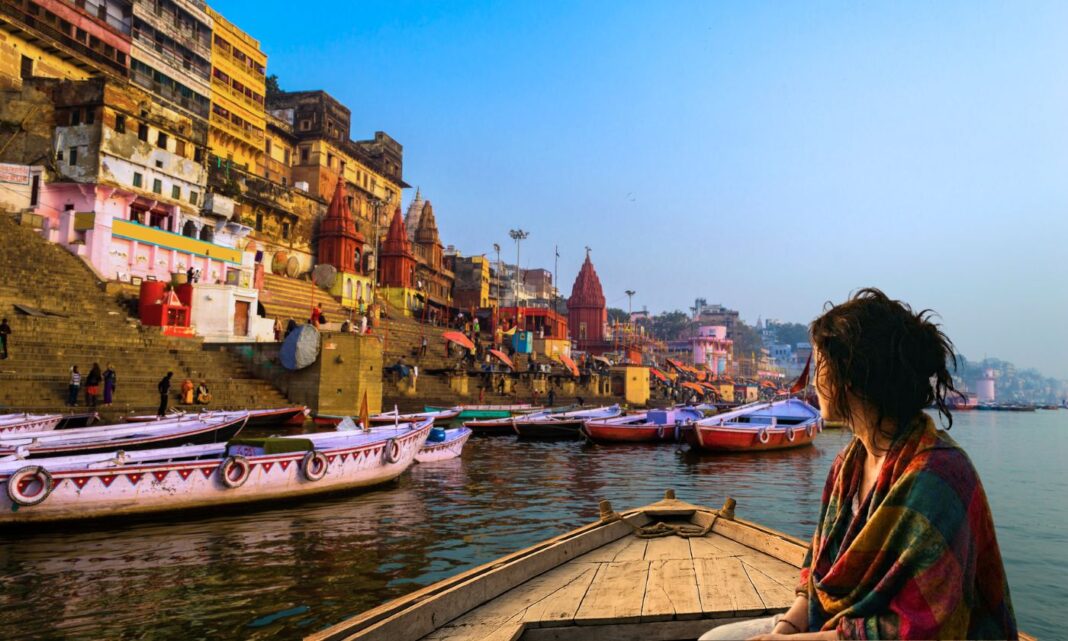
Key Takeaways:
- Varanasi is a city in Uttar Pradesh, India, located along the banks of the River Ganga in northern India.
- Varanasi exposes everyday life and death together, altering how visitors understand impermanence and continuity.
- The city removes control and comfort, which naturally shifts how people respond to uncertainty.
- Most visitors experience delayed emotional impact rather than instant transformation.
Varanasi does not introduce itself softly or gently. There isn’t a soft landing or a gradual settling period. Not really. Not truly. As soon as you arrive, the city seems to have functioned perfectly well without you. It does not wait for your comprehension or your comfort or your approval. It throbs along at its own sweet, unhurried pace.
Many visitors come to Varanasi with expectations, though they cannot quite articulate what these expectations are. What visitors rarely anticipate is that they will feel quietly unsettled, long after leaving this city behind.
Varanasi does not try to change people. Varanasi does not sell anything in particular – no healing, spirituality, illumination. Just existence: out in the open, ongoing, and inexplicable. And it is this inexplicability that unexpectedly alters how people think about their own lives not in an instant, not in shock value, but profoundly.
Often it is said that one is unable to express what Varanasi has given to him or her. The reason is that Varanasi does not give; it only shows.
What Varanasi Does Differently
Varanasi does not try to guide your emotions. Instead, it places you in situations that naturally challenge how you see life, time, and control.
Life and death exist together without separation
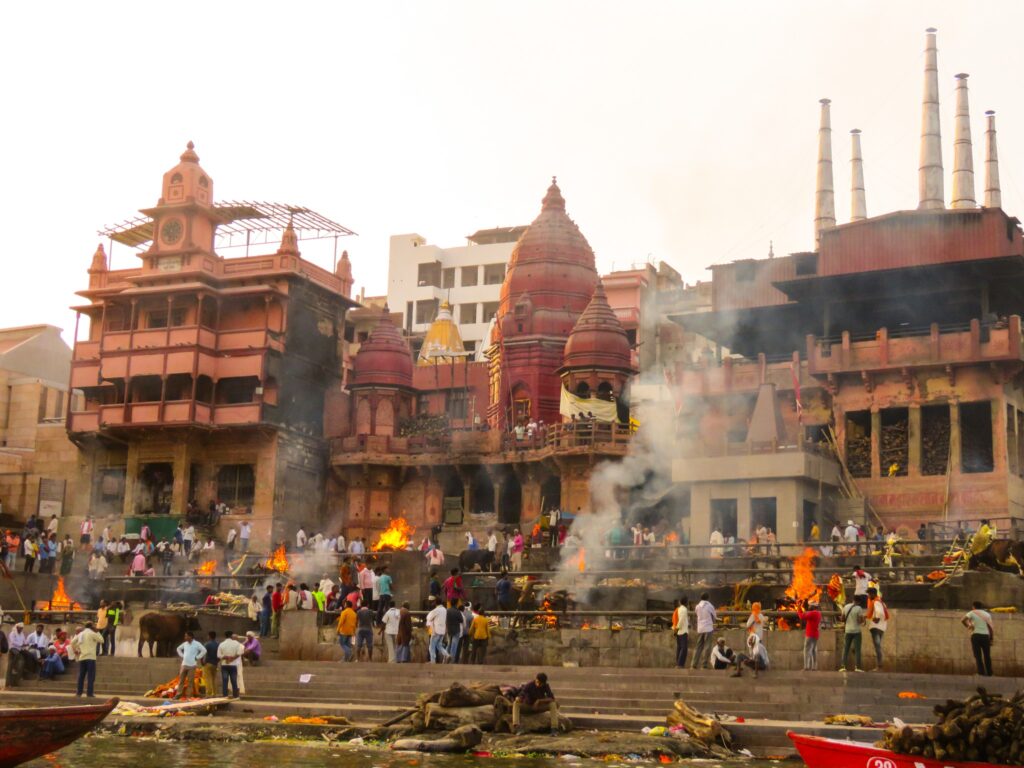
At the ghats, funeral pyres flame openly; sometimes they burn all day. Barely feet away, people bathe, pray, sell flowers, laugh, quarrel, drink tea. No one stops the world for mounting grief. No one speaks softly because someone else has not long to live.
This is, naturally, uncomfortable at first for visitors. For in most contemporary societies, death occurs within closed doors. In Varanasi, it occurs in the open, not in celebration, nor in fear. Over time, this is not bothersome; it is grounding.
One starts to grasp just how much emotional energy one puts into keeping death at arm’s length. It’s ubiquitous in Varanasi. The normalcy of its presence subtly shifts one’s way of looking at things. Many travelers return home with a reduced stress level regarding time, urgency, and achievement. Not from a new realization, but from observation.
The city does not change for you
Varanasi does not lend itself to nice paths or clear patterns: its streets twist and constricted beyond expectation; noises collide without respite; scents alter by blocks; itineraries come undone. The city does not apologize for this.
Of course, at first everyone resists this process. People try to control the schedules, the routes, and the expectations. But eventually, everyone gives up on control. And once everyone stops trying to control things, then something changes. The need to control everything disappears. People start moving in accordance with the city instead of against it
Such a level of surrender doesn’t appear to be spiritual. It appears to be quite practical. Many people are aware of the amount of mental stress they go through on a daily basis in an endeavor to be in control of everything. Varanasi does not require this.
Observation replaces participation
Unlike other places that are centered around things to do, Varanasi has very little in this department. End result: You sit. You watch. You wait. You see people doing their rituals with no interpretation, you see people living their daily routines with no interest in visitors, and you see private moments that are perfectly public.
This lack of participation creates space; and space is where distance is created. Distance is what leads to contemplation. Because there is nothing to do, you automatically observe things. Varanasi is not a city that creates contemplation. Varanasi is a city that allows contemplation.
No performance exists for tourists
In most places, life is adapted with regard to visitors. In Varanasi, this does not happen. The rituals carry on regardless of whether anyone is viewing them or not. There is no need to explain things. It makes visitors feel invisible, and also rather liberating. You don’t feel like you have to document and verify what is happening. It makes the city feel rather honest. You aren’t the center of the experience. And it feels rather liberating.
Why This City Affects People Emotionally
Varanasi removes distraction in a way few places do. Even with noise and movement, there is little escape. After a while, phones feel intrusive. Constant planning feels unnecessary. Silence becomes easier to sit with.
Without distraction, people confront thoughts they often avoid. Not dramatic crises, but lingering questions about work, family, ambition, loss, and time. Varanasi does not amplify these thoughts. It creates space for them. Many travellers describe feeling emotionally exposed. Not overwhelmed, but unprotected. There is no curated experience to hide behind. You are present with whatever surfaces.
The city’s age also plays a role. Rituals continue as they have for centuries. Generations pass through the same spaces. This continuity reframes urgency. Individual worries feel smaller when placed inside a timeline that stretches far beyond one life.
People do not leave Varanasi with answers. They leave with perspective.
Why People Carry Varanasi Long After Leaving
The effect of Varanasi often appears later. Weeks or months after returning, people notice subtle changes, like less panic around timelines, less urgency to control outcomes, a quieter relationship with success and failure.
These shifts do not come from belief systems or spiritual conversion. They come from exposure. From seeing life without filters, pauses, or performance. Varanasi does not promise peace. It offers acceptance not through teaching, but through example. Life continues. Rituals repeat. The river flows. Whether you understand it or not. That understanding stays.
Concluding Note
Varanasi does not seek to inspire or change. It doesn’t help to direct emotions or give them meaning. It is precisely, unfailingly, itself: complex, contradictory, and continuous.
And in that honesty, people change.
Not because the city asked them to, but because experiencing life without editing it changes you, changes how you carry yourself. And this is why Varanasi stays with people long after they leave, not because they remembered it, but because it changed how they thought about time, and control, and themselves.


